
Accounting
Treasury will need to come up with guidance on Big Beautiful Bill

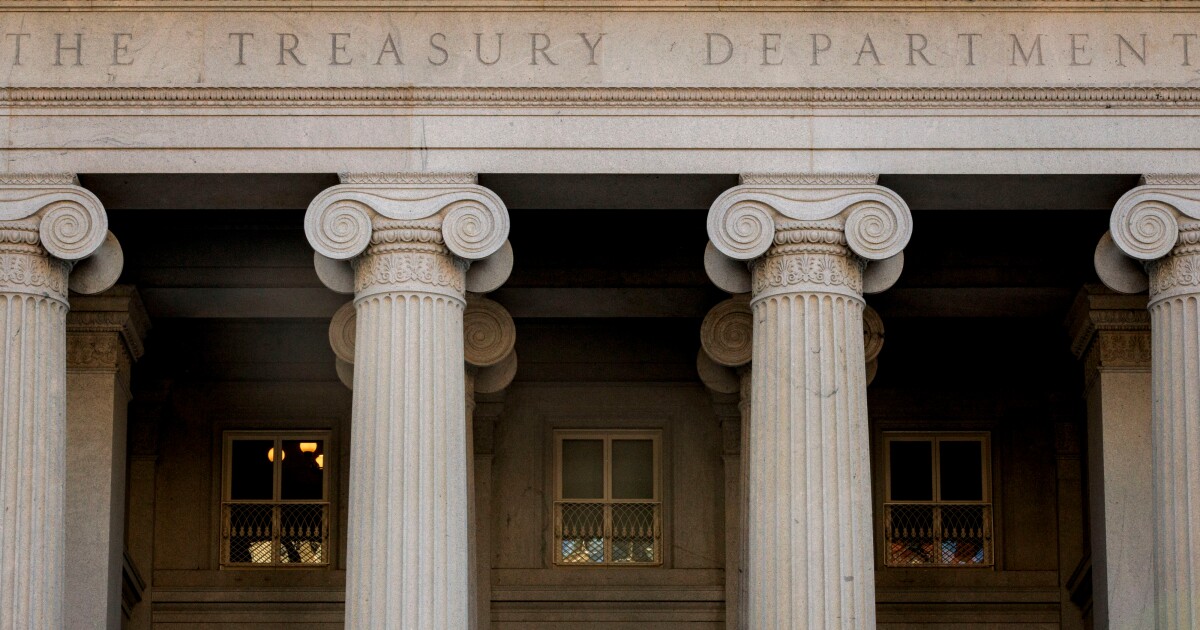

The Treasury Department and the Internal Revenue Service will need to roll out guidance on President Trump’s One Big Beautiful Bill Act to explain its newer provisions and how they differ from earlier tax legislation.
The IRS posted a
Tax professionals are eagerly awaiting additional guidance on the tax provisions, especially for business clients, including those who had relied on the renewable provisions of the Inflation Reduction Act that have since been repealed.
“We’re all going to look at how the administration implements the bill, especially around the Inflation Reduction Act,” said Jon Traub, a managing principal and tax policy group leader for Washington National Tax at Deloitte Tax LLP. “Separate from the bill, but parallel to it, is how the rest of the world agrees to or doesn’t agree to the proposal to exempt the U.S. from Pillar Two, which was done in exchange for dropping out of the bill the proposed Section 899. Those are the two things in the bill that we’re watching how they develop.”
The Treasury worked out a deal with G-7 countries to
While Deloitte doesn’t have many clients who depend on tips for a living, the guidance could be illuminating as well.
“Our clientele for the most part is not in the tipped-income environment, but I think the fact that those were added in the bill, obviously they were priorities of the president and will be interesting to watch,” said Traub. “I think the Treasury has 90 days to issue guidance on how to define industries in which tipped income is common. You can’t, for example, change the compensation structure at an auto dealer and say we’re going to ask car buyers to provide a tip to car dealers. That would be [flipping] that business model on its head. The Treasury is going to have to come up with a list of industries and occupations where tipping is historically common and they’re eligible for the deduction. That is supposed to come out in 90 days from the date of enactment, probably 80 days from now.”
Indeed, the fact sheet says that by Oct. 2, 2025, the IRS must publish a list of occupations that “customarily and regularly” received tips on or before Dec 31, 2024. The IRS said it will provide transition relief for tax year 2025 for taxpayers claiming the deduction and for employers and payors subject to the new reporting requirements.
The law also provides incentives for domestic manufacturing to bring more production back to the U.S.
“That’s one that definitely will be interesting to see,” said Traub. “There’s a new deduction for the expense of the construction of structures that house manufacturing, and there are a variety of rules. … You can’t count parking facilities. You can’t count offices. The Treasury is going to have to come up with guidance pretty quickly to help companies figure out what structures qualify and what don’t.”
He also expects to see guidance coming out on the tax breaks for domestically made automobiles.
“They probably have to come up with definitions around a domestically made automobile for purposes of the new deduction for interest on auto loans,” said Traub. “It’s only available for domestically made vehicles for which final assembly occurred in the U.S., so they’re going to have to figure out how to define what final assembly means. There’s a whole range of difficult challenges that Treasury is going to have to face, but they have very skilled people there putting out a lot of guidance, regulations and notices to help taxpayers comply, especially because a number of pieces of the law are retroactive, effective on Jan.1, 2025. That really puts the burden on them to really aggressively spell out what the law does and does not allow for regulations.”
Many of the incentives for clean energy under the Inflation Reduction Act have been repealed.
“One of the things that the President did is, right after the bill was signed, he put out a notice that he was going to direct the Treasury to clarify the rules for when a facility had begun construction,” said Traub. “There’s limits in the law as to qualifying for clean energy credits, and there’s deadlines based on either when you put the project in service, like when you start actually producing energy. Some of them are tied to when you begin construction. And beginning construction is not just going to Home Depot to buy a shovel and a bucket and putting a spade in the ground and turning it over a couple of times in the dirt. There’s a very specific technical meaning around what qualifies as having begun construction.”
The wind and solar energy industries in particular are losing a number of tax breaks. “For wind and solar there’s obviously a concern in the industry that they will come up with more rigorous rules than today that will make it harder for wind and solar to qualify for what they thought they would qualify for under the revised credits in the OBBBA,” Traub said.
“I do expect regulations this year, but I do believe they’ll be really focused on the renewable energy side,” said Ian Boccaccio, principal and income tax practice leader at tax firm Ryan. “For instance, for that beginning of construction safe harbor, the executive order basically said that Treasury has to come up with something in the next 45 days.”
The bill also seeks to crack down on companies owned by countries perceived as a threat to the U.S.
“I don’t know how they’re going to deal with all of these various credits and the various new rules like foreign entities of concern, defining how much investment by a disqualified foreign country is too much and what qualifies as foreign investment,” said Traub. “There’s a huge administrative challenge to implementing any law like this, whether it’s the Affordable Care Act, the Inflation Reduction Act, the TCJA, or the OBBBA. These laws always require a massive amount of regulatory guidance coming from Treasury.”
The Treasury’s guidance and regulations may be limited in some ways by the
“In the wake of Loper Bright that says the agency has got less deference, the challenge is going to be making sure that they find clear statutory direction to write the rules,” said Traub. “That’s a challenge that the Treasury is really well aware of.”
Even with the ongoing cutbacks in the federal government, he expects the Treasury to be able to come up with such guidance.
The new Trump accounts for babies and young children will probably need new rule writing as well.
“Name any provision in the bill, especially if it’s creating a new tax section, a new benefit, as opposed to the ones where they’re just making small changes to existing rules like around estate tax or rates, where we are creating a whole new tax section out of whole cloth, like the Trump accounts,” said Traub. “Those clearly require guidance and regulatory assistance, every one of them.”
The bill also extends and makes permanent a number of tax breaks that were supposed to expire under the TCJA, such as 100% bonus depreciation, and immediate write-offs for research and development expenses.
“There may be some guidance even on R&D because there’s a sort of ‘retroactivity lite,’ if you will, that allows companies to reclaim deductions they haven’t taken in the last few years, or over five years with domestic R&D, that may require some guidance, but the reversion of 100% bonus depreciation from where it is at 40%, those rules are probably mostly already written,” said Traub. “I’m going to guess that’s an area where Treasury has less regulatory burden than they do in some other places. Things like the Child Tax Credit, where they just change the amount of the credit, don’t really create the regulatory burdens that new deductions for seniors and auto loans would create.”
There may be more of a compliance burden for tax professionals in absorbing all these new rules and provisions, but in some ways the tax rules are simpler.
“Some of the provisions here make the Tax Code potentially more complex for taxpayers and professionals, and I suppose at some level, there could be an increase in complexity,” said Traub. “Other provisions probably make things a little bit simpler for people. Especially if you’re dealing with a structure in which you were concerned about the potential confusion around the expiration of benefits, that uncertainty has gone away. That may provide some uncertainty for taxpayers as well, so it’s probably a mixed bag.”





U.S.-China AI Competition Intensifies as Washington Pushes Allies to Choose Sides

Nvidia’s Potential $3 Billion SB Energy Investment Could Reshape AI Infrastructure

U.S. Retail Sales Fall for the First Time in Nine Months as Consumer Spending Slows

Armanino adds Strategic Accounting Outsourced Solutions

New 2023 K-1 instructions stir the CAMT pot for partnerships and corporations

Tax Strategy: Employee Retention Credit update
-

 Economics1 week ago
US Inflation Matches Wall Street Projections as Core CPI Cools to 2.5%: Key Implications for Economy and Markets
-
 Economics5 days ago
U.S. Retail Sales Fall for the First Time in Nine Months as Consumer Spending Slows
-

 Economics6 days ago
Macroeconomic Impact of Global Energy Shocks and Shipping Route Realignment in 2026
-

 Accounting6 days ago
AI-Driven Automation and Continuous Accounting Frameworks
-

 Finance6 days ago
Cross-Border Settlement Innovation and Real-Time Payment Architecture
-

 Personal Finance6 days ago
Navigating Residential Real Estate and Mortgage Strategy
-

 Technology6 days ago
The Shift to On-Device Edge AI and Advanced Microprocessor Architecture in 2026
-
 Economics3 days ago
Nvidia’s Potential $3 Billion SB Energy Investment Could Reshape AI Infrastructure