Connect with us

Leaders

Modern Executive Leadership: Navigating Hybrid Work Dynamics and Outcome-Based Governance

Published

on

Chief Executive Officers and executive leadership teams are refining corporate workplace models around structured hybrid frameworks and outcome-based performance management. Moving past polarized debates regarding remote work, progressive corporate leaders are designing workplace environments that maximize organizational agility, talent retention, and collaborative innovation.

Moving to Performance-Driven, Outcome-Based Governance
Top corporate leaders have replaced rigid, presence-based management styles with clear, outcome-focused governance frameworks. Rather than evaluating employee contributions based on physical office attendance, modern management systems measure performance against clear Key Performance Indicators (KPIs), project deliverables, and team objectives.

Setting transparent performance expectations empowers employees to structure work schedules autonomously while holding teams strictly accountable for quality output and project timelines.

Designing Purpose-Driven Office Environments
Under structured hybrid workplace models, the physical corporate office serves a specific operational purpose. Executive teams are reconfiguring office real estate to prioritize collaborative project design, strategic planning sessions, team onboarding, and corporate culture building.

Autonomous, focused deep work is supported through flexible remote policies, allowing employees to optimize personal focus time. Modern office environments feature adaptable meeting spaces equipped with advanced telepresence technology, enabling seamless collaboration between remote and in-person team members.

Cultivating Executive Empathy and Authentic Communication
Leading organizations through rapid market shifts and technological changes requires clear, authentic executive communication. Successful CEOs prioritize transparent dialogue with workforce teams, holding regular virtual town halls and interactive feedback sessions.

During periods of operational adjustment or strategic restructuring, empathetic leadership builds organizational trust, maintains workforce morale, and keeps cross-functional teams focused on core corporate goals.

Executive Leadership Principles
1. Manage by Results: Transition performance evaluations from physical presence metrics to clear, objective business outcomes.
2. Optimize Physical Workspaces: Reconfigure corporate real estate to support collaborative strategy and team mentorship.
3. Communicate Transparently: Foster organizational resilience through authentic, continuous executive dialogue.

Continue Reading
Click to comment

Leave a Reply

Your email address will not be published. Required fields are marked *

Leaders

Saudi Arabia, Turkey, and Pakistan Sign Landmark Mecca Joint Defense Pact

Published

on

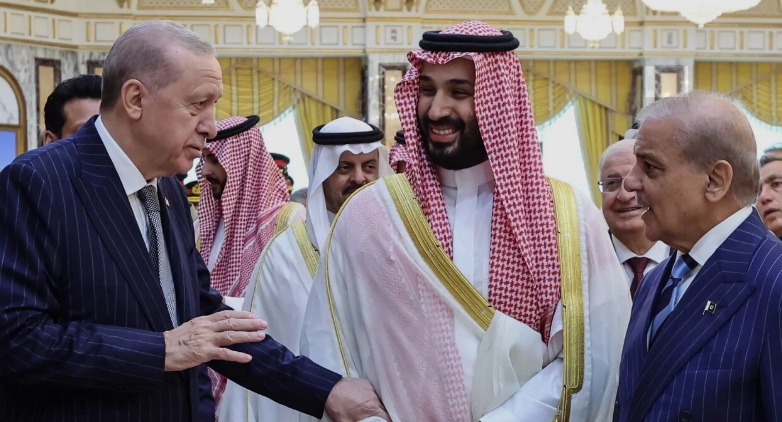
In a major geopolitical development, leaders from Saudi Arabia, Turkey, and Pakistan formally signed the Mecca Joint Defense Agreement during a high-level summit held at Al-Safa Palace in Mecca. The trilateral agreement, signed by Saudi Crown Prince Mohammed bin Salman, Turkish President Recep Tayyip Erdogan, and Pakistani Prime Minister Shehbaz Sharif, establishes a collective security framework among three of the most influential military and economic powers in the Islamic world. The core clause of the official joint declaration establishes that an armed attack against any one of the three participating signatory states shall be considered an act of aggression against all three members.

The defense pact creates a comprehensive strategic alliance that combines Saudi Arabia’s considerable financial resources, Turkey’s advanced defense industry and NATO-standard manufacturing, and Pakistan’s substantial military manpower and nuclear capability. Grounded in Article 51 of the United Nations Charter, which recognizes the inherent right of individual and collective self-defense, the agreement commits the three nations to enhanced intelligence sharing, joint military training exercises, strategic personnel exchanges, and collaborative defense technology projects. Defense analysts note that while the arrangement establishes a powerful collective deterrent capability, it currently operates without an integrated military command structure or permanently assigned joint forces.

The signing of the agreement occurs against a backdrop of escalating security friction across West Asia, where regional security dynamics have been increasingly tested by ongoing military engagements involving regional powers and non-state armed groups. Official representatives from the participating nations emphasized that the Mecca Joint Defense Agreement is strictly defensive in nature and does not conflict with existing international security commitments, such as Turkey’s long-standing obligations within NATO. Geopolitical observers view the tripartite pact as a significant milestone in regional burden-sharing, demonstrating an increasing initiative among regional powers to construct autonomous security frameworks.

Continue Reading

Leaders

The Modern Chief Executive: Balancing Short-Term Margins with Radical Innovation

Published

on

Chief Executive Officers in 2026 are tasked with executing an ambitious dual mandate: delivering consistent quarterly profit margins to public markets while simultaneously driving aggressive, radical technological innovation to prevent business model obsolescence. Navigating this tension requires agile leadership, ambidextrous corporate structures, and clear strategic focus.

Managing the Tension Between Efficiency and Growth
In an economic environment defined by elevated borrowing costs and rapid technological change, CEOs cannot afford to choose between operational discipline and disruptive growth. Executives must run efficient core operations while dedicating significant capital and talent toward next-generation business opportunities.

Successful leaders implement ambidextrous organizational structures:
– Core Operational Units: Managed for high efficiency, process optimization, and incremental margin improvement.
– Innovation Incubators: Autonomous, cross-functional teams tasked with developing disruptive products, testing new business models, and experimenting with emerging technologies.

Empowering Decentralized Decision-Making
To maintain organizational speed in fast-moving industries, top CEOs are reducing rigid corporate hierarchies and empowering decentralized operational units. Pushing decision-making authority closer to front-line customer teams allows business units to adapt rapidly to market feedback and competitive threats.

Decentralized leadership frameworks require setting clear strategic boundaries and measurable performance key performance indicators (KPIs). When local teams understand the broader corporate vision, they can make autonomous decisions without introducing operational or brand risks.

Cultivating a Culture of Psychological Safety and Rapid Learning
Radical innovation inherently involves experimentation and occasional project failures. Progressive CEOs foster workplace cultures characterized by psychological safety, where employees are encouraged to take calculated risks and share key learnings from unsuccessful initiatives without fear of professional penalty.

By celebrating intelligent experimentation and rapid iteration, leaders accelerate organizational learning cycles, allowing companies to pivot away from underperforming projects quickly and double down on validated growth opportunities.

Executive Leadership Imperatives
1. Build Ambidextrous Organizations: Balance cost discipline in legacy operations with dedicated capital allocation for disruptive growth initiatives.
2. Delegate Operational Decision-Making: Empowers regional and functional teams to act autonomously within clearly defined strategic parameters.
3. Normalize Iterative Learning: Create psychological safety to encourage calculated risk-taking and rapid organizational adaptation.

Continue Reading

Leaders

Chief Technology Officers as Business Drivers: Bridging Digital Architecture and Revenue

Published

on

The role of the Chief Technology Officer (CTO) has evolved from managing enterprise infrastructure and IT maintenance into serving as a primary architect of corporate revenue growth and business model strategy. In 2026, progressive CTOs work alongside CEOs and CFOs to align digital technology investments directly with commercial objectives and enterprise value creation.

Translating Complex Engineering into Commercial Value
Historically, corporate technology departments were frequently treated as cost centers focused on software deployment and server uptime. Today, leading CTOs position engineering capabilities as core competitive advantages that enable new revenue channels and superior customer retention.

Effective CTOs possess the unique capability to translate complex technical concepts—such as microservices architecture, artificial intelligence model training, and post-quantum security—into clear business metrics. By demonstrating how digital infrastructure investments lower customer acquisition costs or accelerate time-to-market, CTOs secure strategic buy-in from executive boards.

Designing Scalable, Modular Software Architectures
To support agile business expansion, CTOs are prioritizing modular, API-driven software architectures. Legacy monolithic software systems are being systematically replaced with cloud-native microservices that allow rapid feature integration and flexible third-party software partnerships.

A modular software stack enables enterprises to pivot service offerings instantly in response to shifting market conditions. Whether expanding into new international markets or embedding fintech solutions into existing products, flexible system architecture provides the foundation for rapid commercial scaling.

Attracting and Retaining Elite Engineering Talent
In a highly competitive global market for technical talent, the most effective CTOs focus heavily on developer experience and engineering culture. High-performing software engineers thrive in environments that offer modern development tools, continuous learning opportunities, and minimal administrative bureaucracy.

CTOs who build transparent, mission-driven engineering organizations that empower developers to solve complex, meaningful problems maintain significantly higher talent retention rates, driving long-term innovation and system stability.

Key CTO Leadership Strategies
1. Align Tech Architecture with Business KPIs: Ensure every technology investment delivers measurable improvements in revenue, customer conversion, or operational cost reduction.
2. Build Modular, Cloud-Native Systems: Transition legacy monolithic codebases into modern microservices to maximize business agility.
3. Invest in Engineering Culture: Prioritize high-quality developer workflows and career growth pathways to retain top-tier software talent.

Continue Reading

Trending