How Intel $15B Stock Offering Will Impact Investors and he best course of action
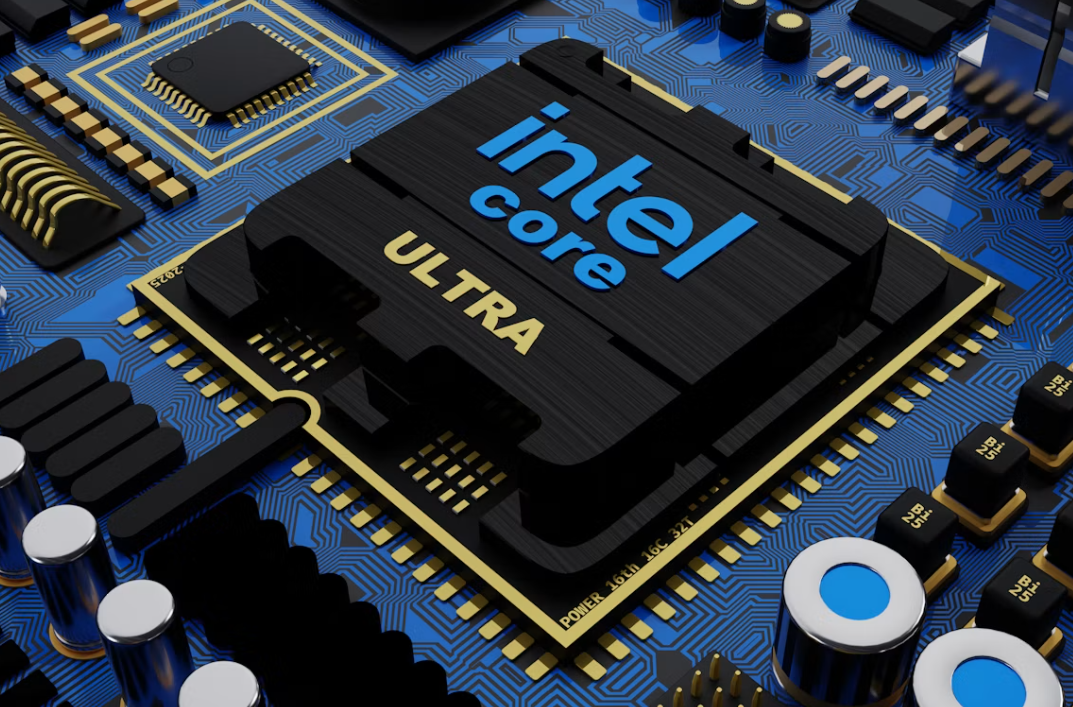
When Intel Corporation announced a proposed $15 billion public offering of common stock—a transaction that quickly expanded to $20 billion and ultimately raised $23 billion following full underwriter option exercises—the semiconductor landscape witnessed one of the largest corporate equity capital raises in recent history. Priced at $95 per share, the deal issued approximately 242 million new shares to institutional buyers.
For retail and institutional investors, a equity raise of this magnitude introduces immediate financial trade-offs. Evaluating the core impacts on shareholders clarifies the strategic course of action moving forward.
The Mechanics: Immediate Shareholder Dilution vs. Balance Sheet Fortification
The most direct impact of Intel’s massive capital raise is share dilution. By issuing ~242 million new shares, existing shareholders see their equity percentage ownership reduced.
Earnings Per Share (EPS) Compression: With more shares outstanding, future net income is divided across a wider share base. This creates temporary friction for short-term valuation metrics.
Balance Sheet Stability: Conversely, raising $23 billion in equity rather than issuing high-yield debt protects Intel’s investment-grade credit rating. In an environment of elevated interest rates, avoiding billions in annual debt servicing costs provides flexibility for long-term research and development.
Strategic Rationale: Capitalizing the Foundry & AI Roadmap
Wall Street’s initial willingness to absorb this supply shift stems from Intel’s operational turnaround and capital-intensive strategy:
Foundry & Advanced Packaging Infrastructure: Building leading-edge semiconductor fabrication facilities (fabs) and 3D silicon packaging infrastructure requires tens of billions in capital expenditures. The proceeds fund tool acquisitions and cleanroom buildouts necessary to compete directly with external foundries.
Server & Agentic AI Demand: Surge in demand for server CPUs (such as the Xeon 6 platform) and custom AI accelerators has pushed Intel’s factory capacity to its limit. The cash injection funds immediate production scaling to capture enterprise demand.
Temporary price pressure as the market digests excess supply.
Strategic entry point if the stock pulls back below the $95 offering price.
Growth Runway
Lower risk of corporate debt overhang or solvency stress.
Direct exposure to foundry expansion and physical AI hardware demand.
Execution Risk
Success depends on management converting capital into high-margin yields.
Stock remains sensitive to fab execution milestones and customer wins.
The Best Course of Action for Investors
Navigating a massive stock offering depends on your investment horizon and current portfolio allocation:
1. For Existing Long-Term Holders: Hold & Monitor Execution
Selling into post-offering price weakness turns temporary paper dilution into realized losses. Because Intel secured clean capital to fund its multi-year turnaround without taking on expensive debt, long-term investors should hold positions. The key execution metrics to watch over the next 2–4 quarters are foundry gross margins, yield progress on advanced process nodes, and external customer commitments.
2. For Prospective Buyers: Dollar-Cost Average Near the Offering Base
When stock trades near or slightly below the institutional offering price ($95/share), it creates an entry window where institutional anchor investors priced the business. Instead of committing full positions at once, use dollar-cost averaging (DCA) over 3 to 6 months to build a position while the market digests the new share supply.
3. For Short-Term Traders: Exercise Caution
In the near term, large equity offerings often create a “supply overhang,” keeping price action range-bound while institutional underwriters balance market inventory. Short-term traders should wait for the stock to establish a clear technical consolidation floor above major moving averages before taking tactical long positions.
Intel’s upsized $23 billion capital raise is a classic trade-off: short-term share dilution in exchange for long-term balance sheet strength. For patient investors who believe in the global expansion of AI compute and domestic semiconductor manufacturing, this equity injection provides the war chest required to turn strategic plans into market share.
U.S. equity markets posted strong gains this week, supported by exceptional second-quarter corporate earnings releases across major technology, semiconductor, and platform companies. The S&P 500 reached a new all-time high of 7,757.64, while the Nasdaq Composite advanced 1.3% as investor sentiment was bolstered by robust enterprise profitability and ongoing investments in technology infrastructure.
Strong Earnings Growth Supports Market Highs
Corporate earnings growth for the second quarter of 2026 is tracking at its strongest annual pace since 2021, with S&P 500 profit growth approaching nearly 50% year-over-year. Major technology firms—including Nvidia, Broadcom, Alphabet, and Meta—reported strong quarterly revenue performance, benefiting from sustained enterprise cloud migration and artificial intelligence deployment.
Despite broader macroeconomic headwinds, large-cap technology platforms demonstrated pricing power and operational efficiency, expanding net operating margins while continuing to fund major capital expenditure budgets.
Capital Expenditure Expectations and Investor Focus
While quarterly profit results exceeded consensus estimates, institutional investors are closely analyzing corporate guidance regarding capital expenditure plans. Technology leaders are directing billions of dollars toward high-performance microprocessors, custom server hardware, and next-generation data centers.
Market strategists note that while elevated infrastructure spending temporarily reduces free cash flow metrics for major technology platforms, it reflects long-term enterprise commitments to building core digital infrastructure. Companies that demonstrate clear monetization pathways for their technology investments continue to command valuation premiums.
Market Breadth and Economic Data Reaction
Broad market indexes also reacted positively to recent employment reports, which signaled a cooling labor market. Wall Street interpreted weaker payroll data as a factor that provides the Federal Reserve flexibility to maintain steady interest rates without instituting additional monetary tightening.
Treasury yields eased following the labor update, with the 10-year Treasury yield falling to 4.64%, providing support for growth equities and broad equity valuations.
Stock Portfolio Strategies
1. Focus on Quality Growth Leaders: Prioritize large-cap platforms with strong balance sheets and established pricing power.
2. Monitor Corporate Capex Plans: Evaluate whether enterprise capital spending generates measurable long-term revenue growth.
3. Maintain Portfolio Diversification: Balance mega-cap technology holdings with dividend-paying industrial and utility equities.
Shares in consumer discretionary and travel sector companies advanced sharply this week, highlighted by a dramatic 17.4% surge in Airbnb stock following its second-quarter earnings release. Strong corporate earnings across vacation rental platforms, hospitality chains, and consumer services highlighted resilient household demand for experiential travel and leisure spending.
Consumer Resilience Powers Travel Earnings
Airbnb reported quarterly profit and revenue figures that comfortably beat Wall Street consensus estimates, driven by a record volume of nights and experiences booked globally. Robust demand for international travel and extended residential stays demonstrated that consumers continue to prioritize experiential expenditures within personal budgets.
Major hotel operators and travel service providers similarly highlighted strong average daily room rates (ADR) and solid occupancy figures across primary tourist and business travel destinations.
Margin Expansion Across Consumer Discretionary Platforms
Across the broader consumer discretionary sector, companies successfully navigated variable input costs by leveraging automated customer support systems and dynamic pricing algorithms. Tech-enabled hospitality platforms demonstrated the ability to expand operating margins while scaling inventory supply.
Equity analysts note that digital consumer platforms with low fixed capital requirements continue to generate strong free cash flow, insulating them against elevated interest rates compared to traditional asset-heavy real estate enterprises.
Market Valuation and Consumer Outlook
The rally in travel and consumer service stocks provided positive momentum for broader market averages, contributing to record weekly performances across major indices. Equity strategists emphasize that sustained consumer spending in leisure and hospitality serves as a key indicator of underlying household balance sheet strength.
However, analysts recommend monitoring upcoming consumer price index (CPI) reports and personal income data to ensure wage growth continues to support discretionary spending habits through the second half of the year.
Key Considerations for Equity Investors
– Select Asset-Light Business Models: Target digital consumer platforms that generate high free cash flow margins without heavy capital requirements.
– Evaluate Experiential Consumer Demand: Focus on companies benefiting from structural consumer preference shifts toward travel and experiences.
– Track Consumer Spending Indicators: Monitor upcoming CPI inflation updates to gauge prospective consumer purchasing power.
Shares of Palantir Technologies surged dramatically, vaulting the enterprise data software provider back into a dominant lead position across the technology sector. The sharp upward movement saw Palantir stock rally nearly 10% in active trading, reaching new multi-month high valuations following the publication of its second-quarter 2026 financial performance. The company reported overall quarterly revenue growth of 93% year-over-year to $1.94 billion, comfortably exceeding consensus estimates established by Wall Street equity analysts, who had projected quarterly revenue near $1.80 billion.
A primary catalyst for Palantir’s accelerating commercial momentum was explosive adoption within its domestic business customer base. Commercial revenue generated in the United States expanded by an extraordinary 149% compared to the same period in the prior year, driven by rapidly growing enterprise demand for localized Artificial Intelligence Platforms (AIP). Furthermore, revenue derived from government contracts maintained strong momentum, expanding 90% year-over-year to $809 million. Chief Executive Officer Alex Karp highlighted expanding customer demand for sovereign AI deployment capabilities, emphasizing that private corporations and international government institutions are seeking customized software infrastructure that allows them to maintain direct operational control over proprietary algorithms and confidential data assets.
In light of the exceptional quarterly performance, Palantir executive leadership raised its full-year 2026 corporate revenue guidance to a revised range between $8.15 billion and $8.16 billion, well above previous consensus expectations. Following the announcement, several prominent Wall Street investment banks issued research upgrades and elevated target prices on Palantir stock, citing superior free cash flow conversion and an exceptional Rule of 40 operational score. The company’s expanding market valuation reflects renewed investor confidence in institutional enterprise software platforms that successfully demonstrate clear, measurable monetization pathways for artificial intelligence technology deployments.








 Economics1 week ago
 Economics6 days ago
 Finance1 week ago
 Accounting1 week ago
 Economics1 week ago
 Personal Finance1 week ago
 Economics5 days ago