Connect with us

Accounting

Practice Profile: Providing rare clarity at Accounting for Jewelers

Published

on

Since she founded Accounting for Jewelers in 2013, Mariel Diaz has provided value for her exclusively jewelry-industry clientele, including one quality they find particularly admirable: a lack of judgment.

According to the firm’s recent midyear survey, Accounting for Jewelers’ approximately 53 clients said they appreciated the practice’s good culture and “nonjudgmental and very caring” attitudes, reported Diaz.

“Business owners can feel really messy when they first come to us,” she explained. “We try to work with them and train them on best practices.”

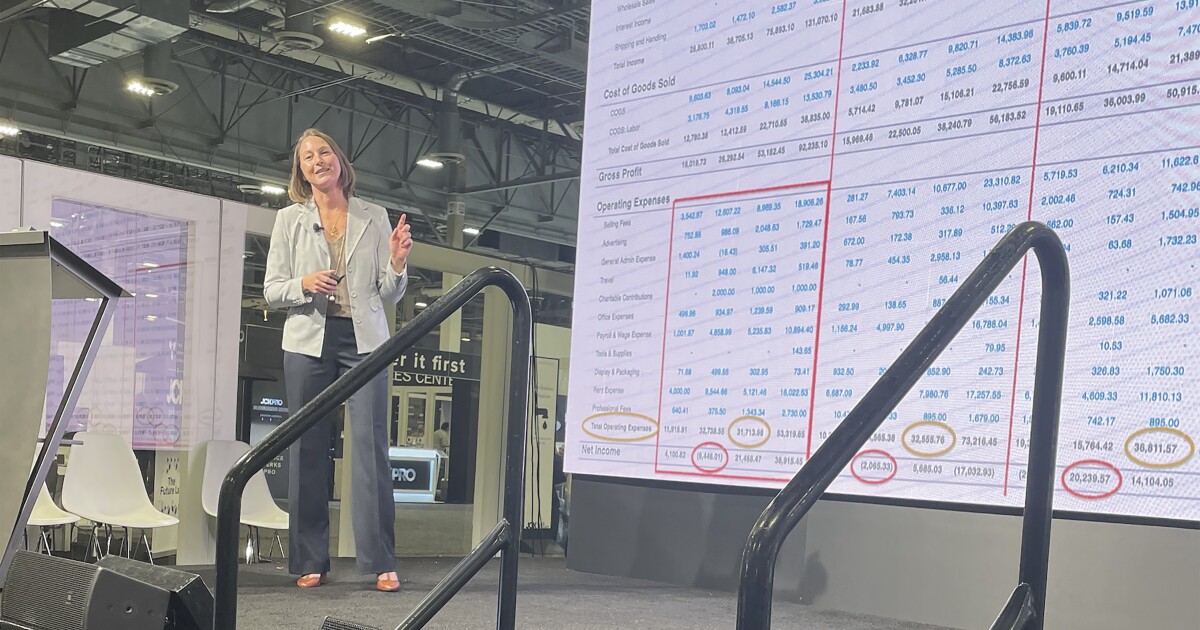
Mariel Diaz of Accounting for Jewelers

Mariel Diaz of Accounting for Jewelers

In addition to an open-minded and supportive environment, clients of Accounting for Jewelers find a like-minded entrepreneur in Diaz, who was a jeweler herself before becoming a bookkeeper. “My first language is jewelry,” Diaz explained. “I grew up in the jewelry industry; I was a gemologist before I was in accounting. I got that creative side from my dad, and my grandma was a bookkeeper, my dad’s bookkeeper, and I helped her with it growing up.”

Both of Diaz’s parents were jewelers, with her dad owning seven boutique jewelry stores and selling wholesale, a path she eventually followed by owning her own jewelry business after training under various independent jewelry designers. But it was the work she did on her father’s books, and moving him from paper ledgers to QuickBooks, that kept her balancing spreadsheets and gemstones.

“It was a side hustle of mine,” she explained. “I did the books for any jeweler I worked for, and I decided I’m a better accountant than jeweler.”

So Diaz ventured into corporate accounting as an accounting assistant, working for a music publishing house in Nashville. Then, after discovering online accounting software Xero and training other jewelers on it, she realized a way to merge her two passions by establishing Accounting for Jewelers.

The firm provides core bookkeeping services including accounting, reconciliation, sales tax and forecasting. And though Diaz stopped providing income tax returns in-house in 2022, it’s on the firm’s long-term radar to bring that service back.

Within the jewelry industry, Accounting for Jewelers’ clients range from brick-and-mortar storefront owners to studio owners to wholesale-focused jewelers to studio artists. And all “have an e-commerce component nowadays,” said Diaz.

The clients also share common pain points, mainly inventory management, according to Diaz, with cash flow also being a challenge. “Jewelry is a very expensive commodity to fund upfront, produce, managing sales and deposits from customers. I understand them first and foremost,” she shared, adding that these relationships help her keep a bond with her father, who passed away: “I essentially work with my dad every day in my clients.”

A deeper understanding

Diaz has the expertise to serve her clients, but also the empathy.

“One of the most common complaints I get from new clients that have worked with multiple accountants over time [is that the accountants] looked at them like they were dumb and didn’t know what they were talking about, and didn’t help them to understand it.”

Accounting for Jewelers, on the other hand, takes the time to explain. “A lot of them are business-savvy,” Diaz said. “They don’t necessarily understand the financials. But being able to relate to them, speak to them caringly, explain things to them in a way they understand — we end up giving them a lot of business strategy on jewelry production, matchmaking with resources. I understand things, from different production types to gemstone dealers, that most accountants wouldn’t understand.”

Diaz enjoys offering this more holistic guidance. “Budgeting and forecasting I love to do,” she said. “It’s something we all need, whether we want it or not.”

Meanwhile, hiring for the practice has been tricky amid a professionwide talent shortage, according to Diaz, who currently oversees a staff of seven that has ranged as high as 12 over the years.

Diaz identifies the problem of finding CPAs or enrolled agents to hire as “everyone wants to work for themselves.”

To help solve for the issue, “I did move offshore, and it was the best decision I ever made,” she shared. “It was a struggle communicating that value to clients, and I feel it’s still an ongoing thing. We educate clients on why we did it and why it is good for them. We offshore in the Philippines and the people are delightful, smart and design-driven. Since COVID, we have struggled with staffing.”

For other firms looking to carve out as specific a vertical as she has, Diaz recommends immersion in the industry,

“Try to learn as much as you can about their business,” she advised. “Go to their industry conferences and trade shows. Eventually be a speaker there if you can. Build up relationships with people in the industry, become a member of nonprofits and charities in the industry. It can be very helpful to network.”

For her part, Diaz plans to boost her accounting acumen, aiming to attain her CPA and CFP licenses, and grow her general knowledge.

“My goal is to improve capacity management,” she said. “I didn’t grow up in a traditional accounting firm, so it’s new to me, improving system efficiencies. My goal long term is that Accounting for Jewelers outlives me.”


Continue Reading

Accounting

AI-Driven Automation and Continuous Accounting Frameworks

Published

on

The accounting profession is undergoing a fundamental structural transition as enterprise finance departments shift from periodic month-end closes toward automated continuous accounting models. By integrating specialized machine learning algorithms directly into enterprise resource planning (ERP) platforms, chief accounting officers are transforming financial reporting from a retrospective exercise into a real-time operational asset.

The Shift from Periodic Close to Continuous Financial Reporting
Traditional accounting workflows heavily relied on manual data reconciliation, spreadsheet calculations, and multi-week closing cycles at the end of each fiscal period. In contrast, continuous accounting frameworks utilize automated software agents to process, validate, and post transactional data in real time as business activities occur.

Automated bank reconciliation tools cross-reference incoming bank feeds, invoice records, and purchase orders automatically. By resolving transactional variances instantly throughout the month, corporate accounting teams eliminate the traditional workload spikes associated with quarterly and annual closes.

Machine Learning in Audit Trails and Anomaly Detection
Advanced natural language processing (NLP) and machine learning tools are redefining internal audit and financial control environments. Automated systems analyze 100% of general ledger entries, identifying anomalous transactions, duplicate payments, and unauthorized journal entries in real time.

Rather than relying on random statistical sampling, corporate internal auditors can focus their attention on high-risk flags automatically surfaced by algorithmic monitoring platforms. This continuous risk assessment strengthens internal controls over financial reporting (ICFR) and significantly reduces fraud risk.

Evolving Roles for Accounting Professionals
As routine data entry and manual reconciliation tasks become fully automated, the skill set required for accounting professionals is shifting toward data analysis, system design, and strategic business advisory.
– Systems Governance: Accountants are increasingly responsible for monitoring algorithmic accuracy and managing data integration pipelines.
– Business Partnership: Finance professionals leverage real-time financial dashboards to advise operational leaders on margin management and working capital allocation.
– Regulatory Compliance Management: Accounting teams utilize automated platforms to ensure compliance with dynamic tax codes and international accounting standards.

Core Implementation Recommendations
1. Deploy Automated Reconciliation Tools: Integrate continuous transaction processing modules into existing enterprise ERP architectures.
2. Establish Algorithmic Governance Controls: Implement strict internal testing protocols to ensure automated accounting rules comply with GAAP/IFRS standards.
3. Reskill Accounting Teams: Invest in training finance staff on data analytics, workflow automation, and predictive financial modeling.

Continue Reading

Accounting

Global ESG Reporting Standards and Double Materiality Compliance

Published

on

Corporate accounting departments face expanding reporting expectations as international sustainability disclosure standards achieve regulatory enforcement across major global jurisdictions. Chief Accounting Officers (CAOs) and corporate controllers are establishing rigorous internal accounting controls to treat Environmental, Social, and Governance (ESG) metrics with the same data precision, auditability, and governance as traditional financial statements.

Regulatory Harmonization Under Global Sustainability Frameworks
The implementation of standardized sustainability reporting frameworks—notably rules established by international sustainability accounting boards—has created unified expectations for public and large private enterprises. Corporations must report standardized metrics covering greenhouse gas emissions (Scope 1, 2, and material Scope 3), energy utilization, workforce demographics, and supply chain governance.

In Europe and other participating international jurisdictions, double materiality principles are mandatory. Under double materiality, organizations must report both how external sustainability risks impact corporate financial performance, and how internal corporate operations affect surrounding environmental and social structures.

Integrating Sustainability Metrics into Core ERP Systems
To provide auditable non-financial data, enterprise organizations are integrating specialized carbon accounting and ESG management platforms directly into core ERP systems. Automated data collectors capture energy utility invoices, logistics fuel consumption metrics, and vendor compliance records in real time.

Establishing automated, traceable data pipelines ensures that non-financial reporting is supported by clear audit trails. This structured approach allows external financial auditors to provide reasonable assurance on sustainability disclosures during annual corporate reporting cycles.

Financial Impacts and Capital Market Disclosure
Accurate ESG reporting directly influences corporate cost of capital and institutional credit ratings. Commercial lenders and institutional asset managers systematically incorporate sustainability metrics into risk pricing models. Companies that demonstrate transparent, verifiable progress in operational energy efficiency and climate risk mitigation benefit from expanded access to green bond markets and lower debt pricing.

Action Steps for Accounting Leadership
1. Implement Double Materiality Frameworks: Conduct comprehensive assessments to identify material financial and operational sustainability metrics.
2. Build Auditable Non-Financial Data Pipelines: Automate ESG data collection within core accounting software to ensure data integrity.
3. Align Sustainability with Annual Financial Filings: Prepare non-financial disclosures concurrently with financial statements to satisfy regulatory audit expectations.

Continue Reading

Accounting

Modernizing Internal Controls: Machine Learning and Continuous Monitoring in Auditing

Published

on

Internal audit departments and corporate risk managers are modernizing internal control frameworks by shifting from periodic sampling techniques to continuous monitoring and machine learning analytics. As operational data volumes increase across enterprise organizations, automated control testing ensures financial integrity, prevents corporate fraud, and streamlines annual audit engagements.

The Limitation of Periodic Audit Sampling
Historically, internal and external auditors evaluated internal controls by reviewing random samples of financial transactions—often analyzing less than five percent of total ledger entries. In complex enterprise environments, periodic sampling methods carry inherent risks of overlooking localized financial misstatements, unauthorized disbursements, or operational control breakdowns.

In 2026, progressive internal audit functions are utilizing automated continuous monitoring platforms that evaluate one hundred percent of financial transactions in real time. Continuous control auditing systems continuously monitor general ledger entries, procurement approvals, and expense reimbursements across all operating subsidiaries.

AI-Powered Fraud Detection and Anomaly Identification
Machine learning models trained on historical corporate financial data excel at identifying subtle transactional anomalies that indicate potential fraud or operational error. Automated systems instantly flag duplicate invoice payments, unapproved vendor creation, unusual journal entry timing, and unauthorized override of authority thresholds.

When an anomaly is detected, the automated auditing platform generates an instant risk alert, allowing internal audit teams to investigate root causes immediately. Early detection prevents minor operational errors from escalating into material weaknesses in financial reporting.

Streamlining External Audit Preparation
Continuous internal control monitoring delivers significant benefits during annual external financial audits. External audit firms can review continuous audit logs and automated control testing documentation, reducing the time required for manual field testing.

This integrated approach lowers overall audit compliance fees, reduces administrative burdens on corporate accounting staff, and provides senior management and audit committees with real-time visibility into the organization’s overall risk profile.

Core Implementation Guidelines
1. Transition to 100% Data Testing: Replace legacy sampling methods with automated continuous audit monitoring systems.
2. Deploy Anomaly Detection Algorithms: Implement machine learning models to identify unauthorized transactions and operational control overrides.
3. Align Internal and External Audit Workflows: Coordinate continuous control testing protocols with external auditors to optimize annual compliance cycles.

Continue Reading

Trending