
Accounting
Art of Accounting: The end of this year’s tax season


Enjoy complimentary access to top ideas and insights — selected by our editors.
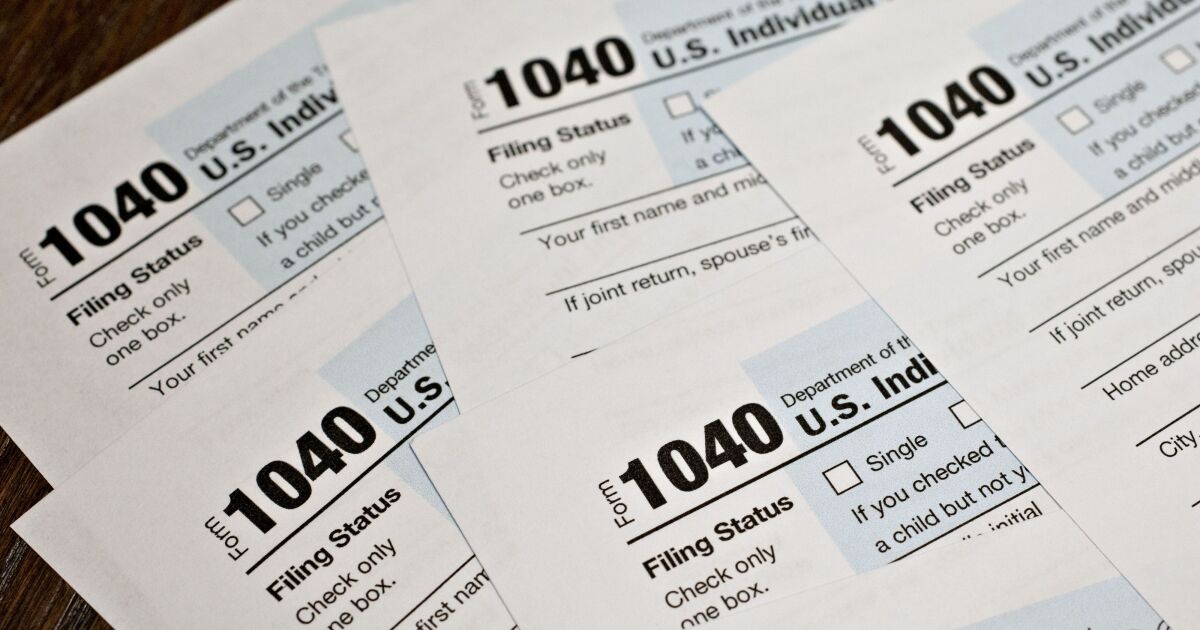
My original headline was “The end of tax season,” but that is not so. It is the end of this year’s tax season.
If you were designing a CPA practice from scratch, what would you do about tax season? Would you keep it as it is for you, or would you make some changes or possibly eliminate it? It is doubtful you would eliminate it. It is an essential part of what we do and generates substantial revenue and connections with clients and provides growth opportunities for staff. For those looking to grow their practice, it gives them an inside look at their client’s personal, financial and investment affairs.
I’ve always liked tax season for all those reasons. When I was employed as a staff accountant I had no control over my added hours and did what I was supposed to do. But it was a lot less burdensome than it is today. My overtime was three hours for each of two nights a week and five hours on the weekend and this started the second week of January. A downside was that there was no tax work in January and I spent my time with “busy” projects. When I had my own practice (with partners), tax season never started earlier than the first week in February with a weekend day from 9:30 to 5:00. The nights started when the work was there to be done — usually not until the middle of February.
We also gave staff a floating weekend day in February and the weekend after March 15; and we paid for every extra hour worked on the next paycheck. We never gave a bonus but gave a nice cash gift to everyone on April 15 before we “closed” the office. We stayed closed for the next day too. Tax season was a nice time of year, and I do not remember many complaints. We needed our staff to work as hard as they could but deliberately enough so they would avoid errors. Errors were the bane of our existence and were to be avoided at all costs. We did good with tax season!
Getting back to you, what would you do to make tax season enjoyable for you and your staff to experience the benefits from it? What changes would you make? Do you have the resolve to carry those changes through for the entire tax season? We did! We did these things, not because we liked to, but because we had to. We were running a business. That business happened to be a CPA practice, and one of our service lines was preparing individual tax returns.
We understood that if we were to grow, we would need staff to do much of our work. We also understood that what they did needed to be done the way we wanted them to do it. We set up processes, procedures and checklists for everything the staff would do. They were told they had to follow them. Our model was the McDonalds restaurants where it worked because everyone followed the processes, procedures and checklists. We wanted to replicate that McDonalds mentality and worked hard at it, training our staff to work the way we wanted them to.
Not following a process, procedure or checklist was a big deal; a violation of the terms of their employment, and we held them to it. Another thing that was a must was they needed to check their work before they handed it upward for review. We showed them how to check their work and expected them to check it. If they didn’t, they violated the terms of their employment.
I calculated that correcting errors on tax returns added a day’s work every week. Eliminating errors reduced their work seven or eight hours a week. That was time they had for themselves, since they needed to only work the hours necessary to handle their work assignments. No one was penalized if they went home early or worked less than some others. Some staff members worked quicker than others and some slower, but no one worked extra because they had to stay to correct their errors. Some did, and if it became a regular habit, they were no longer permitted to work for our great firm. We did not believe it made sense to carry nonperformers just to have a “body” looking like they were doing work.
It was fortunate that all our partners bought into our methods. Perhaps not happily when a new procedure was established, but as the results came in, they became believers. To be frank, not every manager did, and they were soon taken off our payroll.
I certainly do not know how most firms operate, but I know how a lot of firms do. The successful ones have procedures and make sure they are followed. There are a lot of other reasons that contribute to success, but this is a big giant step toward having a successful tax season.
I opened this column asking how you would design a successful tax season. You should work on that, and having everyone follow your processes, procedures and checklists is a fine way to start.
Do not hesitate to contact me at





U.S.-China AI Competition Intensifies as Washington Pushes Allies to Choose Sides

Nvidia’s Potential $3 Billion SB Energy Investment Could Reshape AI Infrastructure

U.S. Retail Sales Fall for the First Time in Nine Months as Consumer Spending Slows

Armanino adds Strategic Accounting Outsourced Solutions

New 2023 K-1 instructions stir the CAMT pot for partnerships and corporations

Tax Strategy: Employee Retention Credit update
-

 Economics1 week ago
Top 65 Largest Economies in the World for 2027
-

 Economics1 week ago
US Inflation Matches Wall Street Projections as Core CPI Cools to 2.5%: Key Implications for Economy and Markets
-
 Economics4 days ago
U.S. Retail Sales Fall for the First Time in Nine Months as Consumer Spending Slows
-

 Economics5 days ago
Macroeconomic Impact of Global Energy Shocks and Shipping Route Realignment in 2026
-

 Finance5 days ago
Cross-Border Settlement Innovation and Real-Time Payment Architecture
-

 Accounting5 days ago
AI-Driven Automation and Continuous Accounting Frameworks
-

 Personal Finance5 days ago
Navigating Residential Real Estate and Mortgage Strategy
-

 Technology5 days ago
The Shift to On-Device Edge AI and Advanced Microprocessor Architecture in 2026