
Accounting
Expect a tempest in tax under Trump

Expect plenty of changes in the world of tax under the new administration.
On Inauguration Day, President Donald Trump signed an executive order calling for a longer
Republicans in Congress are currently negotiating the contours of an extension of Trump’s signature tax legislation, the Tax Cuts and Jobs Act of 2017, along with his campaign promises of exempting certain kinds of income, such as tips, Social Security income and overtime, from taxes.
Mark Everson, a former IRS commissioner who is currently vice chairman of Alliant, a tax consulting firm in Washington, D.C., believes the administration under Treasury Secretary Scott Bessent will focus on the international front with tariffs and sanctions.
“It will be relatively more aggressive in the international arena,” said Everson. However, he believes the OECD tax deal would only be implemented through an act of Congress in the aftermath of Trump’s executive order.
(For insights on the new administration’s impact on other areas of regulation, like the PCAOB, see
He also expects to see changes at the IRS, with less emphasis on enforcement and diversity, equity and inclusion programs. “Consistent with the move against DEI, my guess would be a return to enforcement without scrutiny of results by racial grouping,” said Everson. “There’s a lot of discussion of the impact disproportionately on minorities through the Earned Income Tax Credit in terms of audit rates. I don’t think that will be considered in this approach going forward, given what they’ve already done with the abolition of the DEI offices, including, as I understand it, at the service.”
However, he expects to see continuing improvements in taxpayer service. “I do think that there will be common ground in terms of emphasis on service improvements,” said Everson. “I’m not suggesting that everything at the IRS is going to stop. Hardly. The Republicans feel very strongly about the need for good service, and I think that will be a focus of the administration once, presumably, Commissioner [Billy] Long is in office. I think there will be continuation and a great deal of focus on privacy versus efficiency. They’ll want to make the improvements on the system side, which are already underway, but I do think there will be a great deal of focus on privacy.”
Hiring freeze
The hiring freeze at the IRS could be a concern, however.
“Will they be able to maintain adequate personnel? Time will tell on that, but I think we’ll know fairly quickly,” said Everson. “The filing season has already started, and I think that the impact of departures on the workforce will be felt over time. I’m not overly concerned about the filing season, per se. Over a period of time, if people are leaving government — and the IRS does have a very high component of people who have been working from home — because that is no longer allowed, what will the impact be there? That’s very much in the mix, but it will take time to feel the effects of that.”
He expects to see more of a focus at the IRS on process in terms of enforcement activities. Trump’s proposal to create an “External Revenue Service” to collect tariffs and duties could also introduce complications, since many of those functions are already performed at the Department of Homeland Security rather than the Treasury Department.

Al Drago/Bloomberg
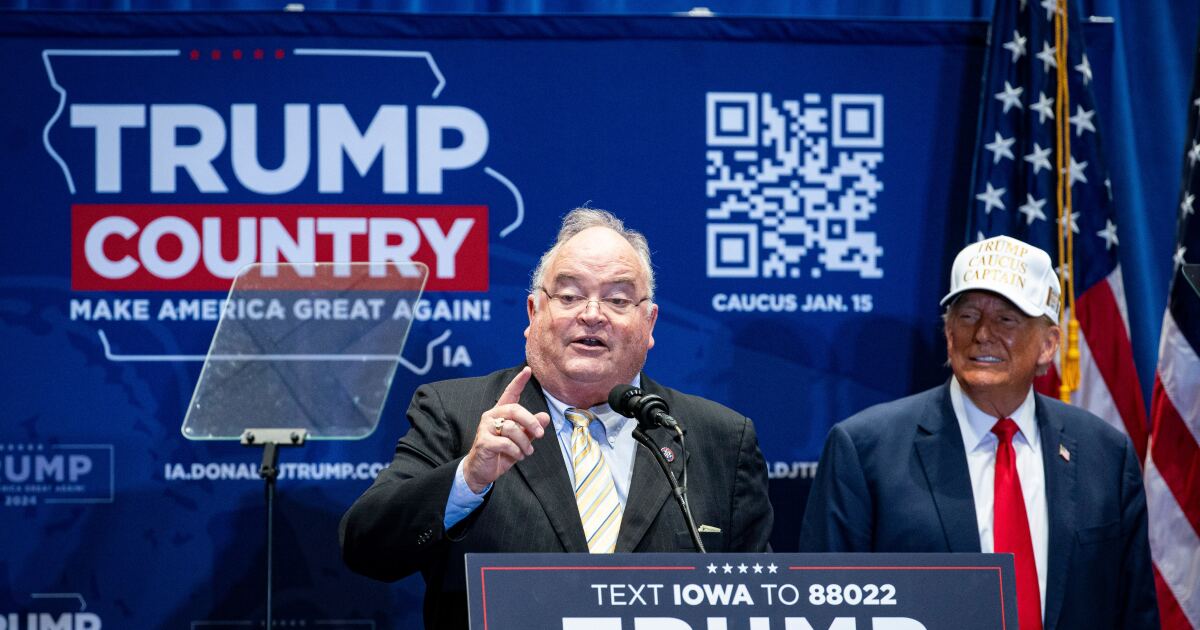
After the election, Trump named former Rep. Billy Long, R-Missouri, to be the
The Trump administration and Republicans in Congress have been moving to
“Without the IRA funding — and as it stands today, there’s no funding coming from any additional sources — it is certainly less likely that the IRS will be able to conduct effective audits of partnerships,” said Colin Walsh, principal and practice leader of tax advocacy and controversy services at Top 10 Firm Baker Tilly. “Something could change tomorrow, and Billy Long could become commissioner and figure out a different way to finance it. Billy Long will have his own ideas, and we’re all curious to see how he’d like to build the IRS. There’s a big push to get federal workers back into the office. What impacts might that have? Maybe the theory could be that people working in an office are going to be more effective and more efficient than people working remotely. I don’t think at this stage we can even predict, if Billy Long becomes the commissioner, what that will look like, but we can say that it is going to be different. I think comfortably, we could say it’s going to be different than what it would have been like if the IRS had $80 billion and Danny Werfel, versus $40 billion and Billy Long. It is different objectively.”
“It doesn’t mean that it will necessarily be less stringent,” he noted. “We just don’t know, whereas six months ago, we all had a pretty good idea of where this was headed, because the IRS was explicit in saying what they were going to do, creating a partnership audit task force, auditing 80 of the largest partnerships, and in practice, we were seeing that last year.”
The IRS and the Treasury may also cut back on labeling tax transactions such as micro-captive insurance as “transactions of interest.”
“The IRS lost all those cases on making things transactions of interest or reportable transactions by notice,” said Bill Smith, managing director of the national tax office at Top 25 Firm CBIZ Advisors. “They now have to go through the regulatory process, with proposed regulations, a notice and comment period, all of that. Having nothing to do with the change of administration, they suffered a pretty serious setback there. They suffered a setback with the elimination of Chevron deference. It’s all taxpayer favorable, but is it good, sound policy? The IRS collects something like 97% of the revenue for the United States. I don’t know if Elon Musk is going to be able to cut that much out. If you’re going to eliminate a lot of the income, you’d better start eliminating the expenses too.”





U.S.-China AI Competition Intensifies as Washington Pushes Allies to Choose Sides

Nvidia’s Potential $3 Billion SB Energy Investment Could Reshape AI Infrastructure

U.S. Retail Sales Fall for the First Time in Nine Months as Consumer Spending Slows

Armanino adds Strategic Accounting Outsourced Solutions

New 2023 K-1 instructions stir the CAMT pot for partnerships and corporations

Tax Strategy: Employee Retention Credit update
-

 Economics1 week ago
US Inflation Matches Wall Street Projections as Core CPI Cools to 2.5%: Key Implications for Economy and Markets
-
 Economics5 days ago
U.S. Retail Sales Fall for the First Time in Nine Months as Consumer Spending Slows
-

 Economics6 days ago
Macroeconomic Impact of Global Energy Shocks and Shipping Route Realignment in 2026
-

 Accounting6 days ago
AI-Driven Automation and Continuous Accounting Frameworks
-

 Finance6 days ago
Cross-Border Settlement Innovation and Real-Time Payment Architecture
-

 Personal Finance6 days ago
Navigating Residential Real Estate and Mortgage Strategy
-

 Technology6 days ago
The Shift to On-Device Edge AI and Advanced Microprocessor Architecture in 2026
-
 Economics3 days ago
Nvidia’s Potential $3 Billion SB Energy Investment Could Reshape AI Infrastructure