
Accounting
IRS agrees to share tax data on immigrants for criminal cases

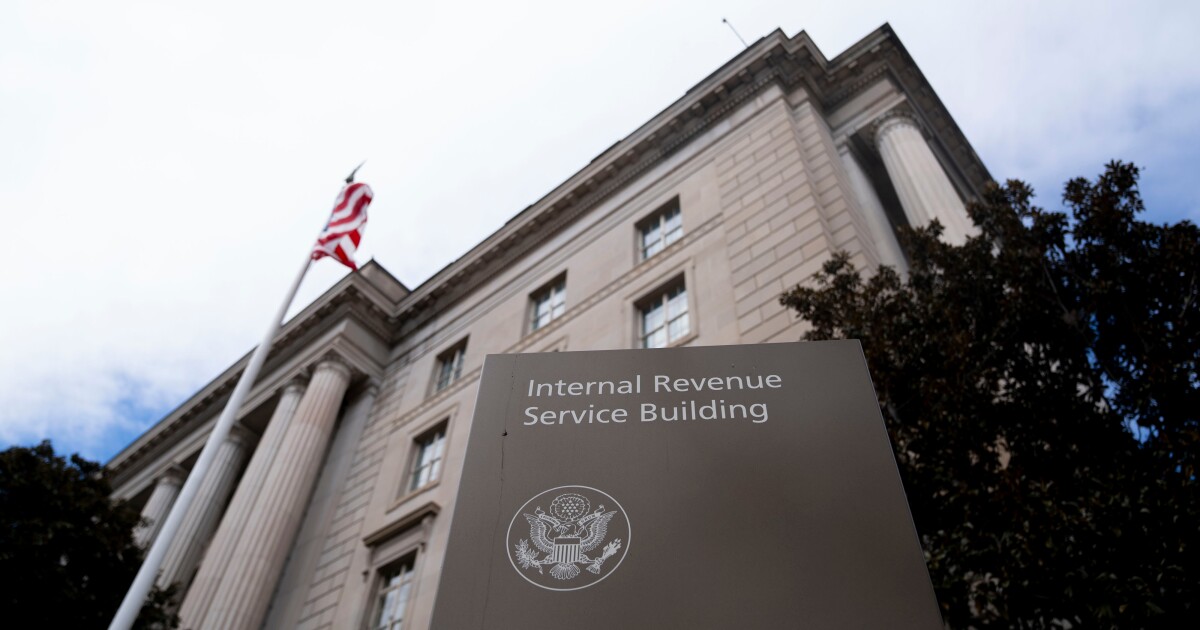

The Internal Revenue Service will give taxpayer data about immigrants to U.S. authorities conducting criminal investigations, saying it will support President Donald Trump’s pledge to deport people illegally in the U.S.
A memorandum of understanding was struck Monday between the Treasury Department, which oversees the IRS, and the Department of Homeland Security to share information in response to valid law enforcement requests. The agreement was part of documents filed over a lawsuit by four immigration groups seeking to slow the Trump administration’s mass deportation policies.
The groups sued to block the IRS from potentially sharing taxpayer information about millions of non-citizens who don’t have Social Security numbers but may pay taxes after obtaining Individual Taxpayer Identification Numbers. While federal officials say the agreement includes safeguards and applies only to criminal matters, immigrant and tax groups warn that the IRS shouldn’t reverse longstanding privacy policies to target migrants.
“The MOU only permits the lawful exchange of information for taxpayers who are under criminal investigation or subject to a criminal proceeding,” the Justice Department’s tax division said in a court filing. That agreement “simply establishes procedures and guardrails for ensuring that such requests and subsequent transfers of information are handled lawfully and securely.”
Being in the country without authorization is not a crime by itself, but the Trump administration has referred to those crossing the border illegally as criminals and has enlisted the IRS in its crackdown.
Access to sensitive tax data would “expose millions of taxpayers to the administration’s aggressive immigration enforcement tactics,” the groups, including Centro de Trabajadores Unidos, said in the complaint. The IRS’s computer systems “house the single largest source of the names and current addresses of individuals not authorized to be present in the United States.”
A spokesperson for the Treasury said that the agreement establishes a “clear and secure process to support law enforcement’s efforts to combat illegal immigration.”
“The bases for this MOU are founded in longstanding authorities granted by Congress, which serve to protect the privacy of law-abiding Americans while streamlining the ability to pursue criminals,” the spokesperson said.
The Tax Law Center at the New York University School of Law said in a report last week that an IRS-Homeland Security data-sharing agreement could erode voluntary tax compliance, a key to the U.S. tax system. It may deter people from filing taxes out of fear of immigration enforcement, even in error, potentially costing billions in lost revenue. The move also breaks decades of IRS assurances that immigrants’ tax data would remain confidential.
Treasury Secretary Scott Bessent and Homeland Security Secretary Kristi Noem signed the agreement, which allows for sharing tax information for crimes related to migration. One involves aliens who willfully stay in the U.S. for 90 days after a removal order and another involves immigrants who reenter the U.S. after a removal order, according to the memo and the court filing.
The groups that filed the lawsuit also include Immigrant Solidarity DuPage, Somos Un Pueblo Unido and Inclusive Action for the City. They said that a section of the Internal Revenue Code, known as 6103, forbids the Treasury Department from sharing return information for civil immigration enforcement.
“All the evidence suggests DHS wants this information to find undocumented workers, and that’s not a permissible basis for sharing confidential taxpayer information,” said Nandan Joshi, a lawyer for the plaintiffs with Public Citizen. “The only way to get confidential information to locate potential criminals is to get a court order.”
They are seeking a preliminary injunction to prevent the IRS from transferring the data until the court issues a final decision. U.S. District Judge Dabney Friedrich previously denied their request for a temporary block in Washington federal court.
Section 6103 of the Tax Code allows sharing information in criminal investigations and proceedings. In 2017, the complaint says, the IRS said the code didn’t permit it to share tax data with U.S. Immigration and Customs Enforcement.
“To entertain and enter into an information sharing agreement,” the IRS “would have to change its interpretation of section 6103” and provide “a reasoned explanation for that change,” the groups said in their complaint.
A Department of Homeland Security spokesperson said that the government is “sharing information across the federal government to solve problems.”
“Information sharing across agencies is essential to identify who is in our country, including violent criminals, determine what public safety and terror threats may exist so we can neutralize them, scrub these individuals from voter rolls, as well as identify what public benefits these aliens are using at taxpayer expense,” the spokesperson said.
The case is Centro de Trabajadores Unidos v. Bessent, 25-cv-677, US District Court (District of Columbia).
— With assistance from Daniel Flatley, Zoe Tillman, Hadriana Lowenkron and Alicia A. Caldwell





U.S.-China AI Competition Intensifies as Washington Pushes Allies to Choose Sides

Nvidia’s Potential $3 Billion SB Energy Investment Could Reshape AI Infrastructure

U.S. Retail Sales Fall for the First Time in Nine Months as Consumer Spending Slows

Armanino adds Strategic Accounting Outsourced Solutions

New 2023 K-1 instructions stir the CAMT pot for partnerships and corporations

Tax Strategy: Employee Retention Credit update
-

 Economics1 week ago
US Inflation Matches Wall Street Projections as Core CPI Cools to 2.5%: Key Implications for Economy and Markets
-
 Economics5 days ago
U.S. Retail Sales Fall for the First Time in Nine Months as Consumer Spending Slows
-

 Economics6 days ago
Macroeconomic Impact of Global Energy Shocks and Shipping Route Realignment in 2026
-

 Accounting6 days ago
AI-Driven Automation and Continuous Accounting Frameworks
-

 Finance6 days ago
Cross-Border Settlement Innovation and Real-Time Payment Architecture
-

 Personal Finance6 days ago
Navigating Residential Real Estate and Mortgage Strategy
-

 Technology6 days ago
The Shift to On-Device Edge AI and Advanced Microprocessor Architecture in 2026
-
 Economics3 days ago
Nvidia’s Potential $3 Billion SB Energy Investment Could Reshape AI Infrastructure