Connect with us

Accounting

Senate unveils plan to fast-track tax cuts, debt limit hike

Published

on

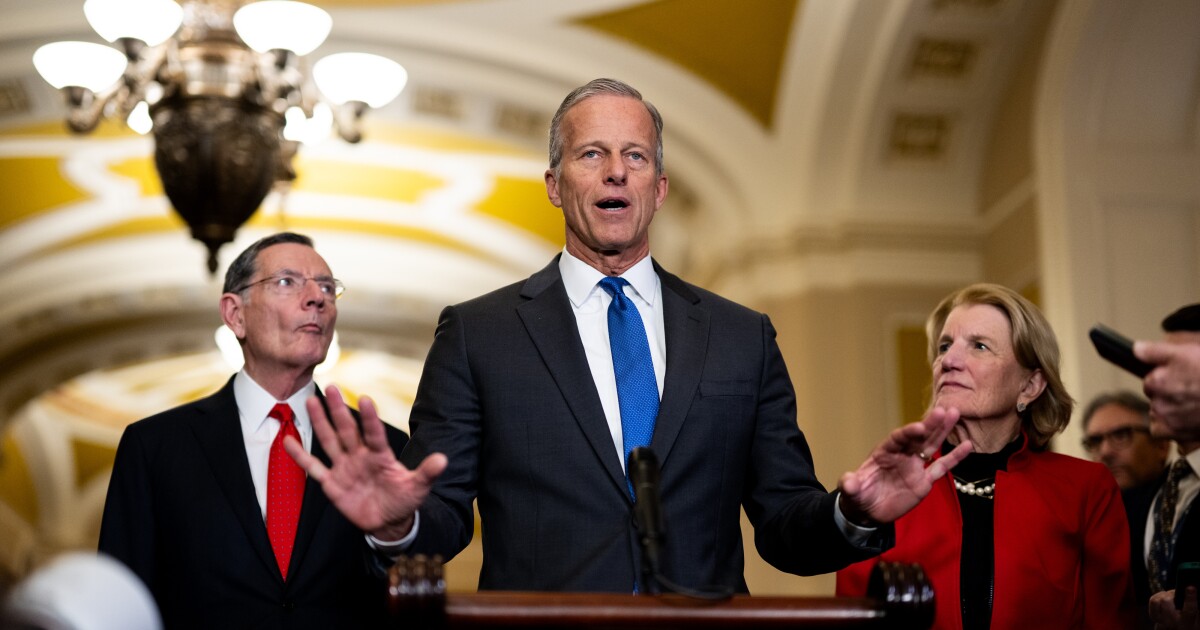
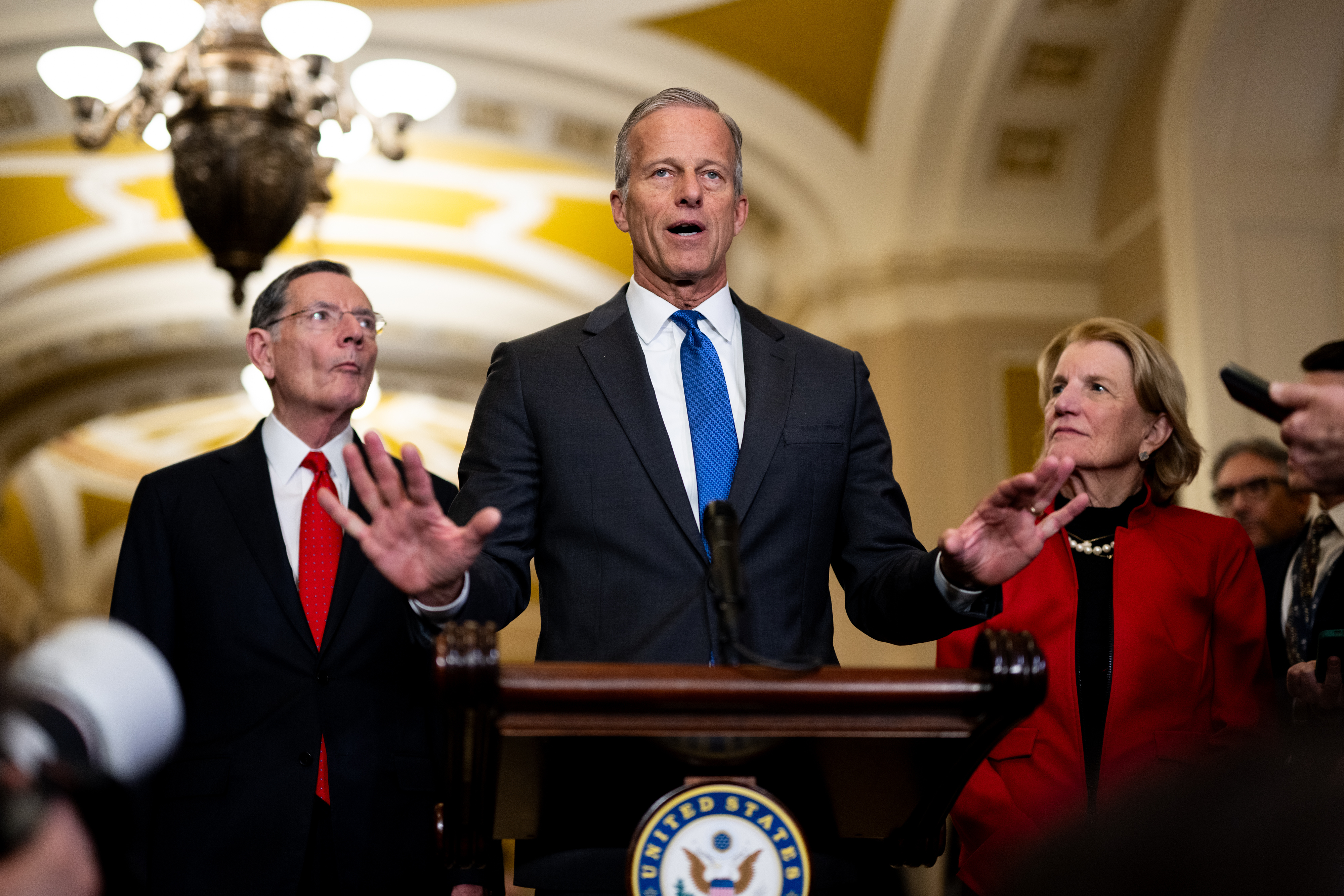
Senate Republicans unveiled a budget blueprint designed to fast-track a renewal of President Donald Trump’s tax cuts and an increase to the nation’s borrowing limit, ahead of a planned vote on the resolution later this week. 

The Senate plan will allow for a $4 trillion extension of Trump’s tax cuts and an additional $1.5 trillion in further levy reductions. The House plan called for $4.5 trillion in total cuts.

Republicans say they are assuming that the cost of extending the expiring 2017 Trump tax cuts will cost zero dollars.

The draft is a sign that divisions within the Senate GOP over the size and scope of spending cuts to offset tax reductions are closer to being resolved. 

Lawmakers, however, have yet to face some of the most difficult decisions, including which spending to cut and which tax reductions to prioritize. That will be negotiated in the coming weeks after both chambers approve identical budget resolutions unlocking the process.

The Senate budget plan would also increase the debt ceiling by up to $5 trillion, compared with the $4 trillion hike in the House plan. Senate Republicans say they want to ensure that Congress does not need to vote on the debt ceiling again before the 2026 midterm elections. 

“This budget resolution unlocks the process to permanently extend proven, pro-growth tax policy,” Senate Finance Chairman Mike Crapo, an Idaho Republican, said. 

The blueprint is the latest in a multi-step legislative process for Republicans to pass a renewal of Trump’s tax cuts through Congress. The bill will renew the president’s 2017 reductions set to expire at the end of this year, which include lower rates for households and deductions for privately held businesses. 

Republicans are also hoping to include additional tax measures to the bill, including raising the state and local tax deduction cap and some of Trump’s campaign pledges to eliminate taxes on certain categories of income, including tips and overtime pay.

The plan would allow for the debt ceiling hike to be vote on separately from the rest of the tax and spending package. That gives lawmakers flexibility to move more quickly on the debt ceiling piece if a federal default looms before lawmakers can agree on the tax package.

Political realities

Senate Majority Leader John Thune told reporters on Wednesday, after meeting with Trump at the White House to discuss the tax blueprint, that he’s not sure yet if he has the votes to pass the measure.

Thune in a statement said the budget has been blessed by the top Senate ruleskeeper but Democrats said that it is still vulnerable to being challenged later.

The biggest differences in the Senate budget from the competing House plan are in the directives for spending cuts, a reflection of divisions among lawmakers over reductions to benefit programs, including Medicaid and food stamps. 

The Senate plan pares back a House measure that calls for at least $2 trillion in spending reductions over a decade, a massive reduction that would likely mean curbing popular entitlement programs.

The Senate GOP budget grants significantly more flexibility. It instructs key committees that oversee entitlement programs to come up with at least $4 billion in cuts. Republicans say they expect the final tax package to contain much larger curbs on spending.

The Senate budget would also allow $150 billion in new spending for the military and $175 billion for border and immigration enforcement.

If the minimum spending cuts are achieved along with the maximum tax cuts, the plan would add $5.8 trillion in new deficits over 10 years, according to the Committee for a Responsible Federal Budget.

The Senate is planning a vote on the plan in the coming days. Then it goes to the House for a vote as soon as next week. There, it could face opposition from spending hawks like South Carolina’s Ralph Norman, who are signaling they want more aggressive cuts. 

House Speaker Mike Johnson can likely afford just two or three defections on the budget vote given his slim majority and unified Democratic opposition.


Continue Reading

Accounting

FASB Standardizes Carbon Offsets Accounting Rules

Published

on

FASB Standardizes Carbon Offsets Accounting Rules

In a decisive move toward standardized environmental financial reporting, accounting standards boards issued updated implementation guidance during the week ending July 25, 2026, regarding the formal recognition and valuation of corporate carbon offsets and environmental credits. The revised frameworks establish precise rules for how enterprises must measure, record, and disclose carbon credits on balance sheets, eliminating years of inconsistent reporting practices across public capital markets.

Under the finalized accounting standard, purchased carbon offsets can no longer be categorized under vague administrative expenses or unstandardized intangible asset accounts. Instead, organizations must classify environmental credits based on underlying operational intent—distinguishing between credits held for immediate compliance compliance obligations, long-term offset obligations, or active market trading. Furthermore, companies are required to evaluate carbon holdings for fair value impairment at the end of each reporting period, ensuring that depreciated or low-quality environmental credits do not distort corporate asset values.

The standardized rules carry significant implications for corporate audit committees and chief accounting officers. External audit firms are implementing rigorous verification protocols to validate the physical legitimacy, legal ownership, and scientific permanence of carbon credits claimed on balance sheets. Inaccurate or overstated carbon accounting claims now carry substantial financial litigation risk, alongside potential regulatory enforcement for misleading ESG disclosures.

To remain fully compliant, corporate accounting departments must establish centralized carbon tracking systems integrated into primary standard ERP ledgers. Accounting teams that proactively adopt standardized environmental reporting protocols will build investor credibility, streamline annual audit processes, and insulate their organizations against evolving regulatory scrutiny.

Continue Reading

Accounting

Automated Tax Compliance Tools Reduce Risk

Published

on

Automated Tax Compliance Tools Reduce Risk

Corporate tax departments reached a critical juncture in automated operational management. With nations worldwide rapidly enacting digital service taxes, localized value-added tax (VAT) mandates, and real-time electronic invoicing requirements, manual tax calculations have become obsolete. Modern corporate tax divisions are aggressively deploying AI-driven tax engine software to automate complex cross-border indirect tax calculations in real time.

The imperative for automated tax compliance stems from the sheer complexity of current trade policies and multi-jurisdictional commerce. E-commerce platforms, software vendors, and global manufacturers face constantly changing regional tax rates, statutory exemption rules, and cross-border tariff structures. Automated tax engines embed directly into enterprise enterprise resource planning (ERP) architectures, automatically applying correct tax codes at the point of sale, calculating real-time withholding amounts, and generating compliant e-invoices.

Automated audit trail generation represents another key advantage of modern tax tech integration. Advanced compliance platforms log every transactional tax determination on immutable digital ledgers, providing tax authorities with transparent, self-verifying audit trails. This capability drastically reduces the operational duration and administrative cost of corporate tax audits, protecting enterprises against severe penalties resulting from calculation errors or missed reporting deadlines.

For chief financial officers and tax directors, investing in automated tax compliance is a vital operational risk mitigation strategy. Automating routine tax calculations frees high-level accounting professionals to focus on strategic tax planning, transfer pricing optimization, and risk management in an increasingly complex global economic environment.

Continue Reading

Accounting

Continuous Auditing Transforms Corporate ERPs

Published

on

continuous auditing transforms corporate erps

As corporate accounting departments cross the threshold into late July 2026, the adoption of continuous, automated auditing systems has reached a definitive turning point. Driven by advances in artificial intelligence and deep integration with modern Enterprise Resource Planning (ERP) platforms, leading finance organizations are moving away from traditional, periodic post-hoc audits in favor of real-time, 100% transactional verification. This technological transition is redefining internal control environments, reducing compliance costs, and eliminating the structural delays inherent in legacy quarterly closing processes.

Unlike traditional auditing frameworks that rely on statistical sampling—a process that inevitably leaves operational blind spots—continuous auditing software monitors operational data feeds continuously. Every purchase order, electronic invoice, payroll disbursement, and cross-border wire transfer is automatically cross-referenced against established corporate governance parameters, regulatory tax schedules, and anti-fraud algorithms in real time. Anomalies or unauthorized ledger entries are flagged instantly, allowing internal audit teams to investigate and remediate compliance gaps immediately rather than months after the close of a financial period.

The implications for executive financial management are far-reaching. By embedding continuous verification directly into daily transaction workflows, chief financial officers gain uninterrupted visibility into the organization’s true financial standing. Real-time balance sheet auditing eliminates the severe operational bottlenecks associated with month-end and quarter-end financial reconciliations, freeing accounting professionals to focus on strategic financial modeling, tax planning, and capital allocation rather than manual data entry and spreadsheet consolidation.

However, implementing continuous auditing requires accounting leadership to invest heavily in data governance and technical upskilling. Internal audit teams must evolve from manual ledger reviewers into system architects capable of auditing complex algorithms and validating automated data pipelines. Accounting firms and corporate controllers that master continuous auditing will establish a resilient compliance framework capable of meeting stringent international regulatory standards with total transparency.

Continue Reading

Trending