Connect with us

Accounting

Trump widens trade fight to include global taxes, regulation

Published

on

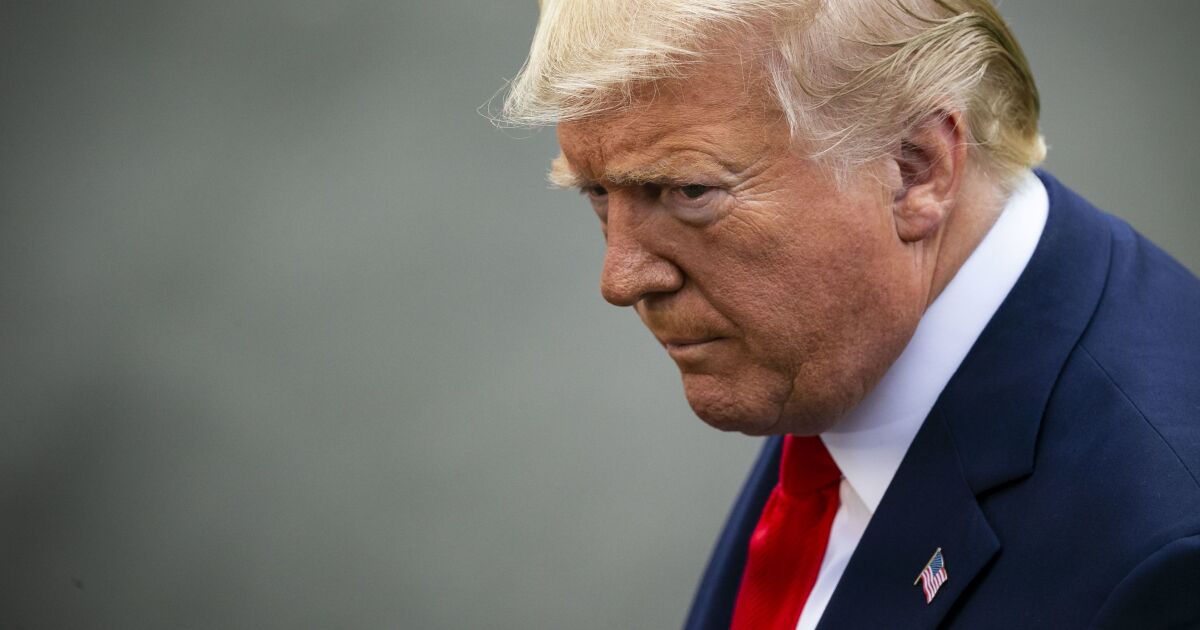
President Donald Trump is embarking on what may be his most disruptive action yet for the global economy by broadening his grievances to how other countries choose to tax and regulate.

Trump on Thursday ordered top economic officials to calculate new U.S. tariffs based on the total tariffs and tax, regulatory, currency and any other barriers that U.S. exports face. The new “reciprocal” duties would be calculated country by country. They will be laid out in a series of reports due by April 1 that officials said would first examine the economies with which the U.S. has the largest trade deficits.

“The numbers are going to be very fair but staggering. They’re going to be large,” Trump told reporters in the Oval Office as he signed a memorandum ordering up the new tariffs.

The move, which Trump said would replace his campaign plan for a universal tariff on imports, immediately puts the European Union and countries including China, India, Mexico and Vietnam in the potential firing line, based on U.S. trade data.

European Commission President Ursula von der Leyen on Friday called Trump’s plan a “step in the wrong direction” and an act of self-harm. By raising tariffs, the U.S. “is taxing its own citizens, raising costs for business, stifling growth and fueling inflation,” she said.

Reaction was swift from other major U.S. trading partners. During a joint conference with Indian Prime Minister Narendra Modi on Thursday, Trump said the two countries would start trade negotiations. Indian officials Friday said they’re looking to boost oil and gas imports from the U.S. — a vow that countries from Japan to Vietnam have already made.

Asian exporters

In Tokyo on Friday, Japan also said it’s reaching out to Washington to start discussions. Taiwanese President Lai Ching-te pledged to boost military spending in a sign of further cooperation with the US against China. South Korea— which along with Japan was singled out by a White House official on a call with reporters — released a statement highlighting the low effective tariff rate on U.S. goods.

Trump’s plan would, if implemented, mark a departure from how the U.S. has approached tariffs for almost a century and deal a major blow to global trading rules now based on countries granting each other what are known as “most favored nation” tariffs unless they sign special trade deals. It would also turn the definition on its head — reciprocity has up until now referred to lower tariffs on goods.

“Trump is essentially trying to create a justification to impose high tariffs on whoever he wants,” said Sam Lowe, a partner at Flint Global in London, where he heads their trade and market access practice.

Fundamental change, Trump advisers said, is what’s needed. “The idea here is historic and it’s really about a revolution in how the international trading system is organized,” Peter Navarro, a senior trade adviser, told Bloomberg Television.  

With his order Trump is also reaching beyond the usual boundaries of his trade fights to how countries collect taxes, apply regulations and standards, and other so-called non-tariff barriers. 

Trump singled out the use of value-added taxes, which he and his advisors argue give exporters from other countries an unfair advantage over U.S. ones. More than 160 countries in the world use VAT or similar consumption levies, according to the International Monetary Fund. The U.S., however, bases its national taxes on income.

In the EU and other economies that use them, Trump and his advisors argue, the ability to claim a VAT rebate when products are exported gives European companies an unfair advantage as imports from the U.S. are charged VAT of 15-20% or higher depending on the member country. 

“A VAT tax is a tariff,” Trump told reporters Thursday. 

Many economists disagree. “Defining a VAT to be a trade barrier isn’t just questionable economics (the VAT is the same on imports and domestic production), it also basically forecloses negotiation, as the EU and others aren’t in a fiscal position to negotiate away its tax base,” Brad Setser, a senior fellow at the Council on Foreign Relations and a former US Treasury official, wrote on X. 

In a note to clients, Paul Ashworth, chief North America economist at Capital Economics, said Trump’s plan was likely to have a more damaging impact on the U.S. economy than his previous universal tariff idea.

Just adding the average most-favored nation tariff rate of countries to their VATs would lead to significant reciprocal U.S. tariffs on some of the U.S.’s top trading partners, he wrote. If the U.S. imposes reciprocal tariffs that add VAT rates and MFN tariff rates together, the countries most hit would be India with a rate of 29%, Brazil and the EU. 

Such duties alone, Ashworth wrote, would lead to an increase in the average effective tariffs rate on all U.S. imports from 3% currently to around 20%. It would also lead to a temporary rebound in U.S. inflation to around 4% later this year.

The EU stipulates that countries must apply a VAT rate of no less than 15% on most goods and services, though it leaves decisions on actual levels and exemptions to member states. According to ING calculations, the VAT across the 27-nation bloc averaged 21.5% in 2023.

By targeting VAT the U.S. is relaunching a long-running trade fight. 

The U.S. and Europe have battled over the treatment of VAT and income taxes in global trading rules since the 1960s with the EU challenging multiple mechanisms the U.S. set up in the 1970s and ’80s to offer a similar export rebate on U.S. corporate taxes levied against revenues. The EU eventually won a World Trade Organization challenge to those mechanisms in the 1990s and since then the U.S. has had no similar export rebates. 

Erica York, vice president of federal tax policy at the nonpartisan Tax Foundation, said the Trump administration’s view of VAT reflects a fundamental misunderstanding of how the tax works. VATs don’t discriminate against foreign goods since domestically produced ones face the same taxes in the countries they are sold, she said.

Consumption taxes

“The goal of a value-added tax is to tax domestic consumption,” York said. “There’s no discrimination based on where something was made. It’s just a tax on the stuff that people in a country are buying.”

But Trump’s grievances with other countries go beyond that by targeting regulations and other non-tariff barriers that U.S. goods face overseas. 

“We’re going to look at everything,” Jamieson Greer, who is due to become U.S. Trade Representative, told reporters on Thursday, including what he called “fake” anti-trust regimes. 

The EU has for years targeted U.S. tech giants like Apple Inc. and Alphabet Inc.’s Google for scrutiny in competition investigations that have led to hefty fines. The U.S. has also long complained about how the EU and other countries like Japan regulate food imports such as beef and chicken, as well as other U.S. exports like chemicals and genetically modified crop seeds.

In the memorandum signed Thursday, Trump ordered officials to include in their tariff calculations “any other practice that” they conclude “imposes any unfair limitation on market access or any structural impediment to fair competition with the market economy of the United States.” 

As with many of Trump’s trade actions, optimists believe that they could lead to trade agreements that will avoid the disruptive economic impact of tariffs likely to provoke retaliation by other countries and lead to higher prices and slower growth. 

John Veroneau, a partner at law firm Covington & Burling LLP who served as a senior trade official in the administration of President George W. Bush, said Trump’s latest move represents a significant broadening out of his trade conflicts. 

“He has raised the stakes. This is now a global enterprise,” Veroneau said, calling it a “huge step” away from the global trading rules first laid out in the 1947 General Agreement on Tariffs and Trade. 

‘New phase’

The U.S. is signaling “the start of a new phase in global trade” in which the U.S. uses its power not to influence global rules but the bilateral trade in goods, he said. The best hope, Veroneau said, is that the U.S. can negotiate new deals that don’t lead to escalating trade wars over tariffs.

Equities rose in Asia and Europe on Friday, with traders optimistic that the timeline for reciprocal tariffs provided enough room to negotiate. Setser said that shouldn’t last long as investors “will eventually realize that this is a path to real tariff hikes,” he wrote on X. 

Jennifer Hillman, who served as both a senior U.S. trade official and a member of the WTO’s highest court, said the plan laid out by Trump and his advisors would be immensely complex to implement, would likely to lead to chaos and require more funding for border authorities

Interfering in how other countries collect taxes and impose regulations would also inevitably lead to a backlash against the U.S., said Hillman, now a senior fellow at the Council of Foreign Relations.

“We’re just going to make America hated again,” she said. “At some level, for these other countries, it’s just like ‘who are you to tell us that we can’t regulate our own economy?'”


Continue Reading

Accounting

AI-Driven Automation and Continuous Accounting Frameworks

Published

on

The accounting profession is undergoing a fundamental structural transition as enterprise finance departments shift from periodic month-end closes toward automated continuous accounting models. By integrating specialized machine learning algorithms directly into enterprise resource planning (ERP) platforms, chief accounting officers are transforming financial reporting from a retrospective exercise into a real-time operational asset.

The Shift from Periodic Close to Continuous Financial Reporting
Traditional accounting workflows heavily relied on manual data reconciliation, spreadsheet calculations, and multi-week closing cycles at the end of each fiscal period. In contrast, continuous accounting frameworks utilize automated software agents to process, validate, and post transactional data in real time as business activities occur.

Automated bank reconciliation tools cross-reference incoming bank feeds, invoice records, and purchase orders automatically. By resolving transactional variances instantly throughout the month, corporate accounting teams eliminate the traditional workload spikes associated with quarterly and annual closes.

Machine Learning in Audit Trails and Anomaly Detection
Advanced natural language processing (NLP) and machine learning tools are redefining internal audit and financial control environments. Automated systems analyze 100% of general ledger entries, identifying anomalous transactions, duplicate payments, and unauthorized journal entries in real time.

Rather than relying on random statistical sampling, corporate internal auditors can focus their attention on high-risk flags automatically surfaced by algorithmic monitoring platforms. This continuous risk assessment strengthens internal controls over financial reporting (ICFR) and significantly reduces fraud risk.

Evolving Roles for Accounting Professionals
As routine data entry and manual reconciliation tasks become fully automated, the skill set required for accounting professionals is shifting toward data analysis, system design, and strategic business advisory.
– Systems Governance: Accountants are increasingly responsible for monitoring algorithmic accuracy and managing data integration pipelines.
– Business Partnership: Finance professionals leverage real-time financial dashboards to advise operational leaders on margin management and working capital allocation.
– Regulatory Compliance Management: Accounting teams utilize automated platforms to ensure compliance with dynamic tax codes and international accounting standards.

Core Implementation Recommendations
1. Deploy Automated Reconciliation Tools: Integrate continuous transaction processing modules into existing enterprise ERP architectures.
2. Establish Algorithmic Governance Controls: Implement strict internal testing protocols to ensure automated accounting rules comply with GAAP/IFRS standards.
3. Reskill Accounting Teams: Invest in training finance staff on data analytics, workflow automation, and predictive financial modeling.

Continue Reading

Accounting

Global ESG Reporting Standards and Double Materiality Compliance

Published

on

Corporate accounting departments face expanding reporting expectations as international sustainability disclosure standards achieve regulatory enforcement across major global jurisdictions. Chief Accounting Officers (CAOs) and corporate controllers are establishing rigorous internal accounting controls to treat Environmental, Social, and Governance (ESG) metrics with the same data precision, auditability, and governance as traditional financial statements.

Regulatory Harmonization Under Global Sustainability Frameworks
The implementation of standardized sustainability reporting frameworks—notably rules established by international sustainability accounting boards—has created unified expectations for public and large private enterprises. Corporations must report standardized metrics covering greenhouse gas emissions (Scope 1, 2, and material Scope 3), energy utilization, workforce demographics, and supply chain governance.

In Europe and other participating international jurisdictions, double materiality principles are mandatory. Under double materiality, organizations must report both how external sustainability risks impact corporate financial performance, and how internal corporate operations affect surrounding environmental and social structures.

Integrating Sustainability Metrics into Core ERP Systems
To provide auditable non-financial data, enterprise organizations are integrating specialized carbon accounting and ESG management platforms directly into core ERP systems. Automated data collectors capture energy utility invoices, logistics fuel consumption metrics, and vendor compliance records in real time.

Establishing automated, traceable data pipelines ensures that non-financial reporting is supported by clear audit trails. This structured approach allows external financial auditors to provide reasonable assurance on sustainability disclosures during annual corporate reporting cycles.

Financial Impacts and Capital Market Disclosure
Accurate ESG reporting directly influences corporate cost of capital and institutional credit ratings. Commercial lenders and institutional asset managers systematically incorporate sustainability metrics into risk pricing models. Companies that demonstrate transparent, verifiable progress in operational energy efficiency and climate risk mitigation benefit from expanded access to green bond markets and lower debt pricing.

Action Steps for Accounting Leadership
1. Implement Double Materiality Frameworks: Conduct comprehensive assessments to identify material financial and operational sustainability metrics.
2. Build Auditable Non-Financial Data Pipelines: Automate ESG data collection within core accounting software to ensure data integrity.
3. Align Sustainability with Annual Financial Filings: Prepare non-financial disclosures concurrently with financial statements to satisfy regulatory audit expectations.

Continue Reading

Accounting

Modernizing Internal Controls: Machine Learning and Continuous Monitoring in Auditing

Published

on

Internal audit departments and corporate risk managers are modernizing internal control frameworks by shifting from periodic sampling techniques to continuous monitoring and machine learning analytics. As operational data volumes increase across enterprise organizations, automated control testing ensures financial integrity, prevents corporate fraud, and streamlines annual audit engagements.

The Limitation of Periodic Audit Sampling
Historically, internal and external auditors evaluated internal controls by reviewing random samples of financial transactions—often analyzing less than five percent of total ledger entries. In complex enterprise environments, periodic sampling methods carry inherent risks of overlooking localized financial misstatements, unauthorized disbursements, or operational control breakdowns.

In 2026, progressive internal audit functions are utilizing automated continuous monitoring platforms that evaluate one hundred percent of financial transactions in real time. Continuous control auditing systems continuously monitor general ledger entries, procurement approvals, and expense reimbursements across all operating subsidiaries.

AI-Powered Fraud Detection and Anomaly Identification
Machine learning models trained on historical corporate financial data excel at identifying subtle transactional anomalies that indicate potential fraud or operational error. Automated systems instantly flag duplicate invoice payments, unapproved vendor creation, unusual journal entry timing, and unauthorized override of authority thresholds.

When an anomaly is detected, the automated auditing platform generates an instant risk alert, allowing internal audit teams to investigate root causes immediately. Early detection prevents minor operational errors from escalating into material weaknesses in financial reporting.

Streamlining External Audit Preparation
Continuous internal control monitoring delivers significant benefits during annual external financial audits. External audit firms can review continuous audit logs and automated control testing documentation, reducing the time required for manual field testing.

This integrated approach lowers overall audit compliance fees, reduces administrative burdens on corporate accounting staff, and provides senior management and audit committees with real-time visibility into the organization’s overall risk profile.

Core Implementation Guidelines
1. Transition to 100% Data Testing: Replace legacy sampling methods with automated continuous audit monitoring systems.
2. Deploy Anomaly Detection Algorithms: Implement machine learning models to identify unauthorized transactions and operational control overrides.
3. Align Internal and External Audit Workflows: Coordinate continuous control testing protocols with external auditors to optimize annual compliance cycles.

Continue Reading

Trending