Connect with us

Accounting

Acting IRS commissioner reportedly replaced

Published

on

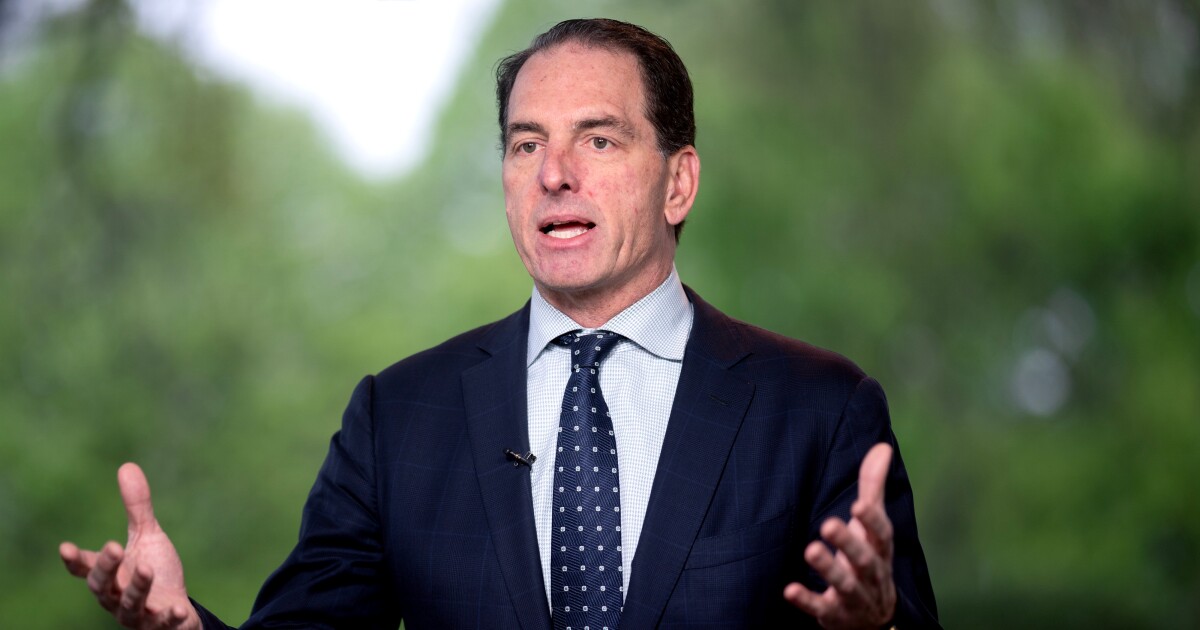
Gary Shapley, who was named only days ago as the acting commissioner of the Internal Revenue Service, is reportedly being replaced by Deputy Treasury Secretary Michael Faulkender amid a power struggle between Treasury Secretary Scott Bessent and Elon Musk.

The New York Times reported that Bessent was outraged that Shapley was named to head the IRS without his knowledge or approval and complained to President Trump about it. Shapley was installed as acting commissioner on Tuesday, only to be ousted on Friday. He first gained prominence as an IRS Criminal Investigation special agent and whistleblower who testified in 2023 before the House Oversight Committee that then-President Joe Biden’s son Hunter received preferential treatment during a tax-evasion investigation, and he and another special agent had been removed from the investigation after complaining to their supervisors in 2022. He was promoted last month to senior advisor to Bessent and made deputy chief of IRS Criminal Investigation. Shapley is expected to remain now as a senior official at IRS Criminal Investigation, according to the Wall Street Journal. The IRS and the Treasury Department press offices did not immediately respond to requests for comment.

Faulkender was confirmed last month as deputy secretary at the Treasury Department and formerly worked during the first Trump administration at the Treasury on the Paycheck Protection Program before leaving to teach finance at the University of Maryland.

Faulkender will be the fifth head of the IRS this year. Former IRS commissioner Danny Werfel departed in January, on Inauguration Day, after Trump announced in December he planned to name former Congressman Billy Long, R-Missouri, as the next IRS commissioner, even though Werfel’s term wasn’t scheduled to end until November 2027. The Senate has not yet scheduled a confirmation hearing for Long, amid questions from Senate Democrats about his work promoting the Employee Retention Credit and so-called “tribal tax credits.” The job of acting commissioner has since been filled by Douglas O’Donnell, who was deputy commissioner under Werfel. However, O’Donnell abruptly retired as the IRS came under pressure to lay off thousands of employees and share access to confidential taxpayer data. He was replaced by IRS chief operating officer Melanie Krause, who resigned last week after coming under similar pressure to provide taxpayer data to immigration authorities and employees of the Musk-led U.S. DOGE Service. 

Krause had planned to depart later this month under the deferred resignation program at the IRS, under which approximately 22,000 IRS employees have accepted the voluntary buyout offers. But Musk reportedly pushed to have Shapley installed on Tuesday, according to the Times, and he remained working in the commissioner’s office as recently as Friday morning. Meanwhile, plans are underway for further reductions in the IRS workforce of up to 40%, according to the Federal News Network, taking the IRS from approximately 102,000 employees at the beginning of the year to around 60,000 to 70,000 employees.

Continue Reading

Accounting

AI-Driven Automation and Continuous Accounting Frameworks

Published

on

The accounting profession is undergoing a fundamental structural transition as enterprise finance departments shift from periodic month-end closes toward automated continuous accounting models. By integrating specialized machine learning algorithms directly into enterprise resource planning (ERP) platforms, chief accounting officers are transforming financial reporting from a retrospective exercise into a real-time operational asset.

The Shift from Periodic Close to Continuous Financial Reporting
Traditional accounting workflows heavily relied on manual data reconciliation, spreadsheet calculations, and multi-week closing cycles at the end of each fiscal period. In contrast, continuous accounting frameworks utilize automated software agents to process, validate, and post transactional data in real time as business activities occur.

Automated bank reconciliation tools cross-reference incoming bank feeds, invoice records, and purchase orders automatically. By resolving transactional variances instantly throughout the month, corporate accounting teams eliminate the traditional workload spikes associated with quarterly and annual closes.

Machine Learning in Audit Trails and Anomaly Detection
Advanced natural language processing (NLP) and machine learning tools are redefining internal audit and financial control environments. Automated systems analyze 100% of general ledger entries, identifying anomalous transactions, duplicate payments, and unauthorized journal entries in real time.

Rather than relying on random statistical sampling, corporate internal auditors can focus their attention on high-risk flags automatically surfaced by algorithmic monitoring platforms. This continuous risk assessment strengthens internal controls over financial reporting (ICFR) and significantly reduces fraud risk.

Evolving Roles for Accounting Professionals
As routine data entry and manual reconciliation tasks become fully automated, the skill set required for accounting professionals is shifting toward data analysis, system design, and strategic business advisory.
– Systems Governance: Accountants are increasingly responsible for monitoring algorithmic accuracy and managing data integration pipelines.
– Business Partnership: Finance professionals leverage real-time financial dashboards to advise operational leaders on margin management and working capital allocation.
– Regulatory Compliance Management: Accounting teams utilize automated platforms to ensure compliance with dynamic tax codes and international accounting standards.

Core Implementation Recommendations
1. Deploy Automated Reconciliation Tools: Integrate continuous transaction processing modules into existing enterprise ERP architectures.
2. Establish Algorithmic Governance Controls: Implement strict internal testing protocols to ensure automated accounting rules comply with GAAP/IFRS standards.
3. Reskill Accounting Teams: Invest in training finance staff on data analytics, workflow automation, and predictive financial modeling.

Continue Reading

Accounting

Global ESG Reporting Standards and Double Materiality Compliance

Published

on

Corporate accounting departments face expanding reporting expectations as international sustainability disclosure standards achieve regulatory enforcement across major global jurisdictions. Chief Accounting Officers (CAOs) and corporate controllers are establishing rigorous internal accounting controls to treat Environmental, Social, and Governance (ESG) metrics with the same data precision, auditability, and governance as traditional financial statements.

Regulatory Harmonization Under Global Sustainability Frameworks
The implementation of standardized sustainability reporting frameworks—notably rules established by international sustainability accounting boards—has created unified expectations for public and large private enterprises. Corporations must report standardized metrics covering greenhouse gas emissions (Scope 1, 2, and material Scope 3), energy utilization, workforce demographics, and supply chain governance.

In Europe and other participating international jurisdictions, double materiality principles are mandatory. Under double materiality, organizations must report both how external sustainability risks impact corporate financial performance, and how internal corporate operations affect surrounding environmental and social structures.

Integrating Sustainability Metrics into Core ERP Systems
To provide auditable non-financial data, enterprise organizations are integrating specialized carbon accounting and ESG management platforms directly into core ERP systems. Automated data collectors capture energy utility invoices, logistics fuel consumption metrics, and vendor compliance records in real time.

Establishing automated, traceable data pipelines ensures that non-financial reporting is supported by clear audit trails. This structured approach allows external financial auditors to provide reasonable assurance on sustainability disclosures during annual corporate reporting cycles.

Financial Impacts and Capital Market Disclosure
Accurate ESG reporting directly influences corporate cost of capital and institutional credit ratings. Commercial lenders and institutional asset managers systematically incorporate sustainability metrics into risk pricing models. Companies that demonstrate transparent, verifiable progress in operational energy efficiency and climate risk mitigation benefit from expanded access to green bond markets and lower debt pricing.

Action Steps for Accounting Leadership
1. Implement Double Materiality Frameworks: Conduct comprehensive assessments to identify material financial and operational sustainability metrics.
2. Build Auditable Non-Financial Data Pipelines: Automate ESG data collection within core accounting software to ensure data integrity.
3. Align Sustainability with Annual Financial Filings: Prepare non-financial disclosures concurrently with financial statements to satisfy regulatory audit expectations.

Continue Reading

Accounting

Modernizing Internal Controls: Machine Learning and Continuous Monitoring in Auditing

Published

on

Internal audit departments and corporate risk managers are modernizing internal control frameworks by shifting from periodic sampling techniques to continuous monitoring and machine learning analytics. As operational data volumes increase across enterprise organizations, automated control testing ensures financial integrity, prevents corporate fraud, and streamlines annual audit engagements.

The Limitation of Periodic Audit Sampling
Historically, internal and external auditors evaluated internal controls by reviewing random samples of financial transactions—often analyzing less than five percent of total ledger entries. In complex enterprise environments, periodic sampling methods carry inherent risks of overlooking localized financial misstatements, unauthorized disbursements, or operational control breakdowns.

In 2026, progressive internal audit functions are utilizing automated continuous monitoring platforms that evaluate one hundred percent of financial transactions in real time. Continuous control auditing systems continuously monitor general ledger entries, procurement approvals, and expense reimbursements across all operating subsidiaries.

AI-Powered Fraud Detection and Anomaly Identification
Machine learning models trained on historical corporate financial data excel at identifying subtle transactional anomalies that indicate potential fraud or operational error. Automated systems instantly flag duplicate invoice payments, unapproved vendor creation, unusual journal entry timing, and unauthorized override of authority thresholds.

When an anomaly is detected, the automated auditing platform generates an instant risk alert, allowing internal audit teams to investigate root causes immediately. Early detection prevents minor operational errors from escalating into material weaknesses in financial reporting.

Streamlining External Audit Preparation
Continuous internal control monitoring delivers significant benefits during annual external financial audits. External audit firms can review continuous audit logs and automated control testing documentation, reducing the time required for manual field testing.

This integrated approach lowers overall audit compliance fees, reduces administrative burdens on corporate accounting staff, and provides senior management and audit committees with real-time visibility into the organization’s overall risk profile.

Core Implementation Guidelines
1. Transition to 100% Data Testing: Replace legacy sampling methods with automated continuous audit monitoring systems.
2. Deploy Anomaly Detection Algorithms: Implement machine learning models to identify unauthorized transactions and operational control overrides.
3. Align Internal and External Audit Workflows: Coordinate continuous control testing protocols with external auditors to optimize annual compliance cycles.

Continue Reading

Trending