
Accounting
The evolution of accounting marketing

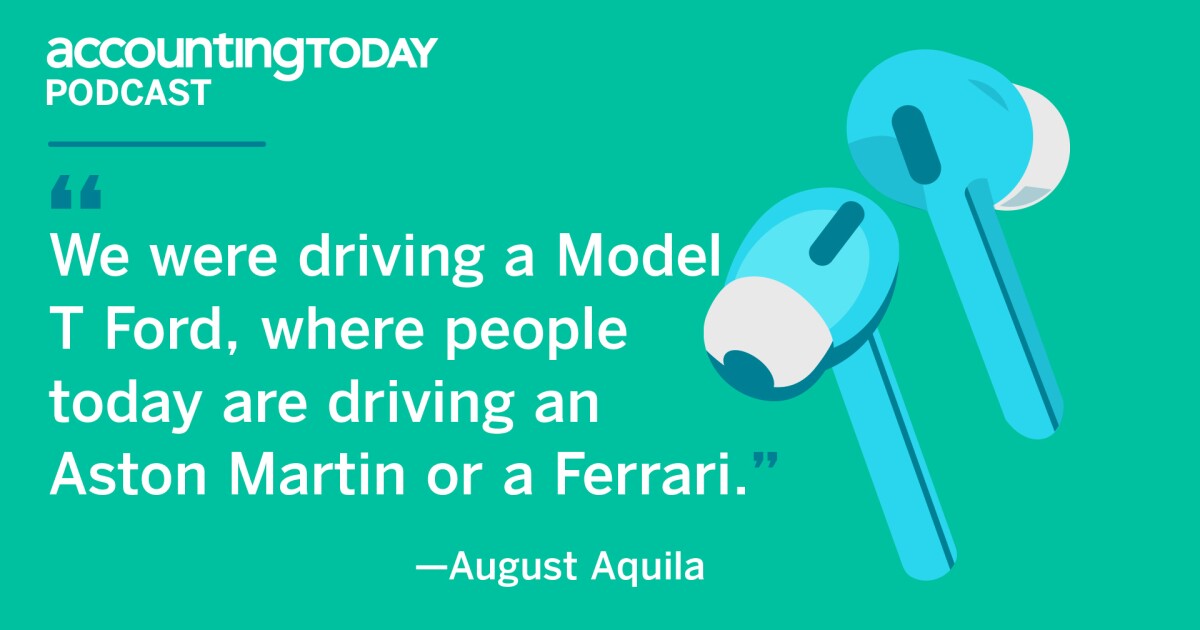

Two AAM Marketing Hall of Famers — August Aquila of Aquila Global Advisors and Kristen Lewis of EisnerAmper — examine the rise of marketing as a professional function in accounting firm, and then look ahead to where it’s going.
Transcription:
Transcripts are generated using a combination of speech recognition software and human transcribers, and may contain errors. Please check the corresponding audio for the authoritative record.
Dan Hood (00:03):
Welcome to On the Air with Accounting Today. I’m editor-in-chief Dan Hood. It’s hard to believe that in a previous generation, accounting firms weren’t allowed to market themselves at all. Now in the four decades since that prohibition was lifted, marketing and the profession has evolved tremendously. And one of the main vectors of change for that has been the Association for Accounting Marketing, which is marketing. Its 35th anniversary this year here to talk about that evolution of marketing in the accounting profession and about AAM and what it’s been doing are Kristen Lewis. She’s a managing director of strategic Growth at Top 20 Firm EisnerAmper. She’s also served on AAM’s board. She’s been named their Volunteer of the Year and she’s a member of their Accounting Marketing Hall of Fame. Kristen, thanks for joining us.
Kristen Lewis (00:41):
Oh, thanks for having me.
Dan Hood (00:43):
We’ve also got with us August Aquila, he’s with Aquila Global Advisors. He’s among other things, among many things, the first marketing director to become an equity shareholder in A CPA firm back in the day. He’s also a major consultant to the profession on a host of issues, not least of which includes marketing. He’s a founding board member of AAM. He was responsible for some of its inaugural conferences in its first years, and he’s also a member of its Hall of Fame. August. Thanks for joining us.
August Aquila (01:09):
Thank you. Thank you, Daniel. Good to be here.
Dan Hood (01:11):
Yeah, it’s a fascinating thing. It is hard to believe that accounting marketing has been around this long, particularly, like I said, given that it wasn’t even allowed for the first 60 to 70 years of the modern profession, maybe August, you can give us a sense of how accounting marketing has changed broadly over the three and a half decades that AAM has been in existence or that you’ve seen since the introduction of marketing into accounting.
August Aquila (01:38):
Yeah. Well, it really has changed quite a bit and I think I want to just mention three key, or at least two key factors. One, we weren’t able to market until 1979 in a law firm down in Arizona, brought a case up to the Arizona Supreme Court, called the Bates decision, and that permitted professional service firms to finally market. And that was critical, but marketing back then was really name awareness and I would say name awareness and just service awareness. And we didn’t have, there was usually one person in the firm was the marketing director, and if you were sophisticated, you usually had market segments that the firm was going after. And firms such as my old firm with my partner Allan Koltin, PDI, we created all sorts of marketing newsletters and products that other firms would acquire. I mean, compared to today, it’s like night and day you might say. And we drove a Model T Ford where people today are driving an Aston Martin or Ferrari.
Dan Hood (03:12):
That’s quite an improvement. I think a lot of people from back in the day were like, whoa, we were great. We just didn’t have all the technology that you guys, you young whippersnappers have now. Kristen, how about you? When you look at the changes in county marketing over this relatively long period, what do you see as the big changes?
Kristen Lewis (03:30):
I mean, very similar to August when I started as in the year 2000 as a little baby marketer, it was very superficial stuff like doing the newsletters and making sure that the brochures were on point and events. And since then it’s just evolved to encompass just this entire experience, client experience, how people are experiencing your brand, how is marketing contributing to firm culture, using information branding, sales enablement. I mean, we’re all over the map now and that’s a great thing. And it’s really important because we’ve been able to help drive firm growth.
Dan Hood (04:08):
Well, a lot of it has to come from that recognition, how many different aspects of a firm marketing can and does touch for a long time. I think it’s not unfair to say that accountants did not gleefully embrace marketing as particularly account for partners. Were not deeply, deeply excited about this prospect of something having to be involved in selling. But I think a lot of them have come around, particularly through the efforts of AAM and its members. Maybe we can talk a little bit about the last decade, get a little more specific, a little closer to the present because a lot of the change we’re seeing now is driven by technology that’s changed enormously over the past decade or so. What changes have you seen recently that have made a big impact on accounting firm marketing?
Kristen Lewis (04:52):
I think that we’ve been really well positioned in our growth roles to be more strategic because of all that change that has happened. I mean, we’re in on the ground floor because of the rise of industry and specialty niche marketing, which is really important. How do you in a see a sameness really communicate how you help clients in a way that’s different from your neighbor firm? The rise of advisory and outsourcing services, it’s really critical that we are in there to help communicate that value proposition and just really help them spread the word beyond the basics. And then of course, we got to say m and a activity and private equity and all of that stuff that’s going on because those have presented new opportunities to really exponentially increase the way that we go to market, the different channels that we are using and just all in all be more sophisticated about the way that we talk to our clients, our prospective clients, and those prospective employees out there too. So that’s really key. Like you were saying, the technology and the digital stuff ties into that perfectly.
Dan Hood (06:02):
Thanks. We’re going to dive into that in a little bit, but August, I want to get your thoughts broadly on how things have changed in the last 10 years specifically as opposed to that broad sort of sweeping change from no marketing to having marketing. How have you seen the last 10 years impact accounting firm marketing?
August Aquila (06:16):
Well, I think the biggest thing of course has been AI in the last few years, last few months maybe you might say. But I think what you see over the last 10 years is the growth, the acceptance of marketing and how marketing can help not only retain clients but can retain staff. There’s more measurements of KPIs and marketing. What actually are we getting for the dollars? Spent more and more partners over the course of the years you have attended AAM conferences. So there’s that educational process also of continuing to show that hey, marketing can only do so much. We can create opportunities or selling force can come in, they can close the opportunities, but it’s really up to you, the individual partners to show the clients that you care what we can do as a firm, how we’re different as a firm, and what impact we can have on you and your business. Well,
Dan Hood (07:33):
And that’s a long-term lesson that partners continually need to learn, right? This isn’t something you could just hand off. It’s really just us helping you get your message out. Want to, we’ve talked everyone, all three of us have different points mentioned technology. August, you mentioned ai, and I am fascinated when we talk about AI with firms, how often they say that their first uses of AI are in marketing for writing copy or for coming up with marketing plans. It’s not every firm, but it’s a good number of them are like, yep, that’s a great place where we started using chat GPT to help us hone our marketing messages or just start figuring out what our marketing message might look like. Then we added our own expertise, et cetera. There are a lot of different ways in which marketing is a heavy user of technology and has used it to sort of accelerate itself. Maybe we talk a little about how that digital transformation August has changed the way firms market themselves.
August Aquila (08:28):
Well, I mean, again, going back in the old days, you would just use a newsletter and paper newsletter on top of it, not an electronic newsletter. But I think today the technology has really changed marketing because you can use it in proposal writing, you can use it in audit reports, you could use it in client improvement, different reports. Marketing now is tied in or can be tied into data analytics as to what’s happening in the client firm and how they can use that information to better improve themselves. The sort of the old constant improvement or continuous improvement program that we saw in the eighties and the nineties, which would not digitalize, but now it is, and it becomes even much more potent and important. And these are things that I think marketing has led the way to expand the mind of a consultant as to what they’re really doing. They’re more than just number crunchers today. We don’t call them number crunchers anymore. They really have achieved that business advisor status and consultants that we’ve been talking about for the last 30 years. So to me that’s very exciting.
Dan Hood (09:55):
Yeah, no, it’s very cool stuff. We can still call them number crus, but only if we want to annoy them. I think. Let’s not get rid of the title. Let’s just keep it for strategic deployment. You talked about August. You mentioned paper newsletters. Christian, you had mentioned the firm brochure, right? The classic firm brochure. Thinking back to the days when those were in paper and you had months to put it together, right, A long time and then you’d go to press and then you’d wait and August mentioned the data that we get now, you get it immediately. There is, and I think one of the big things, data that, sorry, the technology has changed is the speed at which you can and must react and move and change and adapt. And I think it’s putting a lot of pressure on not everybody, but on marketing, certainly Christian. Are there other areas of digital transformation that you look at, you see, well, that’s really how that’s a big change for marketing.
Kristen Lewis (10:46):
I think that what August was talking about with that ROI piece and just being able to take that data, make some strategic decisions based on it, it’s allowing us, when we get it right, it allows us to be more nimble and pivot, especially in an environment where there may be some market instability or radical things are happening, like current events are changing all the time, and our clients are looking to us to tell them if they’re okay to know if there are things they need to be looking out for on a business side. So getting that information helps us also customize our client’s journey through our information. We have to educate, we need to advocate for them. And having that information available to them in a relatively quick timeframe really assists our engagement teams with building those relationships and making people feel like they’re seen and they’re taken care of. So the human element is really reinforced by the technology,
Dan Hood (11:45):
Which is awesome. I mean, this is the positive note, right? As opposed to so many people are afraid that the technology will strip the human element out of things, but as you say, it’s a great way to reinforce it when you use it. Right before we started recording today, we were talking about how we could spend hours on each one of these questions. We’re a little limited on time, so I would love to spend more on this, but I want to talk a little bit about AAM itself as an organization and how it’s changed since its very beginning August, you were there at the very start founding board member. Maybe you can give us your sense of how AAM has changed over the years.
August Aquila (12:23):
Okay, well, let me take a stab at that. Just to give you a little perspective. The first conference is that we had in not the AAM conference, it was an AICPA marketing conference, I believe in 1987 or 88. And the A-I-C-P-A wanted to take AAM that we were going to form under its control and we decided not to because we wanted to really just create something. So if you look at the initial AAM, I think the first year we have maybe 75 members in the entire country. And we did after a couple of years, create some regional chapters. We had an annual conference that didn’t have a whole heck of a lot of people. And that was pretty much the beginning of AAM, Accounting Today played a great role in helping the organization grow. But the first, I would say five to 10 years or so, it was a struggle and it was all the members, all the old timers so to speak, that really paved the way, which is always the case for the future. And it would just be interesting to me 20 or 30 years from now when they look back to 2025 and say, wow, you guys were so primitive back there in what you were doing marketing compared to what we do today. So that would be great.
Dan Hood (14:13):
Yeah, well definitely. I mean, I remember there were a couple of editors here — Howard Wolosky was one of them — who loved from them. Day one, loved AAM, big boosters, love this scrappy little organization that was out there with this scrappy little part of the profession, right? Marketing really wasn’t yet fully accepted. And so it was a very cool thing to see. And now, I mean, I don’t know, I have the numbers on it, but I mean, A has grown enormously. I know your conferences is usually well attended, Christian, what kind of changes have you seen in the organization over the years?
Kristen Lewis (14:42):
Just it’s an even more robust community. I mean, I credit the association with even having, not just this profession, but my own personal career. If AAM hadn’t been a part of it, I probably wouldn’t be here today working with accounting firms. So a greater mix, I think of programming. They’re seeing the specialists that a lot of marketers have become with specific disciplines that we practice in. And from strategy down to who’s updating the website or figuring out keywords and all that stuff is so important to the firms. Just a larger group of people, great in-person and online experiences, which has really been the backbone of the education for a lot of the people who are in accounting marketing today. This is how we learn and how we help our firms.
Dan Hood (15:31):
And I would say one of the things I’ve noticed about it is that it is way out in advance of things, and it does a great job of helping membership know where things are headed in marketing and helping them get ahead of changes that are coming down the pike and new ways they can serve their firms and so on. And it plays a great forward-looking role in that sense. So it is amazing. It’s impressive. I again, would love to spend a lot more time talking about this, but I want to pivot a little bit to talk more about the role of marketing and accounting firms these days. But before we do that, we’re going to take a quick break. Alright, and we’re back. We’re talking with Kristen Lewis and August Aquila, members of the AAM Hall of Fame about marketing, all things marketing in the accounting profession. August. I’m going to talk a little bit about the role of marketing in accounting firms. What do you think, as you talk to accounting firm leaders, what do they need to know? What do they need to understand about modern day marketing?
August Aquila (16:36):
Yeah, I think the key thing that they need to know or to understand is that how important the firm’s culture is in how it’s articulated through the marketing program. And to really give that validity so to speak, is that the firm needs to walk the talk, so to speak. So the firm, the culture needs to be more than something that we just put our mission, vision, values on a website. It’s what we live day in and day out, and it’s for everybody in the firm, especially the partners. And then on the flip side of that, I think marketing directors, especially the directors, need to understand how accounting and consulting works within the firm. And a lot of times, a lot of times they don’t understand the dynamics of a firm. They don’t understand the financial aspects of the, they don’t understand the leaders and shakers of the firm and what’s driving them. So it’s a two-way street, but that we need to help each other understand, because we’re in this together and our goals are the same, which is the success of the firm, which means the success of the clients and the success of the employees.
Dan Hood (18:17):
I don’t want to say it’s a battle because it’s not a battle, but lot of it seems like a lot of misunderstanding back and forth. Accounting firm leaders don’t necessarily know the role that marketing can and should be doing and don’t understand why they’re asking me to do all this work. They supposed to do all this work and marketing. On the flip side, it’s going to be very difficult to explain that and get them to move Christian similar. How do you see, what would you want firm leaders to understand more about marketing?
Kristen Lewis (18:43):
I think that it’s all encompassing and everyone needs to play some role in it. And it could be a more minor one. We always talk about at my firm, there’s many paths to success in supporting our goals. So you may be that person who’s super psyched to go out and network, or you may not be that person, but you may be the best client service guy or gal on the planet. It’s about that conversation, creating the opportunities for the conversation. And it doesn’t happen once it happens every day. It’s back and forth, this holistic relationship building, and we have all these tools and bells and whistles and the tech to help us make that a little bit better. But everyone’s got to buy into it at some level and participate. And that’s when you’re making a difference for your clients. Your employees are seeing like, oh, I’m helping them do important things out there. What I’m doing is not transactional. It’s this big, big win for everybody. And marketing helps tell that story. We’re storytellers, we help the firm tell the story, and everyone’s got a part.
Dan Hood (19:48):
Yeah, it is. That does seem to be one thing, right? That everyone has a part, right? I see a lot of partners are like, well, why do I have a marketing director if I’ve got to get involved in marketing? It’s like everybody’s got to be involved in marketing. It is. You can’t be everywhere. Marketing directors can’t be everywhere. You’re in the meetings with clients, et cetera, et cetera. Maybe having talked about that, everyone has a role in marketing and Christian, you can talk a little bit about the position of marketing professionals within accounting firms. I don’t want to paint anything too negatively, but I will say that it was a little bit difficult to early days, let’s put it that way, difficult to get accepted, difficult to understand the role, difficult to get firms to understand and accept the role, but now we see on a fairly regular basis, marketing directors being made partners, the role of marketing directors, the profile increased. How would you describe the change in the role of marketing professionals in accounting?
Kristen Lewis (20:35):
I think there’s a greater awareness and understanding about the value we can bring in terms of strategy, being down on the ground floor as we’re undertaking things, we see things very differently from the accountants, and that’s a good thing. They need to hear from outside voices. And when we have a seat at the table, we’re able to bring in that perspective. Here’s going on in the outside world, here’s what you think you’re doing and how that looks to the outside world. Sometimes we get very focused on what we’re good at, what we’re comfortable with, and marketers are there to be a little bit different, to talk about how we can really differentiate ourselves and just drive the type of growth that’s going to keep the firm going and evolving over the years. I mean, we are change agents and change managers, and what better environment for marketing to rise to the top when we have all of these issues going on with there’s m and a going on, there’s private equity investment, we’ve got the talent pipeline, there’s questions marketers help solve interesting problems in creative ways.
Dan Hood (21:44):
Very cool. August, when you look at the position of marketing professionals inside accounting firms, how do you think that’s changed worse? Are they,
August Aquila (21:53):
Yeah. I think the main thing is that marketers and firms have definitely become more professional over the years, is that when first started out, a lot of times they would look to administrative assistant to take over the marketing role. And today, with the complexity of firms and the size of the firms and everything, you see a real marketing leader within the firm. And then you see, I mean, so many people with technology backgrounds are now in marketing. So to me that’s been, I think the biggest change. And as Kristen mentioned, more and more marketing directors have a seat at the table. They report to the managing partner of the firm and not to another partner in the firm. So I mean, all those are good movements over the years that have given marketing more credibility, more responsibility and more authority within firm.
Dan Hood (23:01):
That’s excellent. And my suspicion is that they’re going to need it. None of this stuff seems to be getting any less complicated. The roles. I mean, we’ve only fairly recently seen marketing being brought in a big way into the staff issues, helping everybody find more staff. That’s become a new role. And I think we’re going to see more and more roles put onto marketing as more people realize how much they touch the rest of the profession or the rest of the firm. So I guess the question is, as we look forward, maybe August, you shouldn’t kick us off on this one. What kind of changes, where do you see accounting marketing heading in the near future? Where is it? Are there new roles it’s going to be taking on new technologies, it’s going to be exploiting. You mentioned AI might be a good example.
August Aquila (23:44):
Yeah, I think definitely technology, but I think one of the things that I’d like to just mention is that I think marketing can help a firm improve its enterprise value, especially those firms that have been acquired or invested with PE money. So it’s definitely what almost moving, you might think about Fortune 500 company and how they market with more brand recognition, more client acquisition work, market differentiation, all the things we think of a Coca-Cola company and how they market advertising, more advertising on television, more advertising on radio and things BDO used to do if those in a no B deal or whatever it was. I still remember that today. So I see that happening. And over the long run, marketing will just feel like marketing and any other Fortune 500 company in the major accounting firms in the top 100.
Dan Hood (25:01):
Right, right. Well, and that makes perfect sense because they themselves are becoming more corporate in their structure, more corporate, in their governance, more corporate in a lot of their other functions. So it would make sense for marketing in some ways to lead the way. This is a function that needs to operate today on issues that are super important today. So that makes a ton of sense. Kristen, when you look forward, what else do you see happening in accounting marketing?
Kristen Lewis (25:27):
I think there’s a big struggle to communicate to our clients where they are figure out how to get in front of them at the right times and in the right places. So they’re very savvy buyers. There’s a lot more tools and resources available to them now. So the firms that figure that out are going to do well. The algorithms in our life are, I mean, they’re offering me things before I know I need them. And accounting firms need to get on that bandwagon and figure this out because with that sophistication with account-based marketing, we’re going to be there for you even before you realize you need us offering you different services, a change of this and just giving market insight that’s really going to help clients do better.
Dan Hood (26:14):
A lot of, we’ve talked a lot about a lot of change and a lot of things that are coming up. We’ve talked about all the different ways accounting marketing has changed over time. We’ve just got some ideas of where it’s going to be in the future, but all of those things have involved change for the actual accounting marketing professionals themselves. I think maybe it’s a sort of a final thing. We might want to talk somewhat about what skills is an accounting marketing professional going to need to make sure that they’re up for the new tasks that are coming on or the new responsibilities or the new tools or the new whatever, all the new, there’s so much new lots and lots of new, Kristen, when you look forward, when you think about what a marketing professional might need to know or to be able to do, what are some of the skill sets you see there?
Kristen Lewis (26:57):
I think with the increased sophistication, they account-based marketing that firms are going to have to be doing if they’re not already doing it. AI is going to be huge. And I know it seems like we say AI 47 times a day, but I don’t think marketers are going to be replaced by ai. I think that marketers who don’t know how to use AI will be replaced by those who do. There’s tremendous opportunities in using that to just automate minor tasks, get your sales processes in line, et cetera. So people who have to understand AI tools and how to use ’em, there’s ease with metrics and key data points that they have to understand. We can give you the straight ROI on what our different campaigns are doing in marketing now, and we didn’t use to be able to do that as well as we can now. We can track everything just staying on top of the industry and what’s going on in the firms. As August mentioned before, you’ve got to know how your firm works, how all firms work, how the ecosystem’s going, and that gives you ideas for new services and whatnot too. So those are just a couple of the things that marketers really need to stay on top of and develop skill sets to keep growing.
Dan Hood (28:11):
That’s a lot. And to be fair, this is true, I think of a lot of roles in accounting firms that sort of comprehensive needing to understand the firm, needing to keep up with technology, needing to keep up with the changes in the profession. August, when you look forward, when you think of the accounting marketing professional of the future, any extra skillset sets you used think they should be having or focusing on?
August Aquila (28:34):
Well, I think one thing is increase innovation, so don’t fall back. So we are constantly innovating what we’re doing. We don’t fall back on the old and tribe that we did before. And then the other thing that I would say for marketing leaders, as people become leaders of their marketing group, whatever technical skills they had, they’re going to lose more and more of those technical skills and become more real leaders of people and people development. And the current group of marketing directors need to continue to develop the bench strength of those behind them with hands-on experience.
Dan Hood (29:26):
Excellent. Makes a ton of sense. And I’m glad you brought up innovation if only to sort of, we’re running out of time so we can’t go much further, but if only to make the point that marketing departments everywhere, but specifically in accounting firms have been relentlessly innovative. It is a place of innovation that I don’t think a lot of people necessarily recognize in terms of their willingness to take on new tools to bring on, to just come up with new marketing ideas. That alone, that’s innovation and maybe not something that gets recognized often enough. And certainly something I think that AAM has been played a great role in spreading innovation, innovative, innovative ideas around the profession and helping marketing professionals adopt them and work with them and apply them to their firms appropriately. Just one of the many things AAM has done and why it’s worth recognizing it on its 35th anniversary happened in all year. I’m not sure exactly what the dates are, but it’s definitely the whole year. Let’s just make it the whole year, the year of AAM. It’s very exciting stuff. Yeah, exactly. We should celebrate, but I want to, unfortunately, like I said, we can’t talk more about it today, but it is a conversation that will be going on all year, let’s put it that way. And with that, I want to thank August Al and Kristen Lewis. Thank you so much for joining us, members of AAM’s Hall of Fame. Thank you both.
Kristen Lewis (30:36):
Thank you. Thanks for
Dan Hood (30:39):
Thank you all for listening. This episode of On the Air was produced by Accounting Today with audio production by Adnan Khan to review us on your favorite podcast platform and see the rest of our content on accounting today.com. Thanks again to our guests and thank you for listening.





U.S.-China AI Competition Intensifies as Washington Pushes Allies to Choose Sides

Nvidia’s Potential $3 Billion SB Energy Investment Could Reshape AI Infrastructure

U.S. Retail Sales Fall for the First Time in Nine Months as Consumer Spending Slows

Armanino adds Strategic Accounting Outsourced Solutions

New 2023 K-1 instructions stir the CAMT pot for partnerships and corporations

Tax Strategy: Employee Retention Credit update
-

 Economics1 week ago
Top 65 Largest Economies in the World for 2027
-

 Finance1 week ago
Private Credit Expansion and Regulatory Oversight in 2026 Capital Markets
-

 Technology1 week ago
Quantum Computing Advances and PostQuantum Cryptography
-

 Insights1 week ago
Technology-Driven Productivity Gains Outpacing Demographic Labor Shortages
-

 Economics1 week ago
Federal Reserve Holds Rates at 3.50% Amid Divided Committee and Energy Volatility
-

 Economics1 week ago
Impacts of the Ukraine and Iran Wars on World Global Economy and Financial Market
-

 Stock News1 week ago
Tech Sector Earnings Beat Driven by Robust Q2 Profit Growth and AI Infrastructure Spend
-

 Accounting1 week ago
Global ESG Reporting Standards and Double Materiality Compliance