
Accounting
At the end of a smooth tax season, an uncertain home stretch

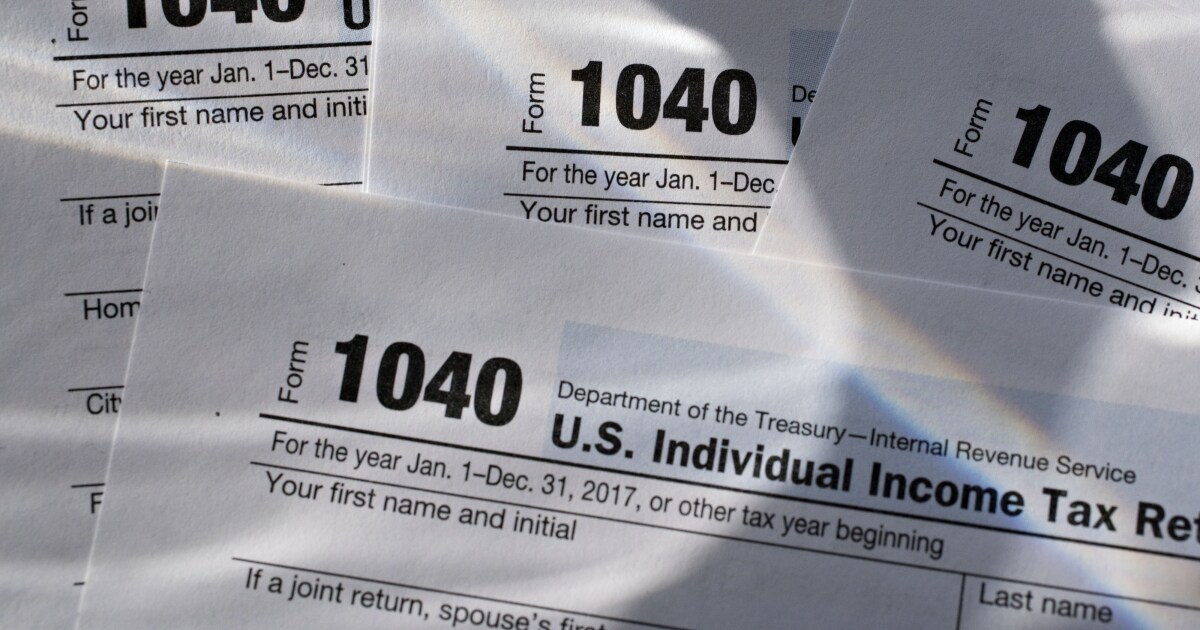
Although filing season began smoothly and proceeded with little fanfare, there are still some issues that are on the minds of tax pros.
“While it began looking like a smooth year, it has been anything but,” said, according to Misty Erickson, tax content manager at the National Association of Tax Professionals. She listed the following as contributing to the angst felt by many preparers:
- With
the IRS laying off employees , there are a lot of questions on how this will impact the filing season. The IRS will shift staff to help with return processing, but if a return stops for review, or if it is paper filed, there may be a delay. To help combat this, tax pros should double check the return before filing and compare last year’s return to this year’s; they should also ask about any missing income or other discrepancies. - There’s also concern about the likelihood of delayed response from the agency. Erickson recommended using online tools whenever possible. The IRS has online accounts for individuals, businesses and tax professionals that can be utilized to reduce the need to call for assistance. Those who need to call should expect to be on hold for some time
- Dealing with current law versus campaign rhetoric around not taxing overtime, tips, or Social Security. Until these promises become law there will be no changes. The challenge, Erickson warned, will be to convince clients that even though this has been in the news, it is not certain until it is signed into law.
Beneficial ownership information reporting for small businesses is an ever-changing landscape. Any enforcement actions have currently been suspended, and it appears that the focus will be on foreign entities reporting their BOI.
There has not been a lot of last-minute legislative changes, so the chores this tax season have revolved around all the other compliance work layered in, according to Kelly Myers, of Myers Consulting Group LLC, who spent 30 years at the IRS, including 20 as a senior technical advisor at the SB/SE Division.
(Read more:
“A lot is crystal ball work — how to make strategic decisions to minimize the tax effect influencing future returns,” he said. “The IRS is still trying to process Employee Retention Credits, with taxpayers waiting for refunds. There are ERCs from 2020 still in the queue. Meanwhile the statute of limitations is running, so make sure to get the claim in before it runs.
“There was a bit of a domino effect,” he added. “When they released 6,700 employees, it caused compliance efforts to stop. People have called in regarding an audit and were told that it had gone on hold until further notice. They had new and probationary hires working on audits, but now those are gone.”

“The reality is we really don’t know what the future holds regarding people getting reinstated,” said Myers. It’s a season of adjustment — that’s different because the technical side of tax season is not here. When four probationary hires leave, the audits they were working have to go to someone. What do you do with clients when the IRS has shortages in the field causing the process to change? It affects filing season indirectly because things take a lot more time when the practitioner is dealing with the ripple effect of IRS staffing.”
Myers praised industry associations and professional organizations for stepping up and providing free membership and advice to departing IRS agents and outgoing staff to help them land jobs.
Waiting for the other shoe to drop
“We have had no major issues or delays,” said Mark Steber, chief tax Officer at Jackson Hewitt Tax Services. “As with IRS guidance, we continue to see refunds being issued for nine out of 10 taxpayers within 21 days, and in many cases even faster than that. We also have not had any disruption in communication with the IRS.”
Bill Nemeth, immediate past president and education chair of the Georgia Association of Enrolled Agents, agreed.
“E-filed returns are being accepted and refunds are being disbursed in a timely fashion just like we would expect,” he observed. “But as we get deeper into filing season, we may have more complicated paper returns that we have to mail in, and we are concerned whether they will be processed in a timely fashion. Someone has to open the envelope, and read and review the return. That’s our biggest concern — it’s still early but we are crossing our fingers.”
“Another concern is that tax revenues may be down 10% this year. If the IRS is not going to pursue people, fewer will file or file correctly,” he added.
Nemeth files an extension for every return. “I then file the return later on. If I discover by looking at the transcript if something was left out, I can file a superceding return — a replacement return. Some people had two jobs in 2024 and forgot one of them. Kids are terrible at giving documents to their preparer, especially 1098-T,” he observed.
“When we call the IRS, the answering assister will give their name and employee number,” Nemeth remarked. “New employees start with ‘100,’ which means that you’re talking to a ‘newbie’ that may not know what they’re doing. I always prefer to speak to someone with a number that begins with a number over ‘100’ that has been there awhile.”
“If you’re talking to a newbie, a polite way to end the call is simply to hang up while you’re talking,” he suggested. “It sounds like an equipment failure on your end as opposed to saying, ‘You don’t know what you’re doing.’ The other trick is calling during lunch time. Managers will often answer their own phone, and they’re the ones you want to talk to. They can make decisions while clerks cannot.”
BOI, EV, Etc.
“The Treasury said they would not enforce the BOI requirements to file, so that’s taken a load off a lot of preparers,” said Stephen Mankowski of Mankowski Associates CPA LLC, a former tax chair of the National Conference of CPA Practitioners. “It was absolutely the right call, since there was no way they were going to get 20 million-plus reports filed, especially during filing season. It was almost as if they were setting us up just to be able to issue a whole lot of fines. The AICPA did a lot on their end. We don’t know if they might come up with something after filing season. I don’t know what filing that report has to do with money laundering because the bad guys will not file.”
“If you were a money launderer would you file?” he asked. “They were just going to get a bunch of moms-and-pops, with carve outs for really small businesses. So keep on top of it pending further action, but for now nothing needs to be done.”
The majority of returns are getting accepted and refunds are being issued in a timely manner, Mankowski said: “We always get a couple of juicy rejects, but even with those, we know what to do to get things resolved. That’s been good so far. The only potential hiccup is the giant elephant in the room: how the reduction in force at the IRS will affect filing season. I’ve been fortunate not to have to call the IRS, but I’ve heard mixed reviews. Some had a hard time while others have gotten straight through.”
The bigger issue is how it will play out with IRS employees at retirement age. “The problem is when people take retirement, they have the knowledge base that goes along with their career,” he explained. “‘Probationary’ just means new to a specific department or a switch from IRS to Treasury, but when all is said and done you could have 10 years and be viewed as probationary. The fact that the IRS is putting together a workforce reduction plan during tax season is almost a power play to other departments — they can say if the IRS is doing this, what’s your problem?”
Tax attorney Barbara Weltman, author of J.K. Lasser’s Small Business Taxes 2025, noted that, new for 2024, the clean vehicle credit for buying new electric vehicles and the previously owned clean vehicle credit for used EVs can effectively be “sold” to the dealer to reduce the purchase price of the EV.
“Opting to transfer the credit to the dealer means the taxpayer does not have to wait to file a return in order to reap the tax savings from the credit,” she said. “The Treasury says that about 90% of the qualifying consumers buying a new EV have transferred their credits to dealers. But the taxpayer must file Form 8936 and Schedule A of this form. The taxpayer should have received a time-of-sale report from the dealer, which has information necessary to complete the form and schedule.”





How to understand Intel $15B Stock Offering

Economic Profile of the United States of America (2026–2030 Horizon)

Top 10 Largest Economies by 2030: IMF & World Bank GDP Projections for Global Powerhouses

Armanino adds Strategic Accounting Outsourced Solutions

New 2023 K-1 instructions stir the CAMT pot for partnerships and corporations

Tax Strategy: Employee Retention Credit update
-

 Economics7 days ago
U.S. Retail Sales Fall for the First Time in Nine Months as Consumer Spending Slows
-

 Accounting1 week ago
AI-Driven Automation and Continuous Accounting Frameworks
-

 Finance1 week ago
Cross-Border Settlement Innovation and Real-Time Payment Architecture
-

 Economics1 week ago
Macroeconomic Impact of Global Energy Shocks and Shipping Route Realignment in 2026
-

 Economics5 days ago
Nvidia’s Potential $3 Billion SB Energy Investment Could Reshape AI Infrastructure
-

 Personal Finance1 week ago
Navigating Residential Real Estate and Mortgage Strategy
-
 Economics21 hours ago
Top 10 Largest Economies by 2030: IMF & World Bank GDP Projections for Global Powerhouses
-

 Leaders1 week ago
Modern Executive Leadership: Navigating Hybrid Work Dynamics and Outcome-Based Governance