
Accounting
Atlanta Braves face $19M tax-hike battle over athlete pay

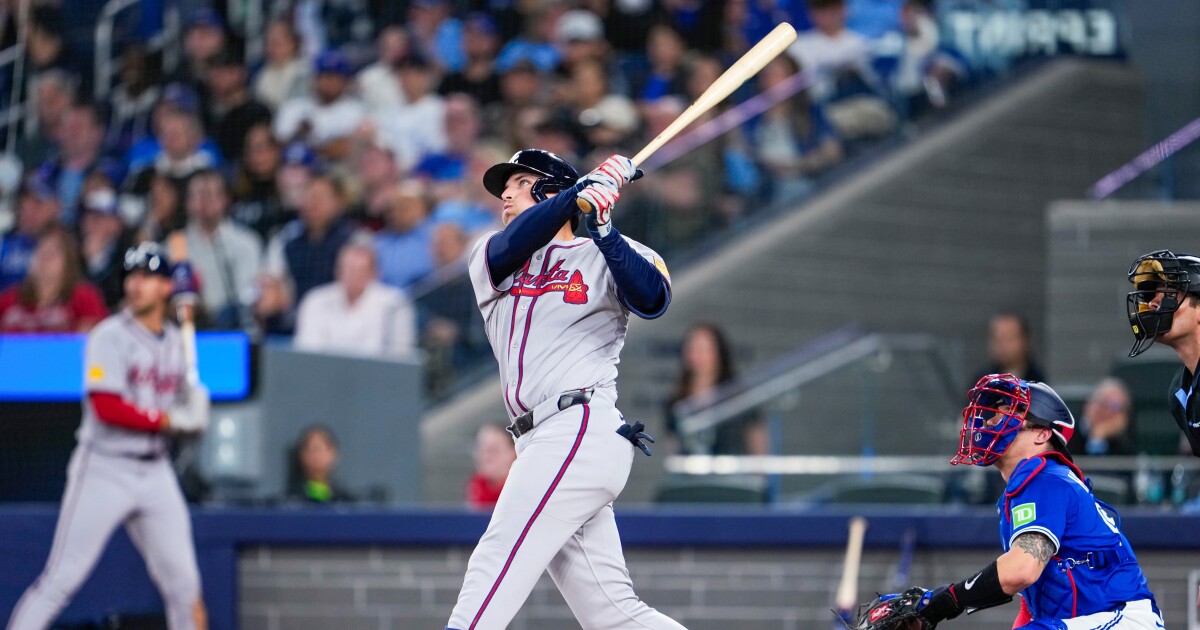

The Atlanta Braves, the country’s only publicly traded Major League Baseball team, is facing off against the U.S. Tax Code in a lonely battle that threatens to cost the franchise millions.
A little-known tax rule soon to go into effect will restrict public corporations from deducting the salaries paid to their highest compensated employees. For Atlanta Braves Holdings Inc., those employees are players — including first baseman Matt Olson, third baseman Austin Riley and former National League Most Valuable Player Ronald Acuña Jr.
Privately held teams like the New York Mets, owned by Point72 Asset Management founder Steve Cohen, and billionaire John Middleton’s Philadelphia Phillies, won’t get hit by the tax. The Mets, for example, can deduct every dime paid to outfielder Juan Soto, a free agent lured from the New York Yankees with a record-setting $765 million, 15-year contract.
The team’s five most generously compensated players are set to collectively earn $96 million in 2027 — the year the new rule limiting salary deduction for all but $1 million of each of the top five most highly compensated players’ pay.
That amounts to a potential $19.1 million tax hike on the Braves, assuming a 21% corporate tax rate. The team paid $4.2 million in federal income taxes in 2024, according to a regulatory filing.
The company had pre-tax loss in 2024 of about $36 million, when revenue was $662 million. Representatives for the Braves declined to comment.
The Braves will be at a significant disadvantage under the tax code, according to Douglas Schwartz, a Nossaman LLP partner who specializes in tax matters. The team would be particularly harmed when pursuing free agents because they’d have to factor in the additional tax burden, in addition to the contract amount when competing for top talent, he said.
The only other major league team owned by a publicly traded company is the Toronto Blue Jays. Rogers Communications, a Canadian entertainment conglomerate with nearly $20.6 billion in annual revenue, doesn’t expect any meaningful impact from the U.S. tax provision, according to company spokesman Zac Carriero.
That leaves the Braves without any MLB allies in this fight, which requires congressional intervention before 2027 tax returns are due if they hope to dodge the new tax. The team hired a pair of lobbyists in February to bend lawmakers’ ear about the rule, according to federal filings.
There is, however, one other professional sports entity affected by the 2027 tax hike: Madison Square Garden Sports Corp., which owns the National Basketball Association’s New York Knicks and the National Hockey League’s New York Rangers.
That may not give the Braves the most politically sympathetic bedfellow. The company, run by billionaire James Dolan, has been criticized for a state tax deal cut in the 1980s that has exempted them from $1 billion in property taxes. A spokeswoman declined to comment.
The Braves’ lobbyists may not find a receptive audience in Congress, according to a person familiar with the talks in Washington. Republicans like the tax because it raises much-needed revenue from a relatively unpopular source: big companies whose top employees earn millions. Democrats like it for the same reason, said the person, who asked not to be identified to discuss confidential conversations.
The Tax Code generally allows companies to write off employee compensation as a business expense. But efforts to curb those write-offs for multimillion-dollar salaries date back to former President Bill Clinton’s first term, after he’d campaigned on reining in corporate greed at a time when middle-class voters were reeling from jobs being moved offshore.
The rule initially only applied to executive pay — not employee compensation — but it was broadened to include the five highest worker salaries as part of former President Joe Biden’s pandemic relief bill, with a delayed effective date until 2027.
Companies can lessen the blow by employing sophisticated tax techniques, including timing other losses to offset the higher tax bills, according to Deb Lifshey, a managing director at Pearl Meyer, an executive compensation and leadership consulting firm. Another option is to go private, which reduces oversight and regulation.
“We always have companies that struggle with the question, is it worth it to be public?” Lifshey said.
For the Braves, finding a buyer willing to take the team private might be difficult. The team was spun off by Liberty Media Corp. in 2023 at a time when the sales tags for sports franchises were spiking — and the Braves were riding a high coming off a 2021 World Series win and had top stars locked into multi-year contracts.
While teams in other leagues — including the National Football League’s Washington Commanders and the NBA’s Boston Celtics — have broken sports franchise sale prices records in recent years, the market for baseball teams hasn’t been quite as lucrative.
Private equity titans David Rubenstein and Michael Arougheti bought the Baltimore Orioles in 2024 for $1.7 billion, $700 million less than Cohen paid for the Mets four years prior. Mark Lerner and his family put the Washington Nationals up for sale in 2022, and took them off the market two years later after failing to find a buyer who’d meet their purchase price.
Absent going private or winning a lobbying effort, the Braves may end up saddled — at least temporarily — with a tax bill no other team in the league faces.
“I just don’t think Congress ever thought about this when it enacted the rule,” Schwartz said.





U.S.-China AI Competition Intensifies as Washington Pushes Allies to Choose Sides

Nvidia’s Potential $3 Billion SB Energy Investment Could Reshape AI Infrastructure

U.S. Retail Sales Fall for the First Time in Nine Months as Consumer Spending Slows

Armanino adds Strategic Accounting Outsourced Solutions

New 2023 K-1 instructions stir the CAMT pot for partnerships and corporations

Tax Strategy: Employee Retention Credit update
-

 Economics1 week ago
Top 65 Largest Economies in the World for 2027
-

 Finance1 week ago
Private Credit Expansion and Regulatory Oversight in 2026 Capital Markets
-

 Technology1 week ago
Quantum Computing Advances and PostQuantum Cryptography
-

 Economics1 week ago
Federal Reserve Holds Rates at 3.50% Amid Divided Committee and Energy Volatility
-

 Economics1 week ago
Impacts of the Ukraine and Iran Wars on World Global Economy and Financial Market
-

 Insights1 week ago
Technology-Driven Productivity Gains Outpacing Demographic Labor Shortages
-

 Stock News1 week ago
Tech Sector Earnings Beat Driven by Robust Q2 Profit Growth and AI Infrastructure Spend
-
 Economics6 days ago
US Inflation Matches Wall Street Projections as Core CPI Cools to 2.5%: Key Implications for Economy and Markets