Connect with us

Finance

Fed minutes August 2025

Published

on

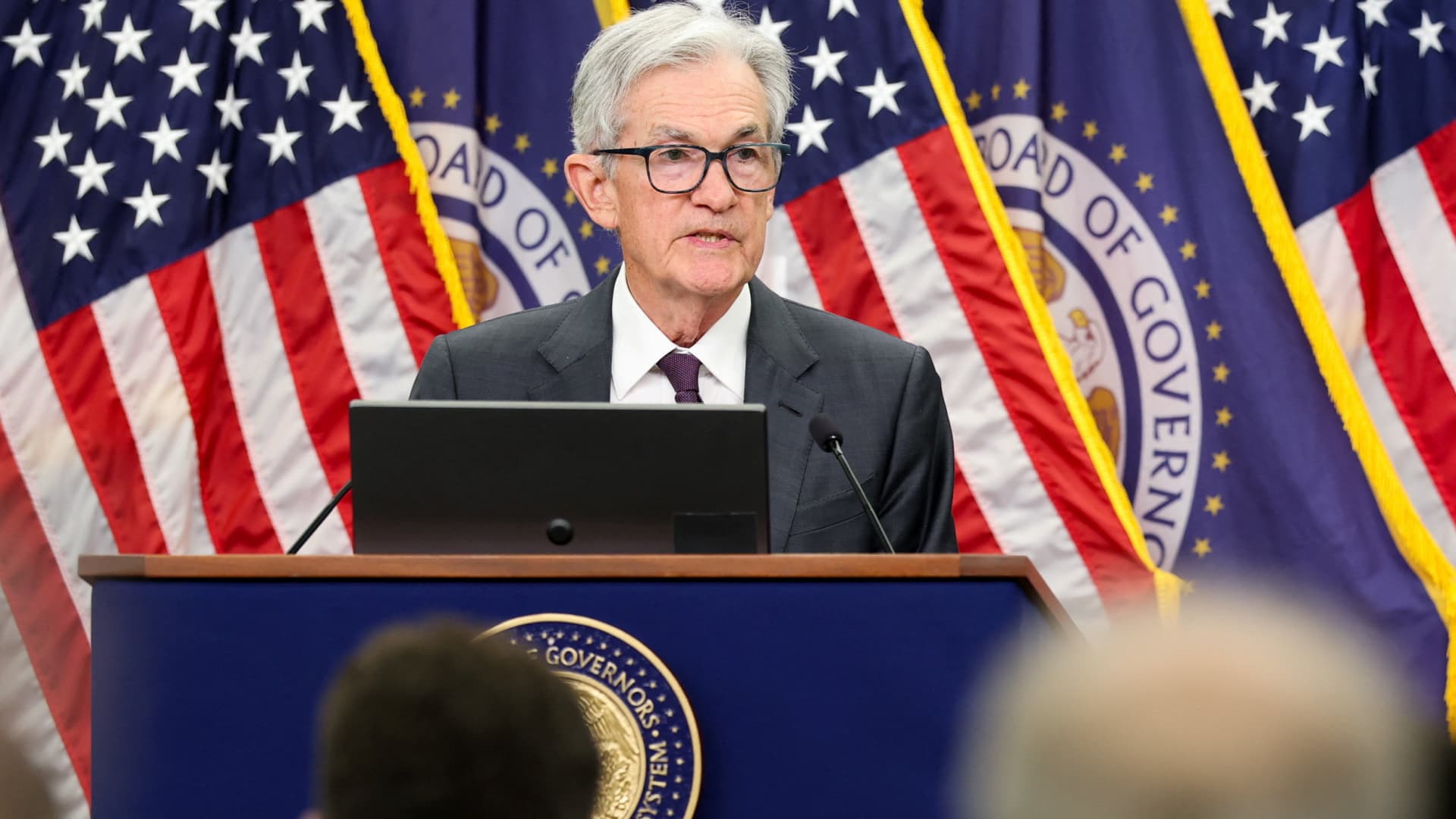
U.S. Federal Reserve Chair Jerome Powell speaks during a press conference following the issuance of the Federal Open Market Committee’s statement on interest rate policy in Washington, D.C., U.S., July 30, 2025.

Jonathan Ernst | Reuters

Federal Reserve officials worried at their July meeting about the state of the labor market and inflation, though most agreed that it was too soon to lower interest rates, minutes released Wednesday showed.
 
The meeting summary depicted a divergence of opinion among the central bankers, whose vote to hold their key rate steady came despite objections from two Fed governors who argued in favor of cutting.

Policymakers noted rising threats to the economy that would warrant monitoring, though they largely agreed that their current stance was the appropriate way to go.

“Participants generally pointed to risks to both sides of the Committee’s dual mandate, emphasizing upside risk to inflation and downside risk to employment,” the minutes noted. While “a majority of participants judged the upside risk to inflation as the greater of these two risks” a couple saw “downside risk to employment the more salient risk.”

Governors Christopher Waller and Michelle Bowman voted against the decision to hold rates steady, preferring instead that the Federal Open Market Committee start lowering its key rate. The fed funds rate, which sets what banks charge each other for overnight lending but is used as a benchmark for other consumer rates, has been targeted between 4.25%-4.5% since December.

This was the first time that multiple governors voted against a rate decision in more than 30 years.

President Donald Trump’s tariffs were a central part of the discussion.

“Regarding upside risks to inflation, participants pointed to the uncertain effects of tariffs and the possibility of inflation expectations becoming unanchored,” the minutes stated. The document also noted “considerable uncertainty remained about the timing, magnitude, and persistence of the effects of this year’s increase in tariffs.”

Coming against an increasingly heated political backdrop, the meeting saw officials express varying opinions on where they see the economy and policy headed. A staff assessment saw economic growth as “tepid” in the first half of the year though unemployment remained low.

Various participants expressed uncertainty over the impact that tariffs would have on inflation while others worried that the jobs picture was starting to show cracks and would need a policy boost to prevent further damage.

“Participants noted that the Committee might face difficult tradeoffs if elevated inflation proved to be more persistent while the outlook for the labor market weakened,” the summary said. Decisions on rates would depend on “each variable’s distance from the Committee’s goal and the potentially different time horizons over which those respective gaps would be anticipated to close.”

The meeting came just two days before a Bureau of Labor Statistics release showing that nonfarm payrolls growth had not only remained weak in July but also that June and May had seen much weaker growth than originally reported.

Even without that information in hand, Fed officials noted that “downside risk to employment had meaningfully increased with the slowing of the growth of economic activity and consumer spending, and that some incoming data pointed to a weakening of labor market conditions.”

The minutes were released two days ahead of the main event for the Fed this week: Chair Jerome Powell delivers his keynote address Friday morning during the central bank’s annual symposium at Jackson Hole, Wyo.

Powell is expected to use the speech to indicate at least a short-term direction for the Fed regarding rates as well as a longer-term view on policy.

Trump has exerted fierce political pressure on the Fed to cut rates. The president has berated Powell as “stupid,” “a loser” and other invectives while also criticizing the board.

With the resignation earlier this month of Governor Adriana Kugler, Trump will get to appoint another of his own candidates to the seat. Powell’s term as chair expires in May 2026, though he can stay on as governor if he wishes through 2028. In the latest wrinkle, Trump has demanded the resignation of Governor Lisa Cook amid claims that she committed mortgage fraud regarding federal loans she received for properties in Georgia and Michigan.

In the case of the Powell seat, the White House has identified 11 potential candidates, including several current and past Fed officials along with economists and Wall Street strategists.

Correction: This article has been updated to correct the spelling of Adriana Kugler’s name.

Continue Reading

Finance

Treasury Bond Volatility Forces Bessent to Double Debt Buyback Size as Yields Swing

Published

on

Bessent

A turbulent week in the U.S. Treasury market prompted the Treasury Department to sharply increase the size of its long-term debt buyback program, as bond prices fell even while equity markets pushed toward record highs. The divergence has drawn attention from fixed-income strategists who see it as a signal of underlying investor unease about federal borrowing levels.

What Happened This Week

U.S. Treasury Secretary Scott Bessent told CNBC on Thursday, August 20, 2026, that the Treasury had doubled the size of its long-term debt buyback operations, moving from roughly $2 billion to at least $4 billion per operation. Bessent indicated the figure could climb further, saying “we’re going to increase the size of the buyback,” and noted the accelerated pace could exceed the announced $4 billion threshold per issue.

Buybacks allow the Treasury to repurchase outstanding government bonds directly from the market, which can help support prices and dampen yield volatility during periods of stress. The expanded program came as stocks staged a late-week recovery: the S&P 500 and Russell 2000 both advanced on Friday, August 21, even as Treasuries logged mild losses, according to Bloomberg market data.

Why Bond and Equity Markets Are Diverging

Capital.com senior market analyst Daniela Hathorn described the week’s dynamic as markets “ending the week on a softer tone after the relative calm of early August was disrupted by renewed pressure in global bond markets, another rise in oil prices, and growing uncertainty around the Federal Reserve’s next move.” She noted that higher long-term borrowing costs are increasingly challenging elevated equity valuations, even as U.S. equities pull back modestly from record highs.

This divergence — equities near record levels while bonds sell off  is unusual and reflects two different sets of investor concerns. Equity investors have remained focused on corporate earnings strength, particularly from large technology companies ahead of Nvidia’s closely watched August 26 earnings report. Bond investors, by contrast, are more directly exposed to concerns about the scale of federal borrowing, highlighted this week by the national debt crossing the $40 trillion threshold for the first time.

The Fed and Treasury “Working in Opposite Directions”

Wilmington Trust senior bond portfolio manager Wil Stith told Yahoo Finance that current conditions reflect “the Fed and the Treasury basically working in sort of opposite directions,” adding that the imbalance will likely require the Federal Reserve  which he described as having “the larger sandbox”  to adjust the federal funds rate rather than relying on Treasury market interventions alone to manage yields.

Notably, the bond market’s reaction to the Treasury’s buyback expansion was relatively muted; strategists described the move as being largely absorbed without a major rally, suggesting the underlying pressure on yields stems from factors, such as inflation persistence and debt sustainability concerns, that a buyback program alone cannot resolve.

What Comes Next

Markets are now looking to two major events in the days ahead: Nvidia’s earnings report on Wednesday, August 26, and the Federal Reserve’s Jackson Hole Economic Symposium, running August 27-29. This will be the first Jackson Hole gathering under new Fed Chair Kevin Warsh, whose public communication style and policy signals remain less established than his predecessors’, according to market commentary from Regards of Wall Street.

For investors, the key metrics to watch are the size and frequency of future Treasury buyback operations, movements in the 10-year Treasury yield, and any policy signals from Warsh’s keynote address. Continued yield volatility alongside record equity valuations would suggest the market imbalance identified this week has not yet been resolved.


Continue Reading

Finance

Cross-Border Settlement Innovation and Real-Time Payment Architecture

Published

on

The global banking system is undergoing a comprehensive modernization of cross-border payment infrastructure. Driven by real-time settlement networks, open banking APIs, and interoperable messaging standards, financial institutions and multinational corporations are eliminating multi-day delays and reducing transaction costs associated with legacy international wire transfers.

Transition to Real-Time Gross Settlement Networks
Historically, international business-to-business (B2B) payments relied on complex correspondent banking relationships involving intermediary fees and processing delays. In 2026, the widespread adoption of ISO 20022 messaging protocols alongside interconnected Real-Time Gross Settlement (RTGS) systems allows direct, end-to-end processing of cross-border transfers.

Commercial banks are providing corporate clients with continuous, 24/7 payment clearing capabilities. Real-time transaction confirmation and automated FX rate locking allow international businesses to settle cross-border trade obligations within minutes, significantly reducing counterparty risk.

Central Bank Digital Currency (CBDC) Interoperability
Wholesale Central Bank Digital Currency (CBDC) pilot initiatives are reaching operational maturity across several key financial centers. Collaborative multi-CBDC platforms enable participating central banks and commercial institutions to settle foreign exchange and international trade transactions directly on shared distributed ledgers.

These wholesale digital currency networks eliminate traditional clearinghouse delays and minimize foreign exchange slippage. Enterprise treasury departments benefit from enhanced liquidity management, as cross-border cash balances can be deployed and repatriated instantaneously.

Corporate Treasury Transformation
For enterprise treasurers, instant cross-border settlement transforms cash management strategies:
– Working Capital Optimization: Reduced transaction float allows companies to lower precautionary cash reserves and optimize short-term liquidity investments.
– Automated Reconciliation: Enriched data formats embedded in ISO 20022 payment messages streamline automated general ledger posting and invoice matching.
– Reduced Processing Overhead: Account-to-account (A2A) real-time clearing bypasses costly intermediary correspondent banking fees.

Strategic Financial Priorities
1. Upgrade Treasury Systems: Ensure internal core enterprise software supports real-time ISO 20022 payment messaging standards.
2. Leverage Instant Clearing Rails: Utilize direct payment networks to lower cross-border transaction fees and eliminate settlement delays.
3. Evaluate Multi-Currency Liquidity: Modernize liquidity management frameworks to capitalize on 24/7 real-time settlement capabilities.

Continue Reading

Finance

Private Credit Expansion and Regulatory Oversight in 2026 Capital Markets

Published

on

The global private credit market has solidified its role as a fundamental pillar of enterprise finance, expanding rapidly across middle-market lending, asset-backed finance, and infrastructure financing. As non-bank financial institutions capture a larger share of corporate debt origination, global regulatory bodies are increasing oversight to evaluate market transparency and systemic risk interconnections.

Growth Drivers in Direct Lending
Direct lending platforms have continued to attract substantial institutional allocations from pension funds, sovereign wealth entities, and insurance companies seeking attractive risk-adjusted yields. Private debt funds offer corporate borrowers customized financing structures, faster execution timelines, and confidentiality compared to syndicated loan markets.

In 2026, private credit managers are increasingly financing larger corporate transactions, providing multi-billion-dollar credit facilities for buyout deals and corporate restructurings. The flexibility of private debt contracts—featuring unitranche pricing and tailored covenant packages—has made direct lending the preferred capital source for middle-market enterprise sponsors.

Regulatory Scrutiny and Systemic Risk Assessment
The rapid growth of non-bank intermediation has drawn heightened scrutiny from financial regulators in North America and Europe. Because private debt agreements are negotiated privately without public exchange disclosures, central banks are evaluating potential vulnerabilities related to asset valuation consistency and fund liquidity profiles.

Regulatory agencies are introducing guidelines aimed at improving reporting standards for private investment vehicles managing institutional assets. Key focus areas include monitoring leverage ratios within private credit funds and evaluating indirect credit exposures between commercial banking institutions and private debt funds.

Navigating Elevated Refinancing Costs
With benchmark interest rates remaining elevated, private debt borrowers face higher debt service obligations on floating-rate credit facilities. Financial advisory firms report an increase in proactive liability management strategies, including payment-in-kind (PIK) interest options, equity infusions from sponsors, and covenant modifications.

Private credit managers with deep operational capabilities are actively working alongside portfolio companies to optimize working capital and maintain cash flow coverage ratios during periods of higher borrowing costs.

Key Financial Takeaways
1. Mainstream Asset Class: Private credit has expanded beyond niche alternative asset status into a core corporate finance solution.
2. Enhanced Transparency Standards: Regulatory frameworks are evolving toward greater disclosure requirements for private debt managers.
3. Proactive Risk Management: Lenders and sponsors must prioritize debt sustainability and active portfolio monitoring amid high benchmark rates.

Continue Reading

Trending