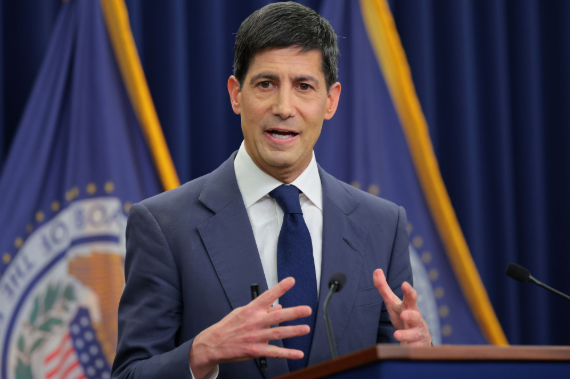
The Federal Reserve Bank of Kansas City’s annual Jackson Hole Economic Policy Symposium runs August 27-29, 2026, and this year’s gathering carries particular significance: it marks the first symposium under new Federal Reserve Chair Kevin Warsh, whose confirmation in May 2026 followed one of the most contentious Senate votes for a Fed chair nominee in the modern era.
A New Chair, an Unfamiliar Market Vocabulary
Warsh was confirmed by the Senate on a 54-45 vote on May 13, 2026 at a margin NPR described as the closest confirmation vote for a Fed chair in the modern era, split almost entirely along party lines except for Pennsylvania Democrat Senator John Fetterman, who crossed over to support the nomination.
Because Warsh has spoken publicly far less often than predecessors like Powell had by this point in their tenures, markets are still, in the words of a Tech Times analysis, “building their dictionary of what his phrases mean.” Every sentence of his keynote is expected to be parsed and traded within seconds of release.
The Official Theme vs. What Actually Moves Markets
This year’s symposium theme is “Financial Innovation: Implications for Payments and Policy,” focused on how developments in digital payments, central bank digital currencies, and financial technology are reshaping monetary transmission and regulatory frameworks, according to Finance Calendar’s event breakdown. Approximately 120 central bankers, policymakers, economists, and academics from more than 70 countries are expected to attend.
However, market commentary from Regards of Wall Street cautions against reading too much into the stated theme: “The theme constrains the papers, not the keynote, and chairs habitually use the slot to talk about whatever the moment requires.” Historically, Jackson Hole keynotes have been used to signal upcoming policy shifts regardless of the symposium’s nominal focus — Powell’s 2022 address, for instance, delivered a stark message about the “pain” required to tame inflation, and the S&P 500 fell roughly 3.4% that same day, while his 2024 speech opened the door to rate cuts and sent the Russell 2000 sharply higher.
Why This Year’s Backdrop Adds Extra Weight
Warsh’s first keynote arrives amid unusually elevated fiscal and market tension. The U.S. national debt crossed $40 trillion this month, Treasury bond markets have seen significant volatility, and the Treasury Department has doubled the size of its debt buyback program in response. Wilmington Trust’s Wil Stith described the dynamic as the Fed and Treasury “working in sort of opposite directions,” suggesting markets may look to Warsh for signals on how policy will respond to fiscal pressure.
Compounding the timing, Nvidia’s closely watched Q2 earnings report on August 26 lands just one day before the symposium begins.
What Warsh Has Signaled So Far
During confirmation, Warsh argued there was room to lower rates but pledged to use independent judgment rather than taking direction from the White House, per NPR’s coverage. He denied Senator Elizabeth Warren’s characterization that he would act as a “sock puppet” for the administration. President Trump has publicly expressed hope Warsh will pursue more aggressive cuts than his predecessor.
Notably, Powell remains on the Fed’s Board of Governors and retains a vote on the rate-setting committee — an unusual arrangement meaning the current FOMC includes both the outgoing and incoming chair simultaneously.
What to Watch
Investors, economists, and households affected by borrowing costs should watch for the exact timing and tone of Warsh’s Friday keynote, expected to draw the heaviest market attention of the three-day event. Any explicit commentary on the interaction between fiscal policy — particularly the growing federal debt — and the Fed’s rate path would be a significant signal, given how directly bond market conditions and mortgage rates have already been affected by fiscal concerns this month.