
Finance
Here’s what current and former Fed officials are saying about Lisa Cook investigation

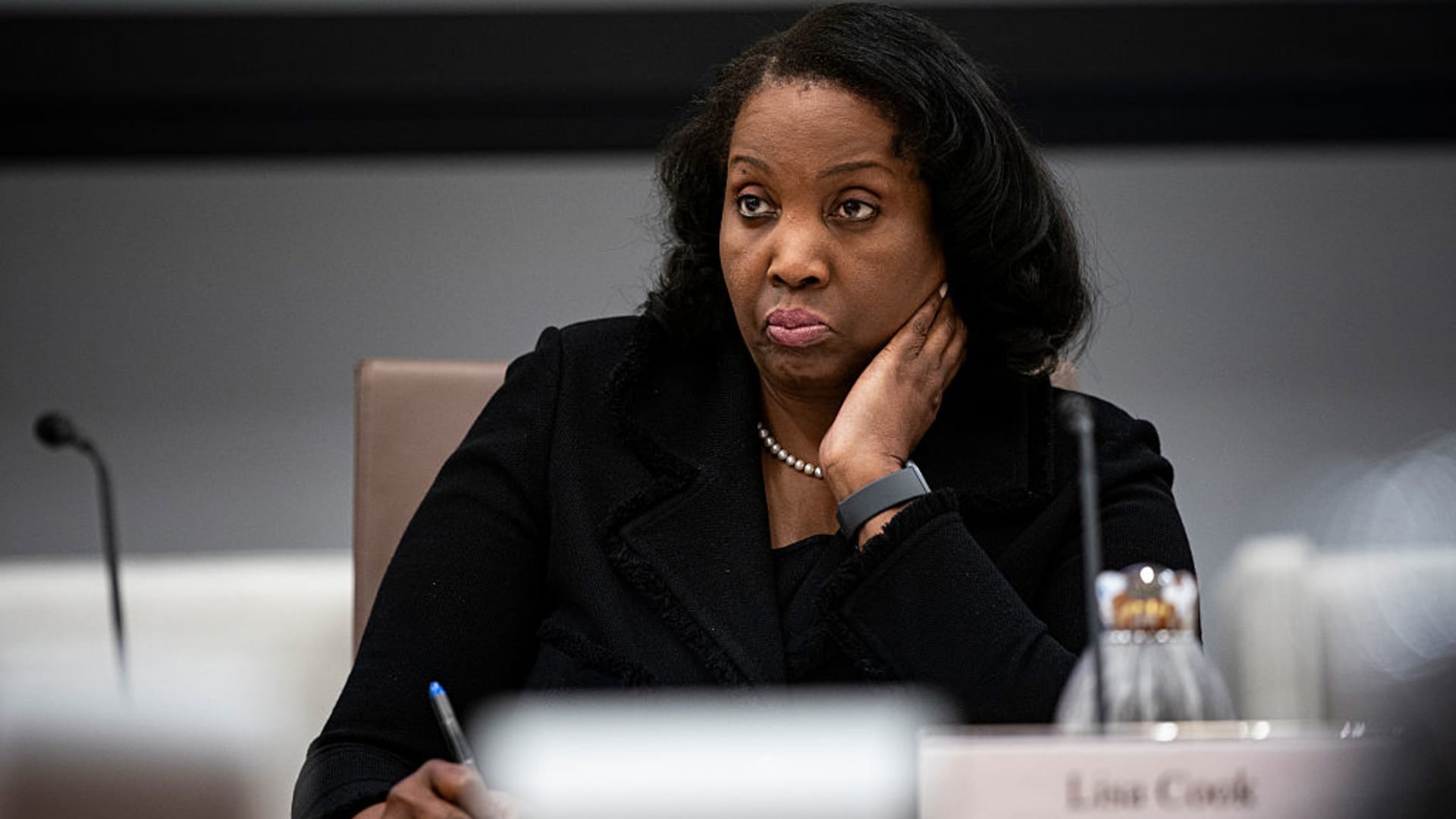
Lisa Cook, governor of the US Federal Reserve, during the Federal Reserve Board open meeting in Washington, DC, US, on Wednesday, June 25, 2025.
Al Drago | Bloomberg | Getty Images
Current and former Federal Reserve officials struck a common note when asked about Lisa Cook’s situation: It’s imperative the central bank’s independence is preserved.
Cook, a Fed governor nominated in 2022 by then-President Joe Biden, has faced attacks over accusations of mortgage fraud from Federal Housing Finance Agency Director Bill Pulte. Justice Department attorney Ed Martin also urged Chair Jerome Powell to fire Cook from her post and confirmed a criminal investigation will take place.
The central bank official rejected the idea of resignation Wednesday, saying in a statement she has “no intention of being bullied to step down from my position because of some questions raised in a tweet.”
Cleveland Fed President Beth Hammack told CNBC on Friday that she stood by Cook, noting: “I know Lisa Cook to be an outstanding economist and a person of high integrity, and I think it’s critically important that the Fed maintains its independence on monetary policy so we can ensure great outcomes for the American public.”

The latest developments have fanned concerns on Wall Street surrounding the Fed’s independence. Trump has notably been a vocal critic of Powell, nicknaming him “too late” with regards to the timing of modifying interest rates and accusing him of being “political.”
Although Trump has said that it’s “highly unlikely” he would fire Powell before his term as chair is up in May 2026, the president has already started considering several candidates to succeed him and just last week threatened to allow a “major lawsuit” against Powell to proceed while pushing for lower rates yet again.
The Fed, which has maintained a strictly data-dependent stance, has kept rates steady since December.
Trump also pressed Cook to resign this week in the wake of the accusations. He even said Friday that he will fire her if she does not leave her post. The odds that Cook will be out as governor this year spiked on prediction market Kalshi following those comments, rising to more than 30% from roughly 21% earlier in the day.
U.S. President Donald Trump speaks by a wall featuring the names of former U.S. presidents and first ladies, as he visits The People’s House: A White House Experience museum, in Washington D.C., U.S., August 22, 2025.
Jonathan Ernst | Reuters
Former Boston Fed President Eric Rosengren thinks more information is needed before a decision — by Cook or the administration — is made.
“I don’t know what Lisa Cook is going to choose to do. It is a difficult situation for her, but today we have allegations but no facts,” Rosengren said Friday on CNBC’s “Money Movers.” “Until there’s some facts out, I don’t think people should draw any conclusion.”
Safeguarding independence
When asked about the pressure that the Fed is facing, including the resignation calls against Cook, former Fed Vice Chair Roger Ferguson emphasized the importance of the institution educating the American public on “what it does and why it’s important” as well as “why we’ve gone through a period of inflation.”
“People for the first time literally in 30 or 40 years had to deal with that, so everyone now understands, ‘Wow, this inflation thing is a secret tax on the middle-income and … lower-class individuals,” he said on CNBC’s “Squawk Box” on Friday. “The Fed is the institution whose mandate is to control inflation, as well as the other side, and so I turn this around and say it’s really time for all of us to educate the American people. That’s the way we ensure independence.”

Ferguson added that it hasn’t turned out well in places around the world where central bank independence has been undermined. For the U.S., he’s still optimistic about the Fed’s future in that regard.
“I think it maintains independence because the population will get behind and say, ‘Wait a minute, we had inflation, it’s not a good thing, we need an independent Fed to maintain that. Congress, etc., do your job, protect the Fed as best you can,'” he remarked.



Dario Amodei’s Call to Pace the AI Frontier and Its Market Ripple Effects

Rising Oil Prices And Persistent Inflation Complicate Fed Decision

Bridging the AI Skills Gap: How Gen Z Youth Demographics Are Transforming the Workforce

Armanino adds Strategic Accounting Outsourced Solutions

New 2023 K-1 instructions stir the CAMT pot for partnerships and corporations

Tax Strategy: Employee Retention Credit update
-
 Stock News1 week ago
S&P 500 September Outlook: Tech Rally Holds Index at 7,600
-
 Finance1 week ago
S&P 500 Outperforms Amid Strong Corporate Earnings as Treasury Yields Cap Equity Multiples
-
 Accounting1 week ago
Mandatory ESG Reporting Standards Demand Standardized Non-Financial Audit Trails
-
 Insights1 week ago
Climate Resilience and Offshore Wind and Land Restoration Milestones
-
 Leaders1 week ago
India Unveils ‘Saptadhara’ Reform Agenda Targeting Technology, Youth Skilling, and Growth
-
 Economics1 week ago
U.S. Inflation Outlook for 2027
-

 Economics5 days ago
Economic Profile of the superpower of western Europe
-
 Economics5 days ago
Sovereign Bond Yield Volatility and Inflationary Shocks Challenge Global Central Banks