
Accounting
House passes plan to advance Trump tax cuts, debt limit boost

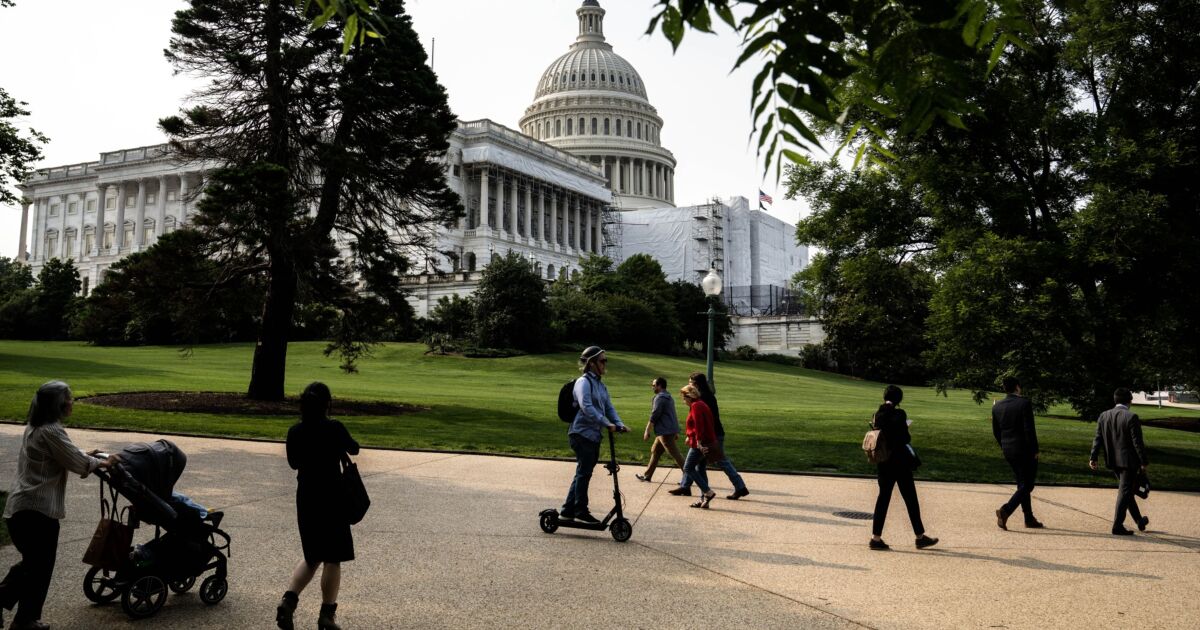

President Donald Trump’s drive to enact trillions of dollars in tax cuts and raise the federal debt is on track after he and congressional leaders successfully corralled House Republican lawmakers to approve a
The 216-214 vote Thursday on the budget — which outlines the parameters for the tax cut and
The president worked the holdouts by phone and in a White House meeting. House Speaker Mike Johnson held a press conference to declare himself “committed” to coming up with at least $1.5 trillion in spending cuts. And Senate Republican leader John Thune joined the speaker to announce “a lot of” Republican senators shared the goal, though he stopped short of a commitment.
It was enough.
With the budget approved, the way is open for a follow-on package to cut taxes by up to $5.3 trillion over a decade and raise the debt ceiling by $5 trillion, in exchange for $4 billion in spending cuts. Republicans can now pass Trump’s tax-cut agenda solely on GOP votes, bypassing the need for negotiations with Democrats.
Trump offered congressional Republicans “Congratulations” in a social media post minutes after the vote.
The vote came a day after Trump announced a 90-day pause on some of his sweeping tariff plans that have roiled markets and sparked predictions of a looming recession. Financial markets — often a barometer of success for the president — initially soared on the news, though U.S. stocks
Republicans are planning to renew Trump’s first-term tax cuts for households and the owners of privately held businesses, and enact a fresh round of reductions, including expanding the state and local tax deduction and eliminating levies on tipped wages.
Conservative hardliners in the House say they want a final package to trim $2 trillion in spending over the next decade, a significant increase over the $4 billion the Senate is directed to cut in the budget passed Saturday. To make those reductions they’ll likely need to curb Medicaid, food stamps and other social programs with tens of millions of beneficiaries.
A group of moderate Republicans sought — and gained — assurances from Johnson during the vote that the final bill would not cut benefits for qualified Medicaid individuals and institutions, said New Jersey Republican Jeff Van Drew.
“We voted late to make the point,” Van Drew said.
The group, however, is open to eligibility reviews and work requirements for Medicaid recipients, he said.
The budget outline punts many of the hard decisions for lawmakers to hammer out later in the tax-cut negotiations. That could lead to a standoff with the Senate at the end of the process, where several members are resistant to large cuts in safety-net programs.
Democrats assailed the plan as cutting benefits for the poor in order to pay for a tax cut skewed toward the wealthy.
“Republicans do nothing to lower the high cost of living,” Democratic Leader Hakeem Jeffries said on the House floor. “In fact, you’re making the affordability crisis in America worse, not better, when you target earned benefits and things that are important to the American people, like Medicaid.”
Senator John Barrasso, the No. 2 Senate Republican, said GOP lawmakers in both chambers are committed to “very serious savings for the American taxpayer.”
Trump hosted Republican holdouts at the White House on Tuesday to urge their backing. He echoed his pleas while speaking later that day at a donor event in Washington, imploring members who were hesitant to vote for the budget to “just get the damn thing done and stop showboating.”
“It is IMPERATIVE that Republicans in the House pass the Tax Cut Bill, NOW! Our Country Will Boom!!!” Trump posted on Truth Social Wednesday.
Johnson has set a target of the end of May to enact the tax bill, while Senate Republicans have talked of being able to complete the process by August. The 2017 tax cuts don’t expire until the end of the year.
Those self-imposed deadlines could be overrun by a fiscal deadline: the debt ceiling.
The nonpartisan Congressional Budget Office estimates that the Treasury will be unable to pay all of its bills in August or September, but that date could come as soon as late May if tax receipts are low.





U.S.-China AI Competition Intensifies as Washington Pushes Allies to Choose Sides

Nvidia’s Potential $3 Billion SB Energy Investment Could Reshape AI Infrastructure

U.S. Retail Sales Fall for the First Time in Nine Months as Consumer Spending Slows

Armanino adds Strategic Accounting Outsourced Solutions

New 2023 K-1 instructions stir the CAMT pot for partnerships and corporations

Tax Strategy: Employee Retention Credit update
-

 Economics1 week ago
US Inflation Matches Wall Street Projections as Core CPI Cools to 2.5%: Key Implications for Economy and Markets
-
 Economics4 days ago
U.S. Retail Sales Fall for the First Time in Nine Months as Consumer Spending Slows
-

 Economics6 days ago
Macroeconomic Impact of Global Energy Shocks and Shipping Route Realignment in 2026
-

 Finance6 days ago
Cross-Border Settlement Innovation and Real-Time Payment Architecture
-

 Accounting6 days ago
AI-Driven Automation and Continuous Accounting Frameworks
-

 Personal Finance6 days ago
Navigating Residential Real Estate and Mortgage Strategy
-

 Technology6 days ago
The Shift to On-Device Edge AI and Advanced Microprocessor Architecture in 2026
-

 Leaders6 days ago
Modern Executive Leadership: Navigating Hybrid Work Dynamics and Outcome-Based Governance