
Finance
Solomon, Dimon, Pick weigh in on the state of the economy

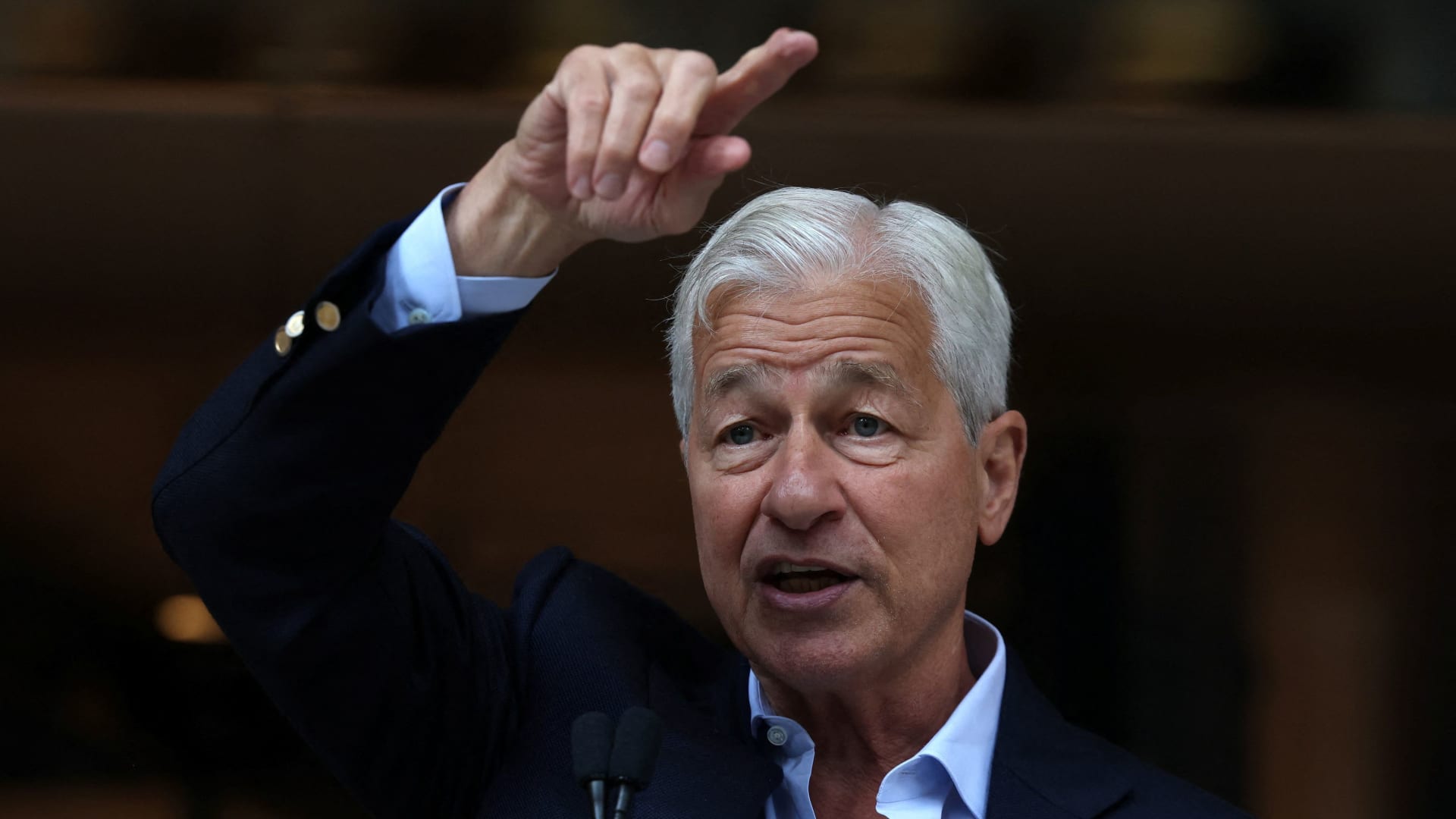

Some of America’s top financial services executives are starting to issue warnings about the economy.
Saying they’re seeing signs of “softening” or “weakening,” a slew of CEOs have been weighing in ahead of next week’s Federal Reserve decision and with the U.S. Bureau of Labor Statistics revising job numbers lower this week.
In a Wednesday CNBC interview, Goldman Sachs CEO David Solomon said while the economy is “still chugging along,” the signals may be pointing in a different direction.
“There are number of CEOs that are talking about a softening in the economy – there’s no question,” he said. “We’ve seen some job data that indicates that there has been some softening.”
The BLS, in a preliminary report released Tuesday, revised its nonfarm payrolls data for the year prior to March 2025, showing a significant drop of 911,000 from the initial estimates. The revisions were more than 50% higher than last year’s and the biggest shift in more than 20 years, adding to growing concern over the economy.
The BLS has also come under fire from President Donald Trump, who fired the head of the bureau in early August and has criticized its data collection methods.
Solomon said he believes there’s “still more work to do” with today’s inflation and that tariffs are having an impact on growth, but that it’s difficult to quantify at this stage. As the economy heads into fall, Solomon said he expects a slight change in the policy rate, including a 25-basis point cut by the Fed next week.
Trump has also been critical of the central bank, calling for lower interest rates and bashing Fed Chair Jerome Powell. The Federal Open Market Committee last cut its benchmark interest rate in December 2024 and has held it steady since then in a target range of 4.25% to 4.5%.
JPMorgan Chase CEO Jamie Dimon told CNBC on Tuesday that he believes the Fed will “probably” lower interest rates at its meeting next week, but that it may “not be consequential to the economy.
Dimon said he also believes the BLS report confirms that the U.S. economy is slowing down.
“I think the economy is weakening,” Dimon told CNBC’s Leslie Picker in an interview. “Whether it’s on the way to recession or just weakening, I don’t know.”
But ultimately, Dimon said the country will simply have to “wait and see” how the economy will progress given the weakening consumer.
Similarly, Wells Fargo CEO Charles Scharf told CNBC Wednesday that his bank is seeing lower-income Americans struggling to stay afloat, despite larger companies seemingly doing well.
“There is this big dichotomy between higher-income and lower-income consumers which continues and is a real issue,” Scharf said.
Commenting on the BLS numbers, Scharf said it’s “undeniable” that the discrepancy between American taxpayers exists and that he sees “more downside” to the U.S. economy.
Job creation in August also showed signs of weakness, as the BLS reported last week that nonfarm payrolls increased by just 22,000 for the month.
Morgan Stanley CEO Ted Pick told CNBC that he believes the American CEO or CFO has had to become resilient throughout the country’s recent ups and downs, including Covid and two Trump administrations.
“We’re in a place where I think some of the policy uncertainty is actually starting to get quantified,” he said.
Still, Pick said he’s seen the headwinds coming through and believes the policy uncertainty may be narrowing slightly.
“So, yes, there may be a little bit of a slowdown,” Pick said, adding that he’ll wait to see how it all plays out.
Barclays CEO C. S. Venkatakrishnan said on CNBC on Tuesday that he believes the Fed will cut on the margin, partly due to the softness in the labor market.
Traders are also expecting to see the Fed lower rates. They currently see a near certainty that the Fed will cut by at least a quarter point, according to the CME Fedwatch tool based on Fed futures trading, and some are betting that there will be an even deeper cut of 50 basis points, or a half percentage point.
Even if inflation problems haven’t tangibly presented themselves yet, Venkatakrishnan said the current economy is signaling that CEOs should have their eyes on the longer term.
“We haven’t seen them yet, but we’ve got to be worried about them,” he said.
PNC Financial Services CEO Bill Demchak also joined the wave, telling CNBC on Tuesday there’s “underlying pressures in our economy” between hiring workers, labor shortages, wage pressure and more.
Demchak said he’s seeing evidence to support the BLS’ revised report, and he believes that evidence is likely the reason that the Fed will cut rates going forward, even as consumer spending is “driving the economy.”
“There’s pressures inside of our economy that I don’t know disappear just because tariffs might get behind us at some point,” Demchak said.



Dario Amodei’s Call to Pace the AI Frontier and Its Market Ripple Effects

Rising Oil Prices And Persistent Inflation Complicate Fed Decision

Bridging the AI Skills Gap: How Gen Z Youth Demographics Are Transforming the Workforce

Armanino adds Strategic Accounting Outsourced Solutions

New 2023 K-1 instructions stir the CAMT pot for partnerships and corporations

Tax Strategy: Employee Retention Credit update
-

 Stock News1 week ago
S&P 500 September Outlook: Tech Rally Holds Index at 7,600
-
 Finance1 week ago
S&P 500 Outperforms Amid Strong Corporate Earnings as Treasury Yields Cap Equity Multiples
-
 Accounting1 week ago
Mandatory ESG Reporting Standards Demand Standardized Non-Financial Audit Trails
-

 Insights1 week ago
Climate Resilience and Offshore Wind and Land Restoration Milestones
-
 Leaders1 week ago
India Unveils ‘Saptadhara’ Reform Agenda Targeting Technology, Youth Skilling, and Growth
-
 Economics1 week ago
U.S. Inflation Outlook for 2027
-

 Economics5 days ago
Economic Profile of the superpower of western Europe
-

 Economics5 days ago
Sovereign Bond Yield Volatility and Inflationary Shocks Challenge Global Central Banks