
Finance
Trump’s war against the Powell Fed has taken another political turn

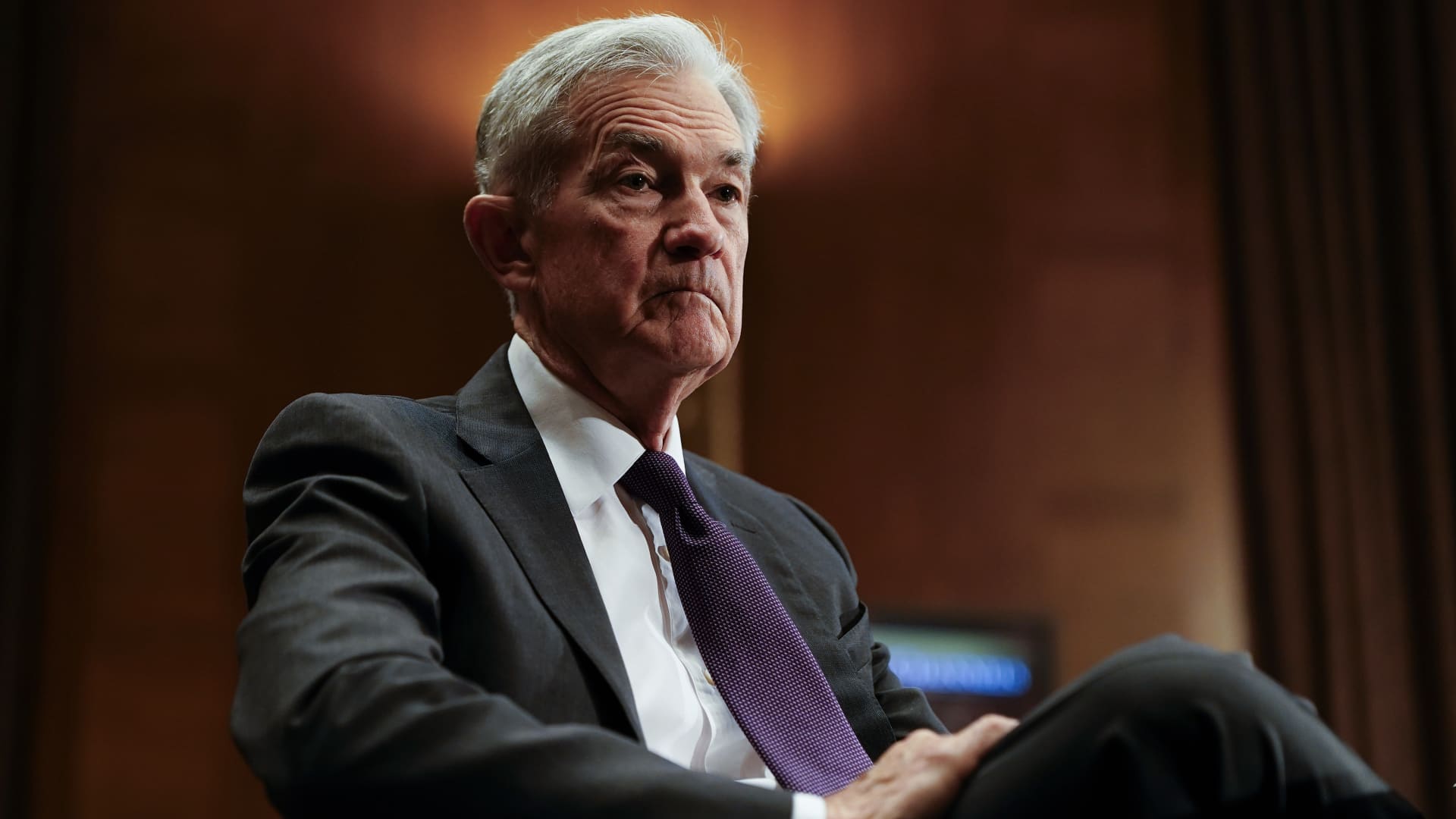
Federal Reserve Chairman Jerome Powell testifies before the Senate Committee on Banking, Housing, and Urban Affairs during a hearing to “examine the Semiannual Monetary Policy Report to the Congress” on Captiol Hill on June 25, 2025 in Washington, DC.
Kent Nishimura | Getty Images
Federal Reserve Chair Jerome Powell mostly breezed through two hearings on Capitol Hill this week but now heads into a much bigger challenge: a potential threat that President Donald Trump could undermine his authority by soon naming his pick to head the central bank next year.
As Powell testified Wednesday before the Senate Banking Committee, holding generally cordial exchanges with lawmakers, Trump was at the NATO summit in The Hague lobbing his latest attacks on a man he had nominated for the Fed job nearly eight years ago.
“I think he’s terrible,” Trump said when asked during a news conference about his intentions for the next Fed leader. Trump then called Powell a “very average mentally person,” adding he has “a low IQ for what he does” and is “a very political guy.”
“I think he is a very stupid person, actually,” Trump said.
While Trump’s name-calling of Powell isn’t particularly new, the words now could signal action.
Potential candidates
In the wake of the intense criticism, Wall Street has been buzzing over the potential for a “shadow chair,” or someone Trump could install as a central bank gadfly until Powell’s term expires in May 2026.
The talk has impacted markets: Traders on Thursday accelerated bets on rate cuts this year, with three reductions now at about a 60% odds, compared to a strong likelihood of two just a few days ago, according to CME Group data. Treasury yields tumbled at the shorter end of the curve, which is where the Fed has its influence, falling much more than those at the long end. The dollar also was down sharply against its global counterparts.
Trump confirmed that he has a list of potential Powell successors down to “three or four people,” without naming the finalists.
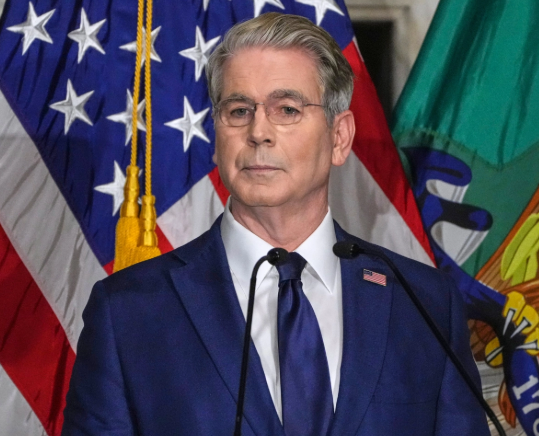
The cadre of potential candidates has become familiar: Treasury Secretary Scott Bessent, National Economic Council Director Kevin Hassett, former Fed Governor Kevin Warsh, and as a dark horse in-house pick Christopher Waller, who is a Trump appointee serving as governor and as of late has been an advocate for lower interest rates.

In some circles, Bessent has been considered a front-runner, though sources familiar with Trump’s thinking say that is not necessarily the case. Bessent himself has said he’s not interested in the job, though that could change if Trump would ask him to take it.
A report in The Wall Street Journal Wednesday evening suggested that former World Bank President David Malpass also is in the running. The Journal report indicated that Trump is considering naming the successor sooner than expected in an attempt to influence interest rate policy.
White House officials did not respond to a request for comment beyond Trump’s remarks at the news conference.
An active Fed
There are several issues making Trump’s desire to name a chair now problematic. For one, there are no immediate open positions, though Governor Adriana Kugler’s term ends in January 2026. Powell’s term as governor itself doesn’t expire until 2028, though the chair term runs out next year.
“This plan probably isn’t constitutional and would politicize the Fed for a few months before stability is restored next May,” Greg Valliere, chief strategist at AGF Perspectives, observed Thursday. “But the damage to the Fed’s independence would be considerable if Trump becomes a monetary back-seat driver, second-guessing Fed policies this fall.”
The latest Trump-Powell tumult comes during a busy time for the central bank.
Over the past several days, the Fed has taken two significant steps aimed at banking: removing “reputational risk” as a criteria for bank exams, a seeming nod to Trump’s complaint over politically motivated de-banking at large institutions, and the relaxing of reserve capital rules for systemically important banks. The latter measure was pushed by Vice Chair for Supervision Michelle Bowman, also a Trump appointee but someone who is thought to be at best an outside hopeful for “shadow chair” finalist.
Nevertheless, Trump’s biggest gripe, namely the Powell-led Federal Open Market Committee’s refusal to lower interest rates, remains a sticking point.
Chicago Fed President Austan Goolsbee told CNBC in a Thursday interview that the political waves are not a factor in decision-making, nor would be the naming of a shadow chair.
“That would have no effect on the FOMC itself,” Goolsbee said. “Just look at the minutes and transcripts. You can see, word for word, what the rationale are in making the decisions, and they’re not about elections and they’re not about partisan politics.”




Dario Amodei’s Call to Pace the AI Frontier and Its Market Ripple Effects

Rising Oil Prices And Persistent Inflation Complicate Fed Decision

Bridging the AI Skills Gap: How Gen Z Youth Demographics Are Transforming the Workforce

Armanino adds Strategic Accounting Outsourced Solutions

New 2023 K-1 instructions stir the CAMT pot for partnerships and corporations

Tax Strategy: Employee Retention Credit update
-
 Economics1 week ago
U.S. Inflation Outlook for 2027
-

 Economics5 days ago
Economic Profile of the superpower of western Europe
-
 Economics5 days ago
Sovereign Bond Yield Volatility and Inflationary Shocks Challenge Global Central Banks
-

 Finance5 days ago
Big Tech Enterprise Borrowing Reaches $135 Billion as Hyperscalers Fund AI Infrastructure
-
 Economics2 days ago
Rising Oil Prices And Persistent Inflation Complicate Fed Decision
-

 Accounting2 days ago
Embedded AI and Automated Anomaly Detection Reshape Modern Corporate Accounting Frameworks
-
 Insights2 days ago
Bridging the AI Skills Gap: How Gen Z Youth Demographics Are Transforming the Workforce
-
 Leaders22 hours ago
Dario Amodei’s Call to Pace the AI Frontier and Its Market Ripple Effects