
Finance
Yieldstreet real estate bets leave customers with massive losses

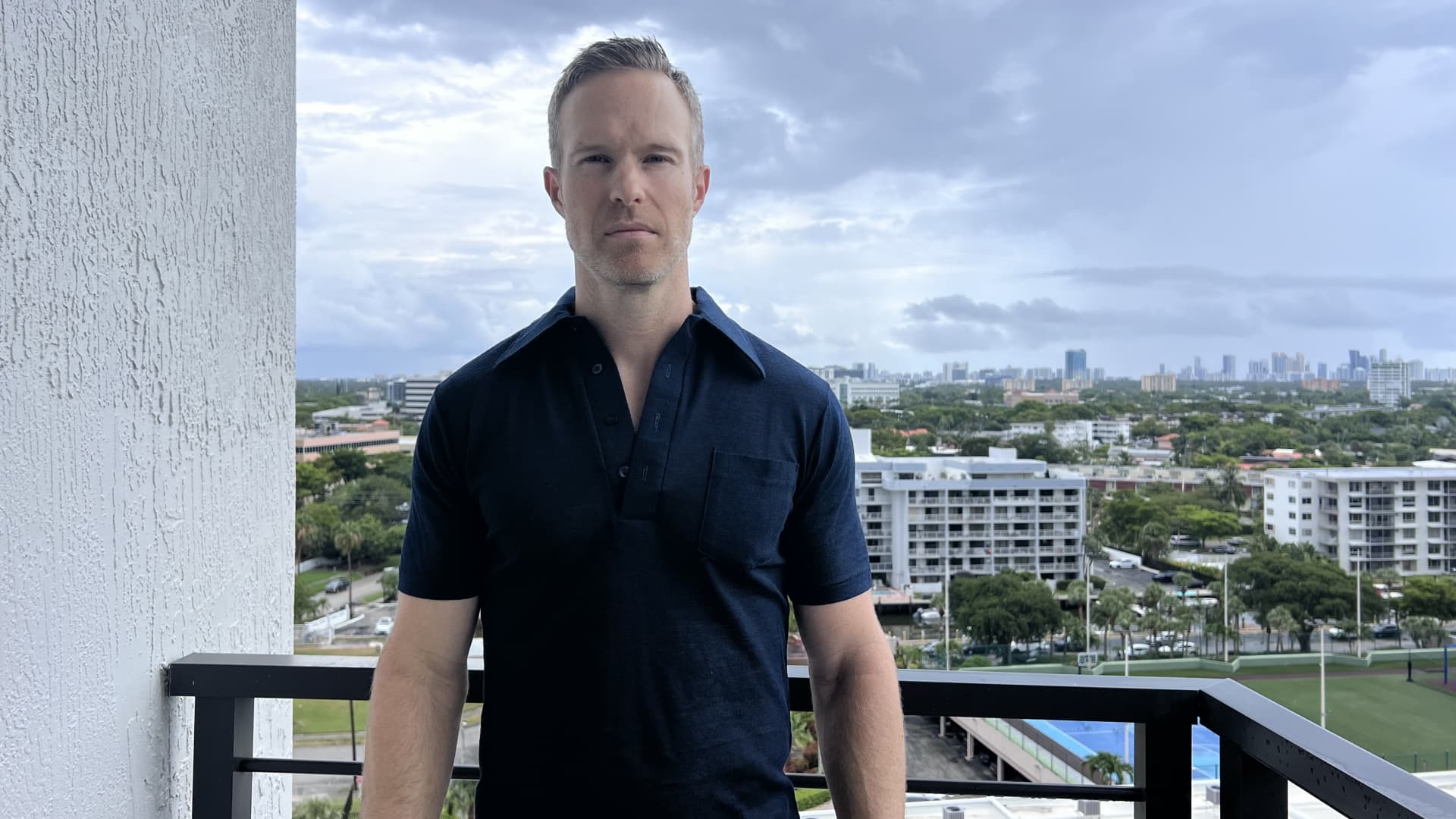
Yieldstreet customer Justin Klish, who said he faces $400,000 in losses from investing on the platform.
Courtesy: Justin Klish
When Justin Klish stumbled upon an ad for Yieldstreet in February 2022, he said, it was the company’s tagline that stuck in his head.
“Invest like the 1%,” the startup said.
The ad spoke to his desire to build wealth and diversify away from stocks, which were then in freefall, Klish said. Yieldstreet says it gives retail investors such as Klish access to the types of deals that were previously only the domain of Wall Street firms or the ultrarich.
So Klish, a 46-year-old financial services worker living in Miami, logged on to Yieldstreet’s platform, where a pair of offerings jumped out to him.
He invested $400,000 in two real estate projects: A luxury apartment building in downtown Nashville overseen by former WeWork CEO Adam Neumann‘s family office, and a three-building renovation in the Chelsea neighborhood of New York. Each project had targeted annual returns of around 20%.
Three years later, Klish said he has little hope of ever seeing his money again. Yieldstreet declared the Nashville project a total loss in May, according to an investor letter, wiping out $300,000 of his funds. The Chelsea deal needs to raise fresh capital to avoid a similar fate, according to another letter. Both letters were reviewed by CNBC.
“There isn’t a day that goes by without me saying, ‘I can’t believe what happened,'” Klish told CNBC. “I lost $400,000 in Yieldstreet. I consider myself moderately financially savvy, and I got duped by this company. I just worry that it’s going to keep happening to others.”
Distributed risk
Yieldstreet, founded in 2015, is one of the best-known examples of American startups with the stated mission of democratizing access to assets such as real estate, litigation proceeds and private credit. To do so, it gathers funds from thousands of investors such as Klish, who typically put in at least $10,000 each for projects vetted by Yieldstreet managers.
The startup’s central premise is that the world beyond public stocks and bonds — often called alternative assets or private market investments — provides both smoother sailing and the possibility of higher returns, a win-win proposition. This month, President Donald Trump signed an executive order designed to allow private market investments in U.S. retirement plans.
But Yieldstreet customers who participated in its real estate deals in recent years say they’ve learned the flip side of the private markets: They face huge losses on investments that turned out far riskier than they thought, while their money has been locked up for years with little to show for it besides frustration.
The company said in a statement that its real estate equity offerings from 2021 and 2022 were “significantly impacted” by rising interest rates and market conditions that pressured valuations industrywide.
This article is based on dozens of investor letters that were sent to customers by Yieldstreet and reviewed by CNBC.
The documents show investors put more than $370 million into 30 real estate projects that have already recognized $78 million in defaults in the past year. Yieldstreet customers who spoke to CNBC say they anticipate deep or total losses on the remainder.
The breadth of Yieldstreet’s struggles in real estate — its biggest single investment category — hasn’t previously been reported.
CNBC’s analysis covers a wide swath of deals that the company offered between 2021 and 2024, but doesn’t include every project, of which there were at least 55, according to Yieldstreet.
The troubled projects vary. They include apartment complexes in boomtowns such as Atlanta, Dallas and Nashville, Tennessee; developments in coastal cities including New York, Boston and Portland, Oregon; apartment buildings in the Midwest and single-family rental homes across Florida, Georgia and North Carolina.
Of the 30 deals that CNBC reviewed information on, four have been declared total losses by Yieldstreet. Of the rest, 23 are deemed to be on “watchlist” by the startup as it seeks to recoup value for investors, sometimes by raising more funds from members. Three deals are listed as “active,” though they have stopped making scheduled payouts, according to the documents.
Additionally, Yieldstreet shut down a real estate investment trust made up of six of the above projects last year as its value plunged by nearly half, locking up customer money for at least two years.
Yieldstreet’s overall returns in real estate have plunged in the past two years; the category went from a 9.4% annual return rate in 2023 to a 2% return rate in the company’s most recent update on its website.
But only customers participating in a specific fund get information about its performance, and Yieldstreet labels its investor updates “confidential,” warning customers that the information in them can’t be shared without consent from the startup. While not uncommon in the private markets, those limitations make it hard for investors to know if their experience is unique.
Klish said he began to worry about his investments in early 2023 when updates became late and began to hint at deteriorating market conditions.
Frustrated by those delays and what he described as a lack of candor from Yieldstreet about his sinking investments, Klish turned to forums on Facebook and Reddit for a sense of the bigger picture. There he said he found a few dozen other customers who shared their Yieldstreet experiences.
“When I dug into the other deals, I realized that this is systemic,” said Klish. “Almost every single deal is in trouble.”
In July, Klish filed a complaint, which CNBC has reviewed, with the U.S. Securities and Exchange Commission alleging that Yieldstreet misled its investors. Klish said he has yet to receive a response to his complaint.
Missing ships, busted tie-up
Yieldstreet calls itself the leading platform offering access to the private markets, a category that has boomed over the past decade as professional investors seek sources of yield beyond stocks and bonds.
Founded 10 years ago by Michael Weisz and Milind Mehere, the company has well-known VC backers including Khosla Ventures, Thrive Capital and General Catalyst. Yieldstreet was part of a wave of fintech startups created in the aftermath of the 2008 financial crisis, including Robinhood and Chime, with a populist message.
“Our mission at Yieldstreet is, how do we help create financial independence for millions of people?” Weisz said during a 2020 CNBC interview. “You do that by helping people generate consistent, passive income.”
Weisz, who became CEO of Yieldstreet in 2023, brought experience in litigation finance, where hedge funds lend money to plaintiffs for a slice of the payout if the lawsuit wins. Mehere, a former software engineer who had co-founded online marketing startup Yodle, was the more technical of the pair.
Yieldstreet declined to make the co-founders or other executives available for this article.
In early 2020, Yieldstreet announced a partnership with BlackRock, the biggest asset manager in the world. The startup said at the time that its new Prism fund would contain a mix of its private market assets with conventional bond funds managed by BlackRock.
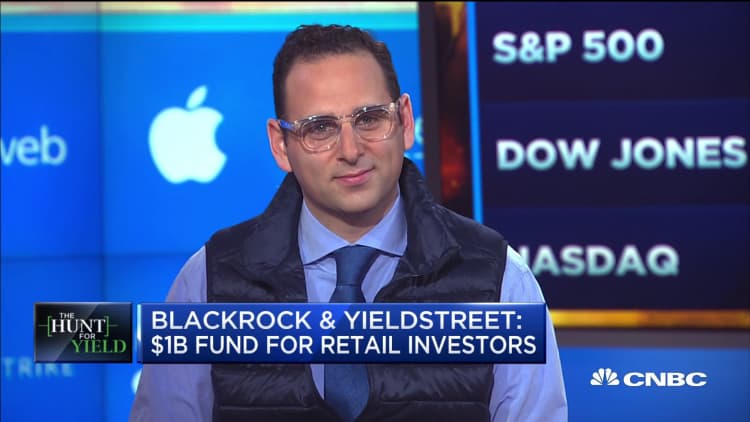
Here is the 2020 interview with Yieldstreet co-founder Weisz:
The move seemed to signal that Yieldstreet was primed for mainstream success. BlackRock had spent 18 months vetting the company before agreeing to the tie-up, Yieldstreet’s co-founders told CNBC at the time.
The month after its public announcement, though, Yieldstreet had tougher news to share. It was becoming clear that customers in another one of its product lines — loans backed by commercial ships that are torn apart for scrap metal — would suffer losses, the firm told them in March, according to a Wall Street Journal report.
Yieldstreet lost track of 13 ships in international waters that backed $89 million in member loans, according to an April 2020 lawsuit filed by the startup against the borrower in that project, which it accused of fraud. In October 2020, a British court sided with Yieldstreet in the lawsuit against the borrower, a Dubai-based ship recycler.
The episode scared off BlackRock, which ended the partnership weeks after it was announced, according to a person familiar with the matter who asked to remain unnamed so they could speak freely about private conversations.
A Yieldstreet spokeswoman at the time told The Wall Street Journal that the BlackRock launch was initially successful but the fund “was then faced with the market environment caused by Covid-19.”
Yieldstreet co-founders Milind Mehere, at left, and Michael Weisz
Source: Yieldstreet
Three years later, the SEC fined Yieldstreet $1.9 million for selling a $14.5 million marine loan to investors even when it had reason to believe the borrower had stolen proceeds from related deals. Yieldstreet also didn’t use “publicly available” methods to track the ships it was relying on for collateral, the SEC said.
“YieldStreet aims to unlock the complex alternative investments market for retail investors but failed to disclose glaring red flags it had about the security of the collateral backing this offering,” an SEC official said in a 2023 release accompanying the settlement, for which the company neither denied nor admitted to the agency’s findings.
Still, the company continued to rack up assets on its platform, in part by ramping up activities in real estate. By 2023, real estate funds made up 26% of all investments on the platform, the largest asset category and well ahead of runners-up such as private credit, Yieldstreet said at the time.
Late that year, Yieldstreet announced it had acquired Cadre, a startup co-founded by Jared Kushner that focused on broadening access to commercial real estate. The companies declined to disclose terms of the deal, but Yieldstreet said the combined entities’ “investment value” was nearly $10 billion.
In May 2025, Yieldstreet replaced Weisz as CEO with Mitch Caplan, a former E-Trade chief who joined the startup’s board in 2021. That’s the year the venture firm where Caplan serves as president, Tarsadia Investments, took a stake in Yieldstreet. The company declined to say why Weisz was replaced.
In July, Yieldstreet announced a $77 million capital raise, led by Tarsadia Investments.
‘Difficult news’
Yieldstreet continued to make moves in real estate well after a seismic shift that made the industry far harder to navigate had begun.
In early 2022, the Federal Reserve kicked off its most aggressive rate-hiking cycle in decades to combat inflation, turning the economics of many projects from that period upside down. The value of multifamily buildings has dropped 19% since 2022, according to Green Street’s commercial property index.
Projects that Yieldstreet put its customers into struggled to hit revenue targets amid price competition or had problems filling vacancies or raising rents, and thus began to fall behind on loan payments, according to investor letters.
The building at 2010 West End Ave., Nashville, Tennessee.
Source: Google Earth
Combined with the use of leverage, or borrowing money that amplifies both risks and returns, Yieldstreet investors suffered complete losses on projects in Nashville, Atlanta and New York’s Upper West Side neighborhood, the letters show.
“After exhausting all options to preserve value, YieldStreet determined there was no reasonable path to recovery,” the firm told customers who invested $15 million in the Upper West Side deal. “We sold our position for $1.”
It’s unclear if Yieldstreet, which makes money by charging annual management fees of around 2% on invested funds, itself suffered financial losses on the defaults.
In at least a half dozen cases, Yieldstreet went to its user base again in 2023 and 2024 to raise rescue funds for troubled deals, telling members that the loans combined the protections of debt with the upside of equity.
But if the project was doomed, a bailout loan was, at least in one case, effectively throwing good money after bad. A $3.1 million member loan to help rescue the Nashville project, located at 2010 West End Avenue, was wiped out in just months.
“We are reaching out to share difficult news,” Yieldstreet told investors of the Nashville project and its member loan in May. “Following multiple restructuring attempts, the property has been sold to Tishman Speyer … resulting in a complete loss of capital for investors.”
In a statement provided in response to CNBC’s reporting for this article, Yieldstreet said it has offered 149 real estate deals since inception and has delivered positive returns on 94% of matured investments in the category.
That 94% figure likely doesn’t include the distressed projects that CNBC has identified, since those funds aren’t yet classified as matured while Yieldstreet seeks to salvage projects on its watchlist. The watchlist designation doesn’t always result in the loss of investor funds, Yieldstreet said in another statement.
“Of the nearly $5 billion invested across the platform, a set of real estate equity offerings originated during 2021–2022 were significantly impacted by rising interest rates and broader market conditions that pressured multifamily valuations across the industry,” Yieldstreet said through a spokeswoman.
Adverse selection
On its website, the startup says it offers only about 10% of the opportunities it reviews, signaling its discernment when it comes to risk.
But several professional investors pointed to the possibility that, instead of securing only top-quality deals in real estate, Yieldstreet may be getting ones that are picked over by more established players.
“There’s no question you’ve seen deals that institutions have passed on that went to the platforms because retail investors might have less discipline than the institutional ones,” said Greg Friedman, CEO of Peachtree Group, an Atlanta-based commercial real estate investment firm.
“It’s a reflection of a lack of discipline in underwriting and market conditions going against them,” Friedman said of Yieldstreet’s track record. “Anything done after 2022, they should have done more carefully knowing that we are in a higher-rate environment.”
Alterra apartments in Tucson, Arizona.
Courtesy: Google Earth
In late 2022, Yieldstreet even told investors that real estate was a “safe(er) haven” asset during periods of rising rates and high inflation. By then, the Fed’s intent to squash inflation with higher rates was well understood.
“Real estate can be an effective inflation hedge, carries low correlation to traditional markets, and has even benefitted in times of market downturns, generating outsized returns,” the startup said in a blog post at the time.
In the post, Yieldstreet gave the example of the Alterra Apartments, a multifamily project in Tucson, Arizona, where it said rent increases and a contractual cap on interest rates protected it from the Fed hikes.
But this year, Yieldstreet told investors in the $23 million deal that the Tucson development was in technical default and headed for a full write-off.
‘Mind-boggling’
Customers interviewed by CNBC accuse the company of downplaying investment risks and say that its disclosures around performance can be sloppy or misleading.
Mark Underhill, a 57-year-old software engineer, said he invested $600,000 across 22 Yieldstreet funds and faces $200,000 in losses on projects that are on watchlist and have never made payouts.
“With any investment, there’s a risk of loss,” Underhill said. “But there’s no consideration of these type of gut-punch losses. They talked about how their deals were backed by collateral, and they gave you all these reasons that make you feel there’s something left if the deal goes south.”
Underhill, who was treated with chemotherapy for multiple myeloma last year and travels the American West in a camper van, said his losses are forcing him to work beyond his expected retirement date.
“The thing that is mind-boggling is, how did they fail so badly on so many deals in so many markets?” Underhill said.
Mark Underhill, a Yieldstreet customer who says he faces $200,000 in losses from investing on the platform.
Courtesy: Mark Underhill
The offering sheet for the Upper West Side project said sales prices would have to plunge 35% for Yieldstreet members to see any losses, a worse hit than what New York experienced during the 2008 recession, Klish wrote in his July complaint to the SEC.
But the project defaulted even though prices in the area didn’t fall by that much, Klish wrote.
In another example, while participants in the Nashville deals got letters showing a complete loss, or a -100% return, Yieldstreet’s public-facing website listed a 0% internal rate of return, or IRR, giving the false impression that investors got all their capital back.
After CNBC asked Yieldstreet for comment on the discrepancy, the website was updated to reflect the -100% return.
The company also stopped issuing quarterly portfolio snapshots after early 2023, making it harder for prospective investors to see how Yieldstreet’s overall investments are performing.
So besides marketing materials, customers are mostly left to rely on the company’s disclosures about its performance as a gauge of whether to invest with the startup.
Yieldstreet says it updates its metrics quarterly, and its website shows a 7.4% internal rate of return through March 2025 across all investments. That period likely excludes the impact of the Nashville defaults, which were disclosed in May 2025.
‘Winter is coming’
Yieldstreet’s real estate woes threaten to wipe out decades of savings for Louis Litz, a 61-year-old electrical engineer from Ambler, Pennsylvania.
Seeking income and stability, Litz put $480,000 into Yieldstreet funds, he said. Three of those projects have defaulted, while seven developments are on watchlist, he said.
“At least half of this stuff is going under,” Litz said. “I’m 61, so there’s no way I can really recover.”
Under its new CEO, Caplan, Yieldstreet has decided to pivot away from a business model of mostly offering bespoke investments like the ones that cratered for its real estate customers.
This month, Yieldstreet said that it officially became a broker-dealer, allowing it to offer funds from outside asset managers including Goldman Sachs and the Carlyle Group. The plan is to become a distribution platform where 70% of funds are from these established Wall Street giants, Caplan said this month.
The move is worlds away from the confidence that Yieldstreet co-founder Weisz had in the company’s original model.
In the 2020 CNBC interview, Weisz said that he often reminded his staff that “winter is coming” and to prepare for turbulence.
Yieldstreet would protect its customers from losses because of the underlying collateral the firm was investing in: real buildings with tenants in sought-after locations all over the country, Weisz said.
“I’m not here to tell you that Milind and Michael are the world’s smartest investors and there’s never going to be something that goes wrong,” Weisz said, referencing himself and his co-founder. “We understand that when winter comes, there will be challenges, but we take comfort in knowing that there’s underlying collateral.”
“Anybody could put money out,” Weisz said. “It’s about bringing it back home.”




Dario Amodei’s Call to Pace the AI Frontier and Its Market Ripple Effects

Rising Oil Prices And Persistent Inflation Complicate Fed Decision

Bridging the AI Skills Gap: How Gen Z Youth Demographics Are Transforming the Workforce

Armanino adds Strategic Accounting Outsourced Solutions

New 2023 K-1 instructions stir the CAMT pot for partnerships and corporations

Tax Strategy: Employee Retention Credit update
-
 Stock News1 week ago
S&P 500 September Outlook: Tech Rally Holds Index at 7,600
-
 Finance1 week ago
S&P 500 Outperforms Amid Strong Corporate Earnings as Treasury Yields Cap Equity Multiples
-
 Accounting1 week ago
Mandatory ESG Reporting Standards Demand Standardized Non-Financial Audit Trails
-

 Insights1 week ago
Climate Resilience and Offshore Wind and Land Restoration Milestones
-

 Leaders1 week ago
India Unveils ‘Saptadhara’ Reform Agenda Targeting Technology, Youth Skilling, and Growth
-
 Economics1 week ago
U.S. Inflation Outlook for 2027
-

 Economics5 days ago
Economic Profile of the superpower of western Europe
-

 Economics5 days ago
Sovereign Bond Yield Volatility and Inflationary Shocks Challenge Global Central Banks