
Personal Finance
401(k) rollover advice rule at risk. What retirement savers need to know

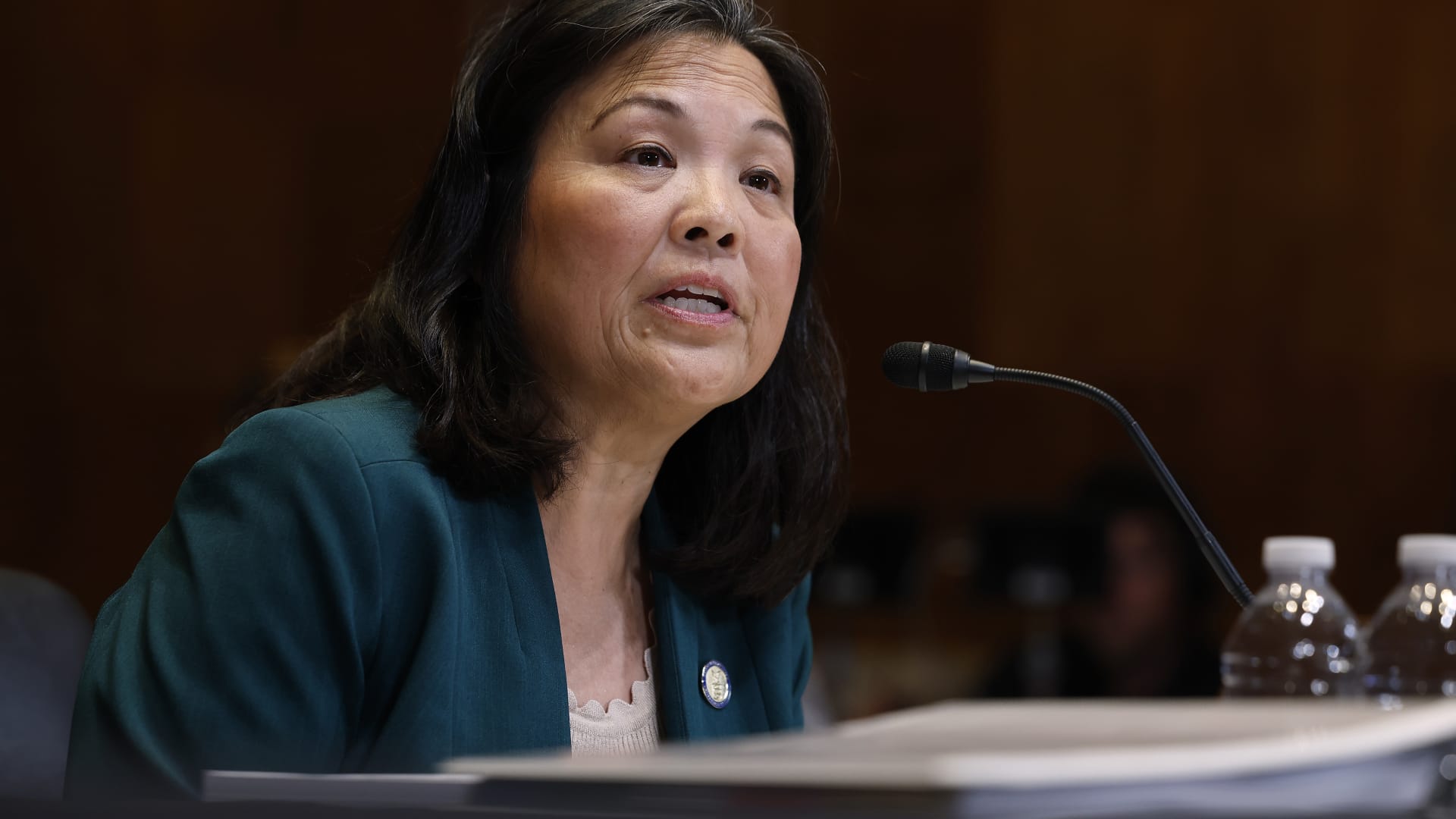
Acting Labor Secretary Julie Su testifies before the Senate Appropriations Committee on May 9, 2024.
Chip Somodevilla | Getty Images News | Getty Images
‘Almost a certainty’ courts will overturn
However, the fiduciary rule’s survival is in doubt following recent court actions, attorneys said.
Two federal district courts in Texas issued a national “stay” of the regulation, in separate rulings in July.
That effectively indefinitely delays the rule’s Sept. 23 start date while the courts conduct a more detailed review of the lawsuits, which were filed by several insurance industry groups.
“It is almost a certainty that both courts will overturn” the DOL regulation, said Fred Reish, a retirement law expert and partner at Faegre Drinker Biddle & Reath.

One of the courts hinted at that outcome.
“The Rule is almost certainly unlawful for a broad class of investment professionals in the industry — not just Plaintiffs,” according to a July 26 order by the U.S. District Court for the Northern District of Texas, in the lawsuit American Council of Life Insurers v. United States Department of Labor.
The other case is Federation of Americans for Consumer Choice v. Department of Labor.
The rule will “create a level playing field” for all trusted investment professionals, according to a Labor Department spokesperson.
“The insurance industry can continue to advise investors and sell annuities, without giving advice that is imprudent, disloyal, or tainted by misrepresentations or overcharges,” the spokesperson said.
The agency referred questions about an appeal to the Department of Justice, which didn’t immediately respond to a request for comment.
Current retirement rollover advice rules stay in effect
In the meantime, the current status quo remains in effect, attorneys said.
Current rules let brokers give investment advice that earns them a higher commission but isn’t in savers’ best interests, the Labor Department said during the rulemaking process. Insurance products like annuities are a chief concern, attorneys said.
The fiduciary rule is part of the Biden administration’s broader crackdown on “junk fees” shouldered by U.S. consumers across the financial ecosystem.
Meanwhile, industry groups say the court decisions are justified.
“The stay of the effective date provides consumers with a needed reprieve from these devastating consequences as the court considers the substantial legal issues we have raised regarding this ill-advised rule,” according to a joint statement from ACLI, the National Association of Insurance and Financial Advisors, NAIFA-Texas, NAIFA-Dallas, NAIFA-Fort Worth, NAIFA-POET, Finseca, Insured Retirement Institute and the National Association for Fixed Annuities.
The legal conundrum echoes that of a similar Labor Department rule issued during the Obama administration.
The Fifth Circuit Court of Appeals ultimately killed that fiduciary rule in 2018. The Trump administration didn’t pursue an appeal to the Supreme Court.
“The new fiduciary rules are somewhat different than those in the 2018 decision and it’s possible that there could be a different outcome,” Reish said.
However, November’s presidential election is a “wild card,” he added.
“If the Democrats retain control of the White House, they will likely pursue the case all the way to the Supreme Court,” if they were to suffer an adverse ruling, Reish explained.
The litigation may takes years to resolve, attorneys said.
“We are nowhere near a conclusion to the challenges to the 2024 fiduciary rule,” wrote Gina Alsdorf and Stephen Kraus, attorneys at Carlton Fields.


Personal Finance
Next-Generation Retirement Planning: Managing Longevity Risk and Variable Income Streams


S&P 500 September Outlook: Tech Rally Holds Index at 7,600

India Unveils ‘Saptadhara’ Reform Agenda Targeting Technology, Youth Skilling, and Growth

S&P 500 Outperforms Amid Strong Corporate Earnings as Treasury Yields Cap Equity Multiples

Armanino adds Strategic Accounting Outsourced Solutions

New 2023 K-1 instructions stir the CAMT pot for partnerships and corporations

Tax Strategy: Employee Retention Credit update
-

 Stock News1 week ago
Nvidia Q2 FY2027 Earnings beats Wall Street Expectation with Record $96.2 Billion Revenue
-

 Technology6 days ago
AI Infrastructure Boom Hits Physical Limits: Power, Financing, and Supply Chain Strain
-

 Economics4 days ago
U.S.- Canada Trade Talks Collapse; Carney Says Retaliatory Tariffs Begin September 8
-

 Technology4 days ago
Flock Cameras and the Future of Public Security
-

 Insights1 hour ago
Climate Resilience and Offshore Wind and Land Restoration Milestones
-
 Stock News3 minutes ago
S&P 500 September Outlook: Tech Rally Holds Index at 7,600
-

 Accounting1 hour ago
Mandatory ESG Reporting Standards Demand Standardized Non-Financial Audit Trails
-
 Finance39 minutes ago
S&P 500 Outperforms Amid Strong Corporate Earnings as Treasury Yields Cap Equity Multiples