Connect with us

UNCATEGORIZED

DataSnipper Launches AI Platforms for Audit and Finance

Published

on

DataSnipper, which calls itself the “Intelligent Automation Platform,” has launched two new product suites: The Advanced Extraction Suite and Cloud Collaboration Suite, for audit and finance professionals. With the aim of further developing the software and serving new markets, the scale-up recently raised an investment of $100 million at a valuation of $1 billion.

The industry is grappling with high attrition rates, the shift to remote work, and the hefty nature of error-prone manual tasks amid higher regulatory demands. The new suites automate data extraction from unstructured documents at scale using AI and facilitate cloud-based collaboration, boosting audit and finance teams’ productivity, while reducing risk. 

DataSnipper’s Advanced Extraction Suite boosts productivity by enabling large-scale data extraction from unstructured documents. With AI at its core, this suite empowers audit and finance professionals to automatically detect, extract, and cross-reference data from any document format, streamlining their workflow, saving time to focus on discrepancies and more strategic work. The suite includes three key features: 

  • Invoice extraction: Automates bulk invoice data extraction such as invoice ID and total amount.
  • Receipt extraction: Captures key details from receipts, like merchant name and transaction date 
  • Contract extraction: Instantly retrieves key data from contracts, such as effective date, execution date, parties, and jurisdiction 

Customers are already reporting up to a 70% efficiency boost working with the Advanced Extraction Suite. “Aprio’s assurance practice has begun using DataSnipper’s Advanced Extraction Suite to streamline our test of details process,” said Alan Langelli, Partner, Assurance Services. “The suite allows us to extract multiple data fields from invoices and cash confirmations in bulk, with high accuracy and efficiency,” Langelli added.  

Audit and finance professionals are harnessing DataSnipper’s AI capabilities to automate menial tasks at scale. A majority of DataSnipper’s customers (74%) trust AI to deliver quality to their roles and 83% are more likely to stay at their firm if they use AI tools to enhance efficiency.  

The Cloud Collaboration Suite revolutionizes document collaboration with real-time, online access to work papers. Featuring DataSnipper for Excel Online, the suite enables seamless team collaboration through any web browser, including on Mac devices. Work papers and cross-referenced documents are instantly saved to SharePoint, boosting team efficiency with credible data capture. A standout feature, the WebSnip Extension, allows users to ‘snip’ data straight from web pages into Excel, lending enhanced credibility to evidence with captured URLs and timestamps. 

The new Add-on module harness DataSnipper’s robust platform functionalities, including the automatic document cross-referencing capabilities, creating clear documentation trails for easy review and verification, boosting consistency, accuracy and trust. 

Intelligent Automation is transforming how audit and financial professionals work – delivering unprecedented quality and scalability to their roles using AI. DataSnipper continues to be the trusted intelligent automation platform used by audit and finance professionals. 

Additional information on the Advanced Extraction Suite and Cloud Collaboration Suite

Continue Reading

UNCATEGORIZED

Hardware vs. Software Divergence: Navigating Midyear 2026 Tech Sector Earnings

Published

on

Hardware vs. Software Divergence: Navigating Midyear 2026 Tech Sector Earnings

As the midyear 2026 earnings season accelerates through the week of July 20, the technology sector is displaying a notable operational split between hardware infrastructure providers and enterprise software-as-a-service (SaaS) platforms. Market indices reflect strong institutional demand for companies supplying core computing hardware, advanced power management systems, and specialized optical networking components. Conversely, software providers are facing intense margin scrutiny as Wall Street demands concrete, high-margin revenue growth to justify elevated software valuations.

The sustained outperformance of hardware equities is anchored in ongoing, multi-billion-dollar global capital investments into data center infrastructure, grid capacity expansion, and high-performance chip architecture. Semiconductor foundries and specialized component suppliers have consistently reported robust order backlogs, driven by enterprise commitments to build out secure, localized computing clusters. Investors have rewarded these companies due to their tangible, order-backed revenue visibility and strong pricing power in a constrained supply environment.

On the other hand, the software sector is navigating a transition phase. While enterprise software vendors have heavily invested in integrating automated AI capabilities across their product suites, corporate clients are scrutinizing software licencing costs and requiring clear return-on-investment metrics before expanding enterprise seat licenses. Consequently, software vendors that rely on generic feature upgrades without demonstrable productivity improvements are seeing extended sales cycles and valuation compression during quarterly earnings calls.

For equity investors, navigating the tech market for the remainder of 2026 requires rigorous fundamental analysis focused on capital efficiency and cash flow generation. Strategic focus should be directed toward hardware leaders with unassailable technological moats and enterprise software companies possessing deep workflow integration and proven monetization models. Maintaining a balanced, selective exposure ensures participation in technological growth while hedging against localized valuation corrections.

Continue Reading

UNCATEGORIZED

Utilities Re-Valuation: How Industrial Power Demand Driven by AI Upgrades Sector Equities

Published

on

How Industrial Power Demand Driven by AI Upgrades Sector Equities

Traditionally viewed as defensive, low-growth dividend plays, utility equities are undergoing a remarkable structural re-valuation across major stock exchanges in July 2026. Driven by an unprecedented surge in industrial power requirements—stemming from high-density data centers, advanced domestic manufacturing plants, and widespread electrification initiatives—utility providers are presenting revenue growth profiles historically reserved for growth sectors. This transition has repositioned power and energy infrastructure equities into prime targets for institutional capital.

The driver of this market shift is the long-term contractual nature of commercial energy demand. Tech giants and industrial manufacturers are entering into multi-decade power purchase agreements (PPAs) with utility operators to secure guaranteed baseload power. To meet this demand, utility companies are undertaking massive capital expenditure programs to modernize electrical transmission networks, integrate next-generation nuclear and renewable power facilities, and enhance regional grid resilience. Regulated utility models allow these companies to earn predictable returns on these substantial capital investments.

Furthermore, equity analysts highlight that the sector offers an attractive blend of growth potential and downside protection in a sustained high-interest-rate environment. While elevated capital costs increase borrowing expenses for grid infrastructure upgrades, the sheer volume of new industrial power demand provides strong top-line revenue expansion that offsets debt-servicing expenses. Investors seeking reliable yield combined with structural capital appreciation are increasingly allocating capital to regulated electric utilities and independent power producers.

Moving through the second half of 2026, portfolio managers recommend evaluating utility equities based on regional regulatory environments and capital execution track records. Companies operating in regions with streamlined permitting processes, supportive state regulatory commissions, and direct proximity to expanding industrial corridors are best positioned to deliver superior long-term shareholder value.

Continue Reading

UNCATEGORIZED

SpaceX Stock Falls Below IPO Price as Investors Reassess Valuation

Published

on

SpaceX Stock Falls Below IPO Price as Investors Reassess Valuation

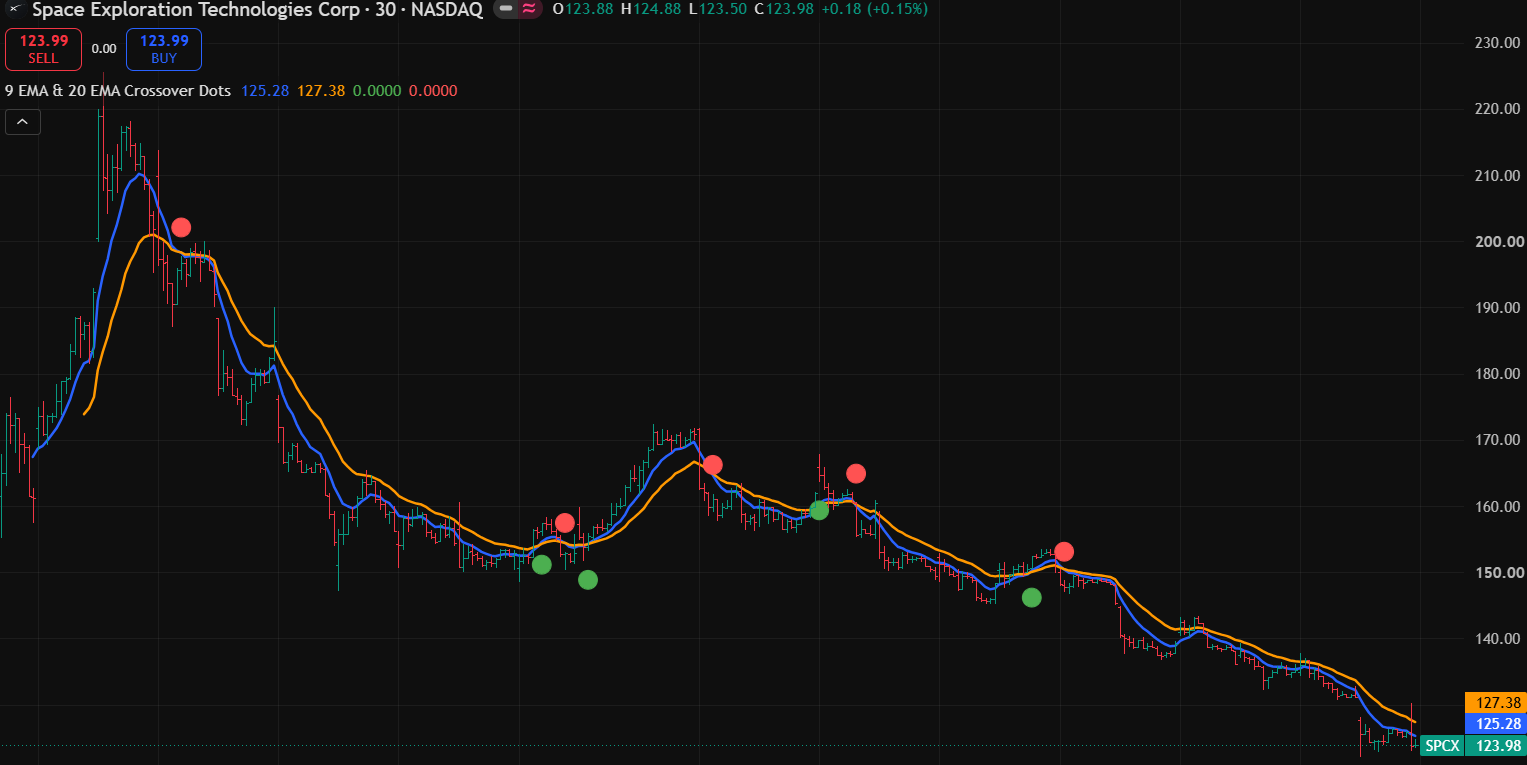
SpaceX Shares Slip Below Their Initial Public Offering Price

SpaceX shares briefly traded below their initial public offering price for the first time since the company’s record-breaking stock market debut. After surging in the weeks following its IPO, the stock declined as investors reassessed the company’s valuation, growth expectations, and near-term financial outlook.

The shares fell below the $135 IPO price during trading before recovering slightly by the market’s close. Even with the recent decline, SpaceX remains one of the world’s most valuable publicly traded companies, although its market capitalization has dropped significantly from its post-IPO peak.

Why Investors Are Selling

Several factors have contributed to the sell-off. Analysts point to profit-taking after the stock’s rapid post-IPO rally, concerns about its premium valuation, and uncertainty surrounding upcoming earnings. Investors are also monitoring the expiration of lock-up restrictions, which could allow more shares to enter the market and increase selling pressure.

In addition, broader market volatility and expectations for higher interest rates have weighed on many high-growth technology companies. SpaceX has also attracted attention for its significant investments in artificial intelligence infrastructure and ambitious long-term expansion plans, prompting questions about how quickly those investments will translate into profits.

Long-Term Growth Story Remains Intact

Despite the recent weakness, many analysts continue to view SpaceX as a company with strong long-term potential. Its leadership in commercial space launches, Starlink satellite internet services, and future space exploration projects continues to support optimism about its growth prospects.

Investors are now looking ahead to the company’s first quarterly earnings report as a publicly traded company. Financial results, future guidance, and progress on Starship development could play a major role in determining the stock’s next direction.

What Investors Should Watch

The recent decline highlights how quickly market sentiment can change after a major IPO. While short-term volatility is expected, many investors believe SpaceX’s long-term value will depend on its ability to execute its ambitious business strategy and deliver consistent financial performance.

As trading continues, Wall Street will closely monitor earnings, new contracts, and upcoming milestones that could influence investor confidence and the company’s share price.

Continue Reading

Trending