Connect with us

Accounting

House tax bill includes provision eliminating PCAOB

Published

on

The far-reaching tax legislation that passed early Thursday morning in the House included a provision that would transfer the responsibilities of the Public Company Accounting Oversight Board to the Securities and Exchange Commission, effectively eliminating the PCAOB.

The House Financial Services Committee passed a bill at the end of April that would transition the PCAOB’s responsibilities to the SEC within one year of enactment, and it was included as part of the overall tax package, which is now headed to the Senate

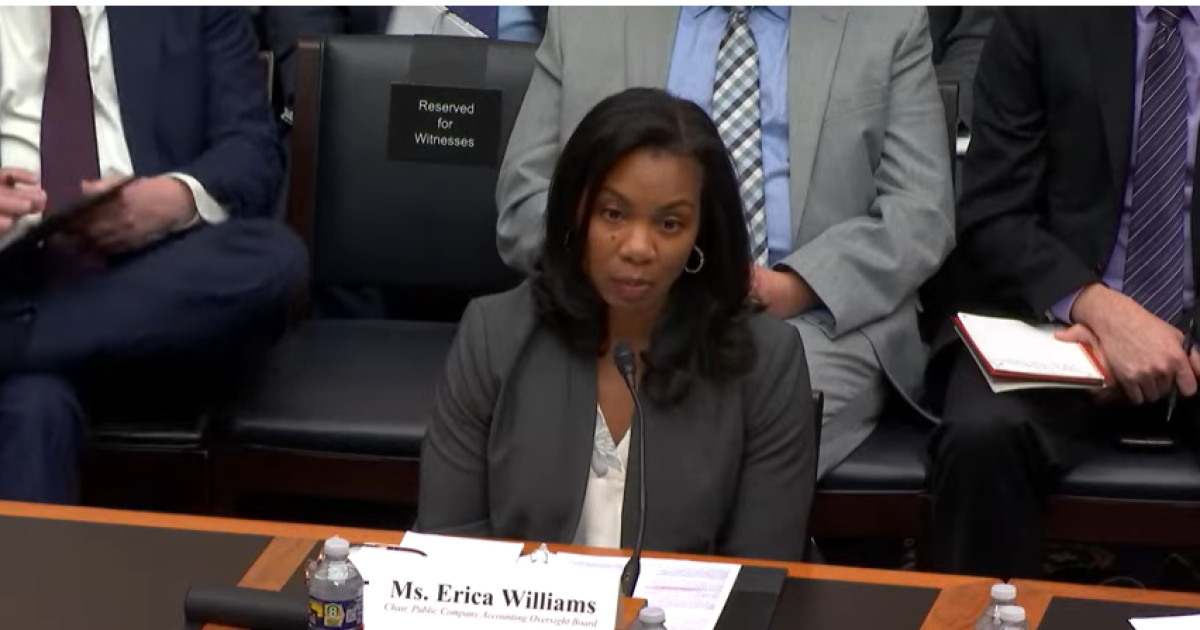
PCAOB chair Erica Williams has been speaking out against the proposal in recent weeks since the bill emerged unexpectedly in the House committee in late April only days before it passed. On Thursday, he reiterated her objections during a meeting of the PCAOB’s Standards and Emerging Issues Advisory Group.

“Like many of you, I am deeply troubled by legislation being considered in Congress to eliminate the PCAOB as we know it,” she said. “This policy idea is not new. It has been around for decades, since the PCAOB was first created in response to Enron, WorldCom and the other accounting scandals of the early 2000s that left devastation in their wake. In the more than 20 years since, the PCAOB, led by its expert staff, has made invaluable contributions to the safety and security of U.S. capital markets. Investors are better protected because of the PCAOB. Audit quality has improved because of the PCAOB.” 

Williams pointed out that she used to work for the SEC and is familiar with the agency. “The SEC was my professional home for 11 years,” she said. “I have deep admiration and respect for the incredible professional staff there. They are excellent at what they do. It is different from what we do here at the PCAOB. The unique experience and expertise built up by the PCAOB over decades cannot simply be cut and pasted without significant risk to investors at a time when markets are already volatile.”

She noted that the PCAOB has specific agreements with other audit regulators in countries around the world. “Getting an inspections program off the ground alone would take years,” she said. “It would require hiring hundreds of experienced inspectors and renegotiating agreements around the world, including in China, wasting time and money all while creating significant risk of fraud slipping through the cracks while no one is looking. Not to mention the disruption to enforcement around the world and potential loss of unmatched expertise built by [PCAOB chief auditor Barbara Vanich] and her team at a time when firms are relying on their support to implement new standards.I have said this before, and I will say it again any chance I get: every member of the PCAOB team plays a critical role in executing our mission of protecting investors on U.S. markets. And they are irreplaceable.”

SEC chairman Paul Atkins said at a conference this week that the SEC would be able to take over the tasks over the PCAOB, but would need the extra funding and staff provided under the bill.

“Congress outsourced those tasks to the PCAOB, and it’s up to Congress to decide where they should be housed,” he told reporters, according to Thomson Reuters. “And if they were decided to be merged into the SEC, I think we could handle it and be able to have enough people in the funding to accomplish it because, at least the way the bill is structured, they have thought about that.”

The SEC might also need to bring over staff from the PCAOB with the necessary experience. Atkins said under the bill “we could get the people who are at the PCAOB and be able to consolidate.”

However, a group of former PCAOB officials doubts the SEC could quickly take up those responsibilities and wrote a letter to the House committee, saying, “We are skeptical that the SEC could replicate the PCAOB’s expertise and infrastructure with similar positive results.”

The American Institute of CPAs has been watching the developments closely in recent months and AICPA president and CEO Mark Koziel said late last month, “We stand ready to assist policymakers as they consider potential changes to the regulatory infrastructure overseeing public company auditing.”

The AICPA had set auditing standards for public companies until the passage of the Sarbanes-Oxley Act of 2002 created the PCAOB in 2003 and still sets many assurance and attestation standards for private companies. The PCAOB has been working to update many of the older auditing standards it inherited from the AICPA, and former SEC chair Gary Gensler had encouraged the PCAOB and Williams to accelerate those efforts

Continue Reading

Accounting

SEC’s Semiannual Reporting Proposal Faces Investor Pushback: What CFOs Need to Know

Published

on

U.S. Securities and Exchange Commission (SEC)

A proposal from the U.S. Securities and Exchange Commission to potentially shift some public companies away from quarterly financial reporting toward a semiannual model is drawing significant pushback from investors, even as it continues moving through the regulatory process. The debate has direct implications for corporate finance teams, auditors, and the broader transparency of U.S. capital markets.

What the SEC Proposed

According to a summary published by accounting advisory firm Cohen & Co., the SEC issued a proposed rule on May 19, 2026, aimed at simplifying financial reporting requirements for many U.S. public companies. The proposal would potentially reduce the frequency of certain mandatory disclosures from quarterly to semiannual, a structural change that has not been made to core U.S. reporting requirements in decades.

The proposal follows an extended debate within U.S. policy circles, with proponents arguing that reduced reporting frequency could lower compliance costs and free up management time for longer-term strategic planning rather than quarter-to-quarter results management.

Why Investors Are Pushing Back

Comment letters submitted in response to the proposal have been extensive, and according to Cohen & Co.’s review of the public record, investors “appear to be largely opposed” to the shift, viewing frequent interim reporting as a core benefit of U.S. capital markets relative to other jurisdictions.

Accounting and law firms have taken a more measured position, generally urging any changes to remain aligned with the Financial Accounting Standards Board (FASB), whose existing disclosure requirements and guidance are built around a quarterly reporting cadence. A shift to semiannual reporting without corresponding changes to FASB guidance could create friction between SEC filing requirements and GAAP-based disclosure expectations.

Lessons From the U.K. Experience

The debate is not without precedent. The United Kingdom moved away from mandatory quarterly reporting for listed companies in 2014, returning to a semiannual disclosure requirement. According to Cohen & Co.’s analysis, that experience offers a cautionary data point: there was no measurable increase in capital expenditure or R&D investment following the change, while analyst coverage of affected companies declined as reliable interim information became less available — a particular risk for smaller and newly public companies that rely on analyst coverage to maintain investor visibility.

Practical Implications for Finance Teams

Beyond the debate over disclosure philosophy, the proposal carries practical complications. Many companies have debt covenants and credit agreements structured around quarterly financial delivery; a shift to semiannual reporting could require renegotiating those terms. Reduced reporting frequency would also extend the “window of market silence” between disclosures, a factor that governance and investor-relations teams would need to manage carefully to avoid information asymmetry.

Separately, and unrelated to the reporting-frequency debate, the SEC and FASB have continued finalizing more routine updates this year. New Accounting Standards Updates are taking effect for December 31, 2026, fiscal year-ends covering income tax disclosures, credit loss measurement, induced debt conversions, and stock compensation, according to Eide Bailly’s review of 2026 ASU activity. Additional guidance on paid-in-kind dividends and environmental credits is also on the near-term horizon.

What to Watch Next

The semiannual reporting proposal remains in the comment and review phase, and no final rule has been adopted as of this writing. Finance leaders should monitor the SEC’s regulatory agenda for further movement, while treating the current quarterly reporting requirement as the operative standard until any final rule is issued and an effective date is set.

Given the extent of investor opposition documented in the comment file, a full shift to mandatory semiannual reporting appears more likely to result in either a scaled-back compromise or continued study rather than swift adoption — though the SEC’s ultimate direction remains uncertain.


Continue Reading

Accounting

AI-Driven Automation and Continuous Accounting Frameworks

Published

on

The accounting profession is undergoing a fundamental structural transition as enterprise finance departments shift from periodic month-end closes toward automated continuous accounting models. By integrating specialized machine learning algorithms directly into enterprise resource planning (ERP) platforms, chief accounting officers are transforming financial reporting from a retrospective exercise into a real-time operational asset.

The Shift from Periodic Close to Continuous Financial Reporting
Traditional accounting workflows heavily relied on manual data reconciliation, spreadsheet calculations, and multi-week closing cycles at the end of each fiscal period. In contrast, continuous accounting frameworks utilize automated software agents to process, validate, and post transactional data in real time as business activities occur.

Automated bank reconciliation tools cross-reference incoming bank feeds, invoice records, and purchase orders automatically. By resolving transactional variances instantly throughout the month, corporate accounting teams eliminate the traditional workload spikes associated with quarterly and annual closes.

Machine Learning in Audit Trails and Anomaly Detection
Advanced natural language processing (NLP) and machine learning tools are redefining internal audit and financial control environments. Automated systems analyze 100% of general ledger entries, identifying anomalous transactions, duplicate payments, and unauthorized journal entries in real time.

Rather than relying on random statistical sampling, corporate internal auditors can focus their attention on high-risk flags automatically surfaced by algorithmic monitoring platforms. This continuous risk assessment strengthens internal controls over financial reporting (ICFR) and significantly reduces fraud risk.

Evolving Roles for Accounting Professionals
As routine data entry and manual reconciliation tasks become fully automated, the skill set required for accounting professionals is shifting toward data analysis, system design, and strategic business advisory.
– Systems Governance: Accountants are increasingly responsible for monitoring algorithmic accuracy and managing data integration pipelines.
– Business Partnership: Finance professionals leverage real-time financial dashboards to advise operational leaders on margin management and working capital allocation.
– Regulatory Compliance Management: Accounting teams utilize automated platforms to ensure compliance with dynamic tax codes and international accounting standards.

Core Implementation Recommendations
1. Deploy Automated Reconciliation Tools: Integrate continuous transaction processing modules into existing enterprise ERP architectures.
2. Establish Algorithmic Governance Controls: Implement strict internal testing protocols to ensure automated accounting rules comply with GAAP/IFRS standards.
3. Reskill Accounting Teams: Invest in training finance staff on data analytics, workflow automation, and predictive financial modeling.

Continue Reading

Accounting

Global ESG Reporting Standards and Double Materiality Compliance

Published

on

Corporate accounting departments face expanding reporting expectations as international sustainability disclosure standards achieve regulatory enforcement across major global jurisdictions. Chief Accounting Officers (CAOs) and corporate controllers are establishing rigorous internal accounting controls to treat Environmental, Social, and Governance (ESG) metrics with the same data precision, auditability, and governance as traditional financial statements.

Regulatory Harmonization Under Global Sustainability Frameworks
The implementation of standardized sustainability reporting frameworks—notably rules established by international sustainability accounting boards—has created unified expectations for public and large private enterprises. Corporations must report standardized metrics covering greenhouse gas emissions (Scope 1, 2, and material Scope 3), energy utilization, workforce demographics, and supply chain governance.

In Europe and other participating international jurisdictions, double materiality principles are mandatory. Under double materiality, organizations must report both how external sustainability risks impact corporate financial performance, and how internal corporate operations affect surrounding environmental and social structures.

Integrating Sustainability Metrics into Core ERP Systems
To provide auditable non-financial data, enterprise organizations are integrating specialized carbon accounting and ESG management platforms directly into core ERP systems. Automated data collectors capture energy utility invoices, logistics fuel consumption metrics, and vendor compliance records in real time.

Establishing automated, traceable data pipelines ensures that non-financial reporting is supported by clear audit trails. This structured approach allows external financial auditors to provide reasonable assurance on sustainability disclosures during annual corporate reporting cycles.

Financial Impacts and Capital Market Disclosure
Accurate ESG reporting directly influences corporate cost of capital and institutional credit ratings. Commercial lenders and institutional asset managers systematically incorporate sustainability metrics into risk pricing models. Companies that demonstrate transparent, verifiable progress in operational energy efficiency and climate risk mitigation benefit from expanded access to green bond markets and lower debt pricing.

Action Steps for Accounting Leadership
1. Implement Double Materiality Frameworks: Conduct comprehensive assessments to identify material financial and operational sustainability metrics.
2. Build Auditable Non-Financial Data Pipelines: Automate ESG data collection within core accounting software to ensure data integrity.
3. Align Sustainability with Annual Financial Filings: Prepare non-financial disclosures concurrently with financial statements to satisfy regulatory audit expectations.

Continue Reading

Trending