
Accounting
Practice Profile: Art appreciation at LMC

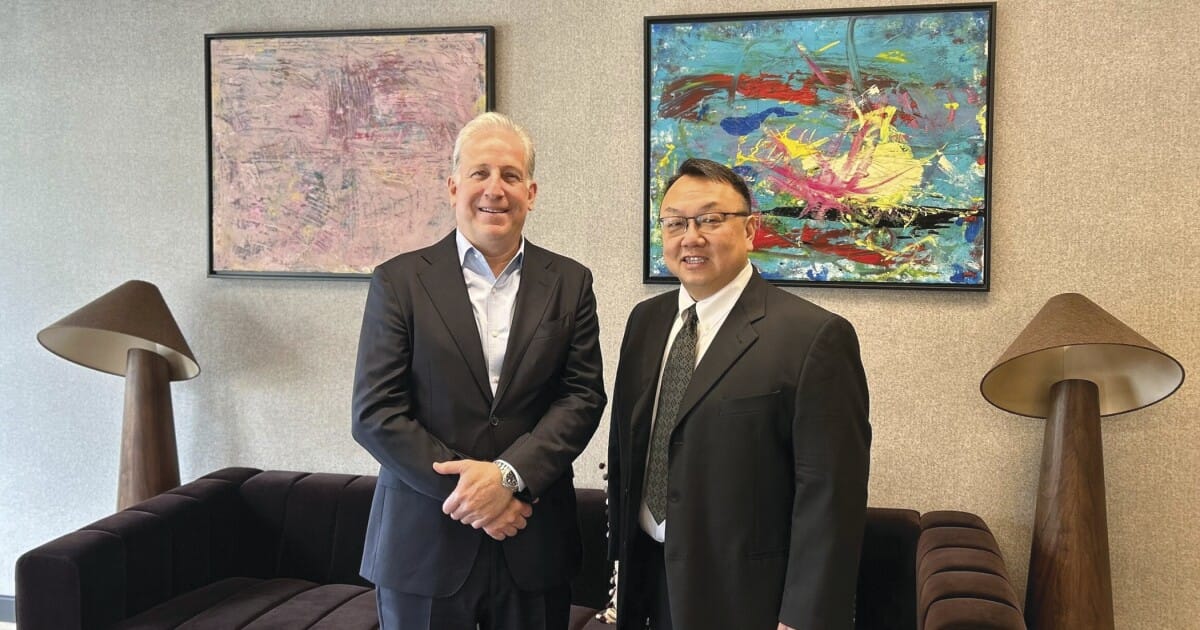

New York-based Regional Leader firm LMC advises some of the world’s largest art galleries and artists, including some “one-percenters,” according to partner Michael Young — but the firm also prepares taxes for “starving artists.”
With Young, fellow art practice partner Steven Goldglit and their team on the case, these artists don’t always stay famished for long, as Young illustrated with the story of one particular client. “We had an artist approach us, and they said, ‘I’d like to hire you as my accountant,'” he recalled. The artist had been referred by another gallery, but when Young asked to look at their tax returns, “They said, ‘I haven’t filed a tax return in five years.’ I said, ‘Why not?’ and they said, ‘I didn’t make enough money.'”
Young told the artist the firm was willing to take them on, but warned them that they could find a lower-priced firm, to which they said, “‘I anticipate making good money in the coming years.'”
“The first year they engaged us they made half a million dollars,” he recounted. “The next year, $2.5 million. The third year, $4 million. They literally went from starving artist to multimillionaire in a few years.”
It’s a trajectory that Young and Goldglit witness in serving LMC’s fastest-growing speciality, and that both were familiar with before at both of their respective firms, which also specialized in art clients and were acquired by LMC, which itself is a member firm of private equity-backed platform Ascend.
Young’s previous firm was merged into LMC six years ago to create LMC’s first art practice, and Goldglit’s was added last August. Both came with a large roster of clients and years of experience in the industry.
Goldglit grew up in the New York City art scene, with his father’s firm that began in the 1960s and 1970s working with clients like influential art dealer Leo Castelli, known as “the godfather of the contemporary art world” and his gallery artists like Roy Lichtenstein and Andy Warhol.
After a tenure at Big Four firm PwC, Goldglit joined his father’s firm. “I grew up living the arts, being involved, going to museums and galleries,” Goldglit said. “It’s a really enjoyable aspect of accounting for me.”
LMC provides full-service accounting, tax, CAS, bookkeeping, and family office services, including back-office work that artists in particular need, according to Young, and the firm currently advises between 200 and 300 artists, and another 70 to 100 galleries.
These clients range from “galleries that can hardly break even to the most important galleries in the world,” Goldglit said. “My philosophy is always to work with artists, to never turn artists away,” he continued. “Starving artists — we’re always happy to work with them and help file tax returns and [show them] how to interact with galleries on the financial level. We have a broad spectrum of clients. The art community is quite large, and most people don’t know about it.”
The current art market
The community comes with unique challenges, especially in today’s climate. “The art market is challenging right now; the economy is in a little bit of a shift,” Goldglit shared. “The art market has gone really quiet. We’ve gotten calls from gallery clients: ‘What’s happening in the market? What are other gallerists doing? You have your finger on the market, are other galleries selling, or quiet?’ We know how to answer that, and continue to be supportive. A couple years ago, the art market was raging. Now, it’s a lot harder work to help manage finances more effectively.”
Tariffs are also a new hurdle. “Tariffs — not only now, but in 2019, in the first term of the Trump administration, there is always something new, something unexpected,” Young shared. “When the topic comes up to address, we have experts we can connect with.”
Goldglit and Young have witnessed many market fluctuations in their years serving the industry.
“Most of the galleries you know today — megasellers — there were not megasellers back then,” Young explained. “Typically a gallery in New York City [was run by] an entrepreneur. It’s a very small circle in the art world, everyone knows everybody. By word of mouth, I happened to engage one of the main galleries. My firm had seven of the top 10 galleries in New York City, or the world, 25 to 30 years ago. Some continued on from the 1990s, some merged. To this day, I still maintain a few of the galleries I had, legacy galleries from the 1990s.”
Still, the overall outlook is positive for the industry, they shared. “There is continuing growth in the industry, more galleries than ever before… and there is an opportunity for everyone,” reported Goldglit.
“New York City is the place to be,” added Young. “They typically started in New York, even those based overseas. If they decide to come stateside, New York is their first choice.”
With the growing international art market, LMC is poised to offer help with changing tax reporting standards, and everything from revenue recognition to foreign sales to IC-DISC (Interest Charge Domestic International Sales Corporation) federal income tax reporting and savings.
For LMC’s few clients in “really high-end art, the one-percenters,” explained Young, “they have very discreet transactions, and are very sophisticated purely in the dollar value of the paintings they are acquiring. These clients have residences all over the world, and sometimes purchase and maintain in the [United States]. They’re dealing with a lot of international tax issues, international accounting issues, there are a lot of taxes: sales tax, VAT … . Any type of scenario is likely to come up, and it keeps you on your toes.”
The firm’s practice must keep these clients up to date on all tax implications, Goldglit explained: “How to set up a gallery in the most tax-advantageous way without exposing clients to international tax problems. Sales tax is a big issue.”
While these emerging issues keep Goldglit and Young in constant communication with their clients, both also serve on boards and regularly attend events at galleries and museums.
Goldglit noted a dinner with one gallery on Wednesday and two art openings on Thursday when examining his calendar for the week. “I go to museums all the time,” he shared. “A number of artists’ museum shows, one at the Whitney, one at the Met. I’m on the board of a few artist-endowed foundations to support artists’ legacies … I’m a big fan of giving back as much as I can give.”
And while he reflected there were more openings and parties happening when he took over his father’s business in the early 1990s, they are still “a great way to grow the practice.”
He also finds them — and his work — to be a satisfying merger of two worlds. “The left brain, the right brain — [artists] are so creative, amazingly creative. I have no idea how they do it,” Goldglit marveled. “But a balance sheet — they can have no idea what that means.”





Jackson Hole 2026: What the First Symposium Under Fed Chair Kevin Warsh Means for Markets

U.S. National Debt Surpasses $40 Trillion for the First Time: What It Means for the Economy

How to understand Intel $15B Stock Offering

Armanino adds Strategic Accounting Outsourced Solutions

New 2023 K-1 instructions stir the CAMT pot for partnerships and corporations

Tax Strategy: Employee Retention Credit update
-

 Economics1 week ago
U.S. Retail Sales Fall for the First Time in Nine Months as Consumer Spending Slows
-
 Accounting1 week ago
AI-Driven Automation and Continuous Accounting Frameworks
-

 Finance1 week ago
Cross-Border Settlement Innovation and Real-Time Payment Architecture
-

 Economics1 week ago
Macroeconomic Impact of Global Energy Shocks and Shipping Route Realignment in 2026
-

 Economics6 days ago
Nvidia’s Potential $3 Billion SB Energy Investment Could Reshape AI Infrastructure
-
 Personal Finance1 week ago
Navigating Residential Real Estate and Mortgage Strategy
-

 Economics1 day ago
Top 10 Largest Economies by 2030: IMF & World Bank GDP Projections for Global Powerhouses
-

 Leaders1 week ago
Modern Executive Leadership: Navigating Hybrid Work Dynamics and Outcome-Based Governance