
Accounting
Accountants weigh tariff impact on finances

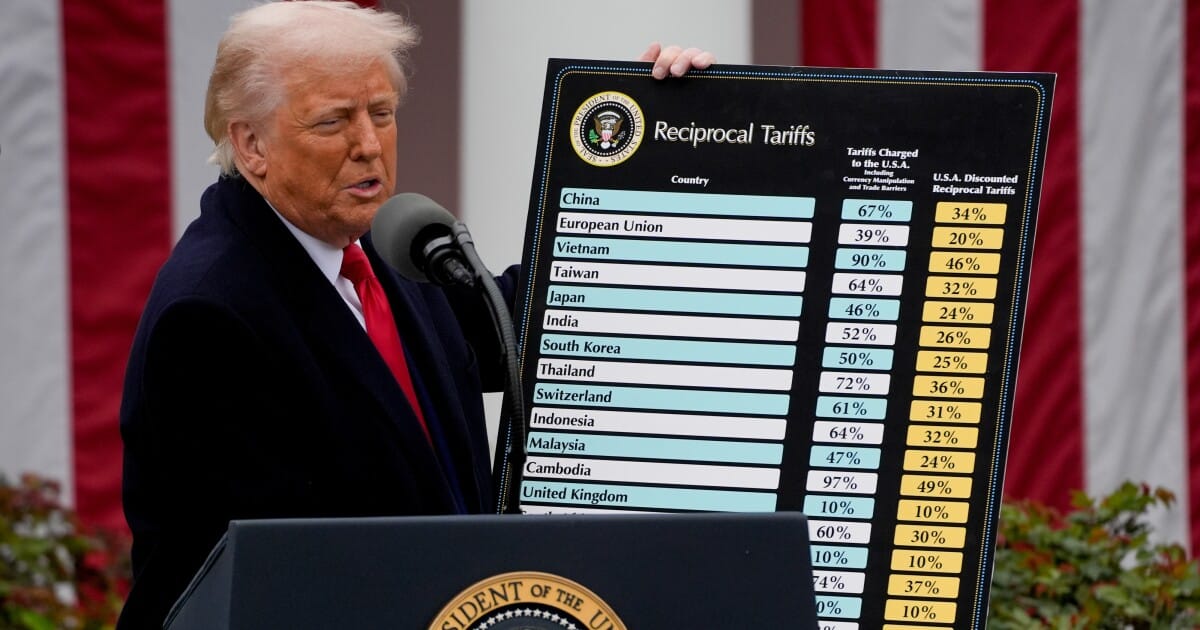

As new tariff rates kick in for imports after months of delays and reverses, accounting and finance professionals are trying to assess the complexities of constantly changing U.S. tariff and trade policies under the Trump administration.
A recent
Accountants can play a major role in helping their clients mitigate the costs of tariffs.
“How companies choose to respond to evolving US tariff and trade policies could have important implications for accounting professionals,” said Matt Hurley, a finance transformation and controllership leader with Deloitte & Touche LLP. “Most companies are continuing to monitor the impact of trade policies on their operations, and as part of that monitoring depend on their finance and accounting teams to provide — often very quickly — new financial data cuts and reporting to support the modeling of policy changes and forecast potential operational impacts.”
Many companies are reorganizing their operations in response to the tariffs and need advice on how to do that cost effectively.
“For organizations that decide to make shifts to their operations, accountants have an even more important and strategic role,” said Hurley. “In these instances, financial professionals are expected to advise on key financial, accounting and reporting changes that may result from operational changes, which may include renegotiated or new contracts, shifts in asset utilization, and more that may need to be accounted for differently on a go-forward basis.”
In some cases, accountants are helping clients move more of their operations and suppliers to the U.S. to avoid the tariffs, in contrast to the offshoring approach that had been favored until recently.
“Deloitte’s focus is on advising organizations as they navigate the evolving tariff environment and assess the financial implications of their decisions and how these decisions may affect financial reporting,” said Hurley. “From an accounting and financial advisory perspective, this includes helping them understand how to account for supply chain adjustments and build more resilient financial processes in the face of continued, broader economic uncertainty. While some organizations are exploring reshoring as a strategy, our role is to provide companies with insights into the financial and accounting impacts of such moves, demonstrating that any changes align with their broader financial goals and individual compliance requirements.”
Accountants can help clients weigh the costs of higher tariffs compared to using U.S. suppliers or opening factories in the U.S.
“The cost analyses of how evolving trade policies affect an organization are much broader than just weighing new tariff rates against reshoring costs,” said Hurley. “Business leaders must also consider many other factors, cost drivers and their accounting impacts as part of this equation, including raw material costs, labor costs, compliance costs (including the impact to financial reporting), tax implications, logistics costs (including freight, shipping, and storage), and indirect costs potentially stemming from shifting brand or customer perceptions. These factors are unique to each organization in driving their response to trade policies, but also to macroeconomic risks broadly. Our role is to advise clients on how to analyze these factors through cost analysis and financial forecasting, seeing that they make informed decisions that align with their strategic objectives.”
The legal team often needs to get involved when a contract needs to be adjusted or renegotiated. But accountants and controllers can provide input when companies are renegotiating their contract terms with suppliers alongside the attorneys and procurement team.
“Even though procurement and legal often lead contract negotiations, it is important that finance and accounting leaders also be included at the contract review table to see that new negotiated terms don’t have unintended consequences and are structured to achieve the financial objectives and desired accounting results of the organization,” said Hurley. “During the contract renegotiation process, finance and accounting leaders can help with the cost analysis of proposed new terms; identify and account for hidden costs (e.g., in logistics, storage, and handling); consider supplier diversification; align new terms with the organization’s financial goals, objectives, and regulatory requirements; and assess how different terms may be better than others over time through financial forecasting.”
Changes in asset use due to new trade policies are affecting depreciation schedules, cost allocations, and tax implications, requiring agile financial strategies.
“In response to supply chain uncertainty and evolving trade policies, some companies may decide to scale up or repurpose existing assets or shift production and manufacturing capabilities that could in turn impact an asset’s expected future use,” said Chris Chiriatti, an audit & assurance managing director at Deloitte & Touche LLP. “Any change in asset usage raises financial reporting considerations which could include changes in depreciable lives, depreciation amounts and even asset impairments.”
Changes to anticipated use of the assets could affect the useful life of the assets, resulting in accelerated depreciation, he noted. “The same could also signal a possible impairment, which entities will need to evaluate,” Chiriatti added. “Although not prevalent in practice, any entity that uses a unit of depreciation method for affected assets will need to revisit their estimated usage and adjust depreciation accordingly. Additionally, assets that are not directly impacted by decisions around asset usage could also be affected by tariffs. This could be the case if an organization’s future cash flows used to support the recoverability of long-lived assets are affected by tariffs. Organizations that must adhere to IFRS for statutory reporting must also consider the possibility of impairment reversals for bringing previously impaired or abandoned assets back online.”
The new tax law mitigates some of the impact of tariffs for companies by lowering taxes in general on U.S. business.
“The One Big Beautiful Bill Act, while not directly targeting tariffs, introduces several provisions that could provide support to companies as they respond to a changing tariff environment — especially those considering onshoring strategies,” said Dave Yaros, tariff and trade strategic growth market leader at Deloitte Tax LLP. “Incentives around R&D, favorable depreciation for manufacturing investments, and potential benefits for moving intellectual property (IP) onshore could help offset some tariff-related costs. These changes in the new tax law could in turn reduce the impact of tariffs for some organizations, depending on how they leverage the law’s opportunities within their unique business models and supply chains.”
However, the new tax law’s effects on tariffs are not universal, he added. “The degree of mitigation depends on each company’s profile, strategic decisions, and even interdependencies between business functions including tax, trade, supply chain, finance, IT, legal, procurement, government affairs, operations and more,” said Yaros. “This underscores how imperative it is for businesses to take a careful, teamed approach to evaluating how the new tax provisions could intersect with their tariff exposures, particularly if they are considering location changes to key business infrastructure. Regardless of the driving force — whether tariffs or something else — thoughtful planning in response to these tax changes can be a valuable part of a broader tax and business strategy.”
Data reliability was cited as a major challenge by 38.6% of the finance and accounting professionals who responded to the Deloitte poll, followed by speed to obtain data (17.9%). “Data reliability is important for accurate financial modeling and decision-making, but speed is also a factor in today’s fast-paced policymaking environment,” said Hurley. “To put some context around this: scenario modeling in today’s fast-paced policy environment may challenge finance teams, as it requires agility to track and analyze consistently moving targets and data points — and that is assuming that the data isn’t already stale by the time it’s been synthesized,
or rules haven’t evolved by the time analysis is ready to be presented to the C-suite or board.”
The survey polled about 300 C-suite leaders in addition to more than 2,900 finance and accounting professionals. “In that same poll, 40.9% of CEOs reported similar data quality and reliability concerns, however, they reported much greater concerns with data access speed (27.6%) when compared to finance and accounting respondents,” said Hurley. “This seems to imply that some level of tension exists between the C-suite and finance function regarding speed of reporting. These challenges underscore the importance of having a healthy and agile data ecosystem, especially data gathering tools, data quality, and the data systems necessary to be able to provide the transparency, accuracy, and speed needed for modeling.”
Some organizations may rely on data differently for financial reporting purposes than in the past,
Chiriatti noted: “Different data sources may now be needed to appropriately identify and account for tariffs,” he added. “Entities may need to consider if they have appropriate processes and controls over the accuracy and completeness of this data.”
The constantly changing nature of tariffs in the Trump administration makes it difficult for companies and their accountants to predict and plan.
“U.S. trade negotiations are ongoing and that may make it difficult for some companies to plan strategically in both the short and long term,” said Hurley. “Uncertainty regarding where tariff rates will ultimately be set — whether for certain countries, geographies, raw materials or certain types of goods — adds to challenges in assessing existing cost structures, analyzing the impact to profit margins, reorienting supply chains, undertaking capital investments and more. This underscores the importance of having agile data systems and robust scenario modeling capabilities to support finance and accounting professionals in how they help their organizations adapt to evolving conditions and provide timely insights to their C-suite, boards, investors and other stakeholders.”





Treasury Bond Volatility Forces Bessent to Double Debt Buyback Size as Yields Swing

Nvidia Earnings Preview: What Wall Street Expects From the AI Bellwether’s Q2 Report

SEC’s Semiannual Reporting Proposal Faces Investor Pushback: What CFOs Need to Know

Armanino adds Strategic Accounting Outsourced Solutions

New 2023 K-1 instructions stir the CAMT pot for partnerships and corporations

Tax Strategy: Employee Retention Credit update
-

 Economics1 week ago
U.S. Retail Sales Fall for the First Time in Nine Months as Consumer Spending Slows
-

 Economics1 week ago
Nvidia’s Potential $3 Billion SB Energy Investment Could Reshape AI Infrastructure
-

 Economics4 days ago
Top 10 Largest Economies by 2030: IMF & World Bank GDP Projections for Global Powerhouses
-

 Stock News4 days ago
How to understand Intel $15B Stock Offering
-

 Technology1 week ago
U.S.-China AI Competition Intensifies as Washington Pushes Allies to Choose Sides
-

 Economics4 days ago
Economic Profile of the United States of America (2026–2030 Horizon)
-

 Leaders3 days ago
Jackson Hole 2026: What the First Symposium Under Fed Chair Kevin Warsh Means for Markets
-

 Economics3 days ago
U.S. National Debt Surpasses $40 Trillion for the First Time: What It Means for the Economy