Connect with us

Technology

Autonomous Quantum Cloud Networks Launch Globally

Published

on

Autonomous Quantum Cloud Networks Launch Globally

Commercial computing reached a landmark milestone during the week ending July 25, 2026, with the deployment of the world’s first fully autonomous, quantum-enhanced cloud processing networks. Leading cloud infrastructure providers announced commercial availability of hybrid quantum-classical computing clusters, allowing enterprise developers to execute complex simulation algorithms, multi-variable financial models, and molecular research pipelines directly via standard web application programming interfaces (APIs).

The architecture of modern quantum cloud networks solves major operational scalability bottlenecks that previously constrained quantum hardware to research laboratories. By combining fault-tolerant superconducting quantum processors with classical AI orchestration nodes, modern quantum networks automatically allocate computational workloads to optimal processing hardware. Highly complex optimization matrices are routed to quantum processing units (QPUs), while standard data management and analytical logic execute on ultra-fast classical server arrays.

Enterprise adoption of quantum cloud processing is accelerating rapidly across pharmaceutical, logistical, and financial engineering sectors. Global logistics firms are deploying quantum algorithms to solve continuous multi-modal routing problems, dramatically reducing fuel consumption and delivery times across global supply networks. Simultaneously, financial institutions are utilizing quantum cloud clusters to perform real-time portfolio risk simulations incorporating millions of live market variables.

As quantum cloud networks transition into mainstream enterprise operations, cybersecurity experts emphasize the urgent necessity of adopting post-quantum cryptography standards. Organizations must upgrade encryption architectures to safeguard sensitive corporate data against future quantum decryption capabilities, securing their digital infrastructure in the era of quantum-enhanced enterprise computing.

Continue Reading
Click to comment

Leave a Reply

Your email address will not be published. Required fields are marked *

Technology

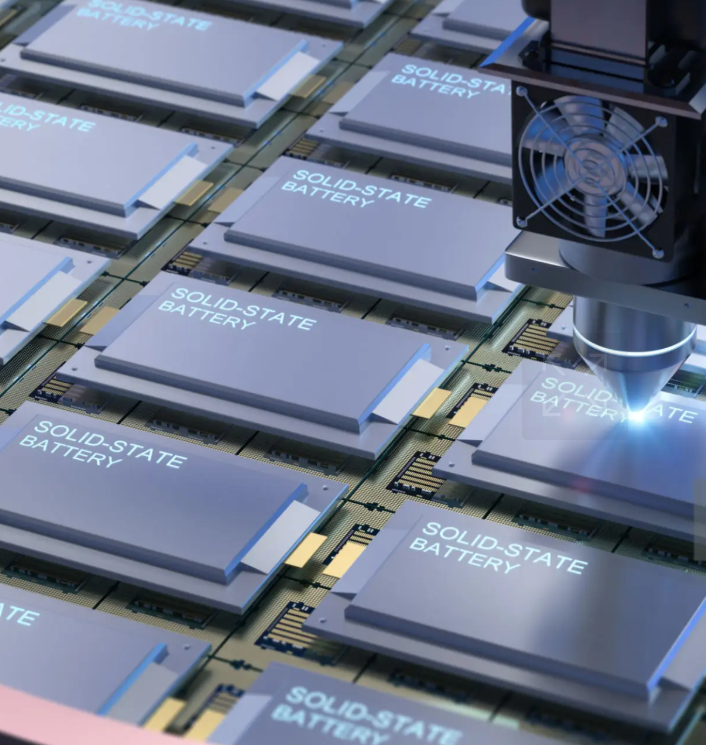
Solid State Batteries Enter Electric Fleet Production

Published

on

Solid State Batteries Enter Electric Fleet Production

Electric mobility technology achieved a major commercial breakthrough , as leading automotive manufacturers and energy storage developers initiated mass production of commercial-grade solid-state battery packs for heavy-duty electric fleets. This long-anticipated transition from traditional liquid lithium-ion chemistry to solid electrolyte architectures promises to eliminate range anxiety, halve charging duration times, and dramatically improve battery thermal safety profiles.

The technical superiority of solid-state battery technology stems from its dense physical design. By utilizing solid ceramic or polymer electrolytes instead of flammable liquid chemicals, solid-state cells achieve up to 80% higher volumetric energy density compared to conventional battery architectures. This allows electric commercial vehicles, long-haul freight trucks, and delivery vans to travel significantly longer distances on a single charge while reducing overall pack weight and manufacturing footprints.

Rapid charging capabilities represent another game-changing factor for fleet logistics operators. Commercial solid-state battery packs can safely accept ultra-fast high-voltage charges, reaching an 80% charge level in under ten minutes without inducing dendrite formation or cell degradation. This near-instantaneous replenishment capability aligns electric fleet refueling timelines directly with traditional diesel logistics schedules, accelerating commercial fleet adoption worldwide.

As production volumes scale and manufacturing costs decline, solid-state battery technology will rapidly filter down into consumer electric vehicles. Automotive analysts predict that solid-state commercialization will revitalize global EV market growth, setting new standards for vehicle range, charging speed, and long-term battery durability.

Continue Reading

Technology

Neuromorphic Chips Power Edge AI Systems

Published

on

Neuromorphic chips power edge ai systems

The hardware architecture underpinning autonomous robotics, industrial Internet of Things (IoT) systems, and real-time edge processing is undergoing a major transformation in July 2026 through the rapid commercialization of neuromorphic computing. Modeled directly after the spiking neural structure of the biological human brain, neuromorphic processors process data asynchronously, offering a dramatic reduction in power consumption and processing latency compared to traditional computing architectures.

In legacy edge computing setups, continuous data streams from cameras, optical sensors, and radar arrays must be constantly processed by power-hungry graphics processing units (GPUs) or transmitted to remote cloud servers. This traditional approach consumes substantial electrical power and introduces microsecond latency delays that can impair real-time decision-making in high-speed autonomous operations. Neuromorphic chips, by contrast, operate on event-driven principles, processing data only when localized sensory changes occur—reducing hardware energy consumption by up to 90% while executing local inferences instantaneously.

The commercial applications of event-driven neuromorphic edge computing are expanding across key industrial sectors. In autonomous transportation and drone logistics, neuromorphic processors handle obstacle detection and spatial navigation onboard without depleting vehicle battery capacity. In heavy manufacturing, ultra-low-power neuromorphic sensors monitor industrial equipment vibrations continuously, detecting micro-wear patterns and predicting mechanical failures long before operational disruptions take place.

As demand for localized, real-time data processing accelerates, neuromorphic technology represents the path forward for sustainable, energy-efficient computing. Technology leaders and hardware design teams must actively integrate neuromorphic chips into their product architectures to secure a decisive competitive advantage in computational speed, battery longevity, and edge intelligence.

Continue Reading

Technology

Quantum Resistance Transition: Securing Enterprise Architecture Against Post-Quantum Threats

Published

on

Quantum Resistance Transition

As quantum computing hardware achieves major performance milestones in mid-2026, the global cybersecurity landscape is executing an urgent, multi-year transition toward Post-Quantum Cryptography (PQC). Following the formal standardization of quantum-resistant cryptographic algorithms by international standards organizations, enterprise technology officers are under strict regulatory and operational mandates to replace legacy public-key encryption frameworks—such as RSA and ECC—with lattice-based cryptographic standards capable of withstanding quantum decryption capabilities.

The urgency surrounding this transition is driven by the reality of ‘harvest now, decrypt later’ threats. Malicious cyber actors and hostile state entities have actively intercepted and stored vast quantities of encrypted enterprise communications, sensitive intellectual property, and classified government data for years. Once commercially viable quantum processing units become operational, these stored data repositories can be decrypted retroactively. Consequently, organizations operating in financial services, healthcare, defense, and critical infrastructure must secure their data pipelines immediately to prevent future compromise.

Transitioning complex enterprise IT architectures to post-quantum standards presents major technical challenges. Post-quantum algorithms require significantly larger key sizes, different computational overhead, and modified network handshake protocols. IT engineering teams must perform comprehensive cryptographic inventories to map every instance of encryption across legacy software, cloud environments, hardware security modules (HSMs), and third-party API integrations. Upgrading these systems without disrupting core business operations requires meticulous staging and continuous compatibility testing.

For Chief Information Officers and Technology Executives, post-quantum security must be treated as an immediate enterprise risk management priority rather than a distant future project. Organizations that proactively adopt crypto-agile software frameworks—enabling rapid algorithm swapping without rebuilding underlying applications—will maintain robust data security, ensure regulatory compliance, and protect their critical digital assets.

Continue Reading

Trending