Connect with us

Stock News

Alphabet Inc. Faces Investor Scrutiny After Reporting Negative Free Cash Flow for the first time

Published

on

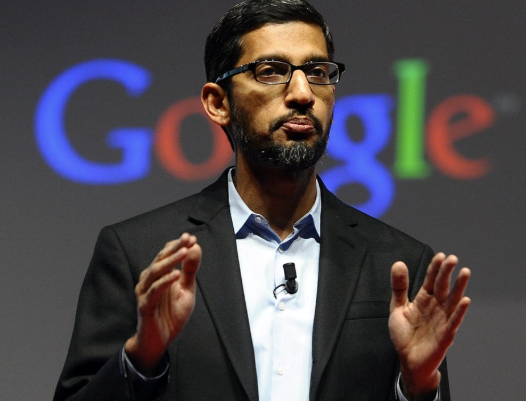
Google CEO Sundar P.

Alphabet Inc., the parent company of Google, delivered one of the strongest operating quarters in its history for the period ending June 30, 2026. Revenue climbed 24% year over year to $119.8 billion, while Google Cloud revenue surged 82%, reflecting exceptional demand for artificial intelligence infrastructure and cloud computing services. Despite these impressive results, Wall Street focused on one surprising metric: Alphabet reported its first-ever negative quarterly free cash flow since becoming a public company in 2004.

The company generated approximately $39.1 billion in operating cash flow during the quarter but spent $44.9 billion on capital expenditures, resulting in approximately negative $5.9 billion in free cash flow. This was not caused by weak operations or slowing revenue growth. Instead, it reflected Alphabet’s aggressive investments in AI data centers, custom chips, cloud infrastructure, and next-generation computing capacity.

Why Free Cash Flow Matters More Than Earnings

Free cash flow represents the cash remaining after a company pays its operating expenses and capital investments. Investors often consider it one of the best indicators of financial health because it measures the cash available for dividends, share repurchases, acquisitions, and debt reduction.

Although Alphabet reported record revenue and substantial profits, much of its reported net income was boosted by non-cash gains on equity investments. Free cash flow, by contrast, reflects actual cash generated by the business after investment spending. That is why many institutional investors paid closer attention to the cash flow statement than to headline earnings.

Massive AI Spending Is Changing Big Tech

Alphabet’s negative free cash flow is largely the consequence of its determination to remain competitive in the global AI race. Management increased its projected 2026 capital expenditures to approximately $195 billion to $205 billion, one of the largest investment programs ever announced by a technology company. Those investments include new AI data centers, Tensor Processing Units (TPUs), cloud infrastructure, and advanced computing capacity designed to support Gemini AI and enterprise cloud services.

Rather than signaling financial distress, the cash burn demonstrates how expensive AI infrastructure has become. Alphabet is effectively sacrificing near-term cash generation to secure long-term leadership in artificial intelligence.

Short-Term Implications for Alphabet Stock

Investors typically react cautiously when free cash flow turns negative, particularly after many years of strong cash generation. Following the earnings release, Alphabet shares declined as markets questioned whether future AI investments would produce sufficient returns. Analysts also expressed concern that continued spending could pressure future share buybacks and increase reliance on external financing.

In the coming months, Alphabet’s stock could remain volatile as investors closely monitor three critical metrics:

  • Growth in Google Cloud revenue.
  • Profitability of AI products and services.
  • Improvement in free cash flow generation.

If capital expenditures continue rising faster than operating cash flow, valuation multiples may remain under pressure despite strong revenue growth.

Long-Term Outlook Remains Constructive

Despite short-term concerns, Alphabet still possesses several competitive advantages. The company maintains one of the world’s strongest balance sheets, with approximately $242.5 billion in cash, cash equivalents, and marketable securities as of June 30, 2026. Its Search business continues to generate enormous operating cash flow, while Google Cloud has become one of the fastest-growing enterprise AI platforms globally.

If Alphabet successfully converts today’s infrastructure investments into higher cloud revenue, AI subscriptions, enterprise software, and advertising growth, today’s negative free cash flow could eventually be viewed as a strategic investment rather than a financial weakness. Similar investment cycles occurred during the expansion of Amazon Web Services, which initially required significant capital before becoming a major profit engine.

Risks Investors Should Watch

The primary risk is execution. AI infrastructure requires enormous capital, and returns may take years to materialize. If competitors such as OpenAI, Microsoft, Anthropic, or Meta introduce superior AI products, Alphabet may struggle to earn an adequate return on its record capital expenditures. Additionally, prolonged negative free cash flow could reduce financial flexibility if investment spending remains elevated for several years.

Investment Perspective

For long-term investors, Alphabet’s first negative free cash flow quarter should be viewed in context rather than isolation. The company’s core businesses continue to produce exceptional revenue growth, expanding operating margins, and strong customer demand. The negative free cash flow reflects unprecedented investment rather than deteriorating operations.

In the short term, Alphabet’s stock may experience continued volatility as markets assess the payoff from its AI spending. Over the longer term, however, these investments could strengthen Google’s competitive position and create new high-margin revenue streams if management executes successfully. Investors should closely monitor future quarters for signs that AI-related capital expenditures are translating into sustained cash flow growth and improved returns on invested capital.
Finance Archives – Business Finance News

Continue Reading
Click to comment

Leave a Reply

Your email address will not be published. Required fields are marked *

Stock News

Nvidia Q2 FY2027 Earnings beats Wall Street Expectation with Record $96.2 Billion Revenue

Published

on

Jensen Huang

Nvidia (NASDAQ: NVDA) reported second-quarter fiscal 2027 results after market close on August 26, 2026, posting record revenue that beat Wall Street’s consensus estimate and reinforcing its position at the center of the global AI infrastructure buildout.

The Headline Numbers

Nvidia reported revenue of $96.2 billion for the quarter ended July 26, 2026, up 18% from the previous quarter and up 106% from a year ago, according to the company’s official press release. That beat the $92.16 billion analysts expected (Visible Alpha estimates via Investopedia) and topped Nvidia’s own guidance range of $89.18 – $92.82 billion.

GAAP and non-GAAP gross margins both came in at 75.0%. GAAP earnings per diluted share were $2.46, while non-GAAP EPS was $2.22 both ahead of the roughly $2.09 per share analysts had projected. GAAP net income reached $59.7 billion, more than double the $26.4 billion reported a year earlier.

Data Center Remains the Growth Engine

Nvidia’s Data Center segment GPUs and networking equipment powering AI training and inference generated $89.0 billion in revenue for the quarter, up 18% sequentially and 117% year-over-year. That segment now accounts for roughly 92% of total revenue, underscoring how thoroughly Nvidia’s business has shifted from its historical gaming GPU roots toward enterprise and hyperscale AI infrastructure. Edge Computing revenue, covering PC, automotive, and robotics applications, came in at $7.2 billion, up 13% sequentially and 27% year-over-year.

What CEO Jensen Huang Said

“AI has reached its inflection point. It’s doing useful work. Its tokens are productive and profitable. Now, compute is revenue,” said Jensen Huang, Nvidia’s founder and CEO, in the earnings release. Huang pointed to demand broadening beyond the handful of frontier AI labs that drove early GPU purchases, describing “a golden age of new AI labs and startups, multiple frontier labs scaling in parallel, a thriving open-model ecosystem and physical AI coming online.”

Huang also highlighted the company’s newest chip platform, Vera Rubin, now ramping into full production with partners including CoreWeave, Google Cloud, Microsoft Azure, Oracle Cloud Infrastructure, and Nebius.

Guidance for the Next Quarter

For the third quarter of fiscal 2027, Nvidia guided to revenue of $108.0 billion, plus or minus 2%, roughly 12% sequential growth if hit. Notably, the company said it is not assuming any Data Center compute revenue from China, reflecting continued uncertainty around U.S. export policy toward Chinese AI chip sales. Gross margins for the coming quarter are expected to be 74.0%, plus or minus 50 basis points, a slight decline from the current quarter’s 75.0%.

A Pattern Worth Watching: Beats Without Rallies

Despite beating consensus for five straight quarters, Nvidia’s stock has fallen the day after earnings in each of its last four reports, per a 24/7 Wall St. analysis tracking moves from roughly -0.8% to -5.5%. Wedbush analyst Matt Bryson, cited in that analysis, noted Nvidia has “consistently exceeded consensus” recently “yet the stock is roughly unchanged from October of last year, a dynamic some attribute to elevated expectations already priced into the company’s roughly $5 trillion valuation.

Capital Returns to Shareholders

Nvidia returned approximately $26.0 billion to shareholders during the quarter through buybacks and dividends, with roughly $99.0 billion remaining under its repurchase authorization. The company declared its next quarterly dividend of $0.25 per share, payable October 1, 2026.

Continue Reading

Stock News

Nvidia Earnings Preview: What Wall Street Expects From the AI Bellwether’s Q2 Report

Published

on

Nvidia earning

Nvidia is scheduled to report second-quarter fiscal year 2027 earnings after market close on Wednesday, August 26, 2026, in what analysts widely describe as the single most closely watched earnings event of the week and one of the more consequential reports for the broader AI trade this year.

What Wall Street Expects

According to consensus estimates compiled by Earnings Whispers, analysts are projecting Nvidia to report earnings of $2.09 per share on revenue of $91.71 billion, which would represent a 96.2% increase from the same quarter a year earlier. The unofficial “Earnings Whisper” “number ”, a market-sentiment-based estimate that sometimes diverges from published consensus sits slightly higher at $2.12 per share.

Nvidia’s own guidance, issued with its prior quarterly report, called for earnings between $1.93 and $2.10 per share on revenue of $89.18 billion to $92.82 billion. The current whisper number sits near the top of that range, suggesting investors are betting the company will exceed its own stated targets. Earnings Whispers data shows 83.0% of surveyed investors expect Nvidia to beat expectations.

Elevated Expectations, Elevated Risk

Options markets are pricing in significant volatility around the report. According to Earnings Whispers, options traders are bracing for a 6.2% price swing following the earnings release, even though the stock has historically moved closer to 3.8% in recent quarters — suggesting the market anticipates an outsized reaction in either direction.

TipRanks reported that Nvidia’s options market implies a potential $324.5 billion swing in total market capitalization tied to the results, reflecting the sheer scale of the company’s roughly $5 trillion valuation and its outsized influence on broader index performance.

Nvidia stock has risen approximately 17.7% year-to-date as of mid-August, according to Intellectia’s analysis, trading around $219 per share, a gain that has nonetheless lagged the broader S&P 500’s roughly 7% advance over a comparable period by some measures, reflecting how much of Nvidia’s prior-year gains have already been priced in.

Why This Report Matters Beyond Nvidia

Nvidia’s results function as a bellwether for the broader AI infrastructure buildout. The company currently holds an estimated 80% market share in AI accelerators, though Intellectia’s analysis projects that share could moderate to around 75% by year-end as hyperscale cloud providers develop custom chips and AMD scales its competing Instinct MI455X platform, part of its newly introduced Helios rack-scale AI system.

The report also arrives amid heightened scrutiny of AI infrastructure spending more broadly. Nvidia has reportedly been in discussions to guarantee financing arrangements exceeding $100 billion in support of OpenAI’s data center expansion plans, according to Reuters reporting from earlier this month, alongside a separate reported $3 billion potential investment in SB Energy, a SoftBank-backed data center developer. Investors will be watching Nvidia’s commentary on data center capital expenditure trends and customer commitments as an indicator of whether current AI infrastructure spending levels are sustainable.

Context: Jackson Hole and Broader Market Conditions

Nvidia’s earnings land in the same week as the Federal Reserve’s Jackson Hole Economic Symposium (August 27-29), creating a concentrated period of potential market-moving events. The report also follows a volatile week for Treasury bonds and mortgage rates, adding macroeconomic uncertainty to an already high-stakes earnings setup.

What to Watch in the Report

Beyond the headline revenue and earnings-per-share figures, analysts will be closely tracking data center segment revenue, forward guidance for the following quarter, gross margin trends amid reportedly rising memory component costs, and any commentary on customer concentration or the durability of enterprise AI spending.

Continue Reading

Stock News

How to understand Intel $15B Stock Offering

Published

on

How to understand Intel $15B Stock Offering

How Intel $15B Stock Offering Will Impact Investors and he best course of action

When Intel Corporation announced a proposed $15 billion public offering of common stock—a transaction that quickly expanded to $20 billion and ultimately raised $23 billion following full underwriter option exercises—the semiconductor landscape witnessed one of the largest corporate equity capital raises in recent history. Priced at $95 per share, the deal issued approximately 242 million new shares to institutional buyers.

For retail and institutional investors, a equity raise of this magnitude introduces immediate financial trade-offs. Evaluating the core impacts on shareholders clarifies the strategic course of action moving forward.

The Mechanics: Immediate Shareholder Dilution vs. Balance Sheet Fortification

The most direct impact of Intel’s massive capital raise is share dilution. By issuing ~242 million new shares, existing shareholders see their equity percentage ownership reduced.

  • Earnings Per Share (EPS) Compression: With more shares outstanding, future net income is divided across a wider share base. This creates temporary friction for short-term valuation metrics.
  • Balance Sheet Stability: Conversely, raising $23 billion in equity rather than issuing high-yield debt protects Intel’s investment-grade credit rating. In an environment of elevated interest rates, avoiding billions in annual debt servicing costs provides flexibility for long-term research and development.

Strategic Rationale: Capitalizing the Foundry & AI Roadmap

Wall Street’s initial willingness to absorb this supply shift stems from Intel’s operational turnaround and capital-intensive strategy:

  1. Foundry & Advanced Packaging Infrastructure: Building leading-edge semiconductor fabrication facilities (fabs) and 3D silicon packaging infrastructure requires tens of billions in capital expenditures. The proceeds fund tool acquisitions and cleanroom buildouts necessary to compete directly with external foundries.
  2. Server & Agentic AI Demand: Surge in demand for server CPUs (such as the Xeon 6 platform) and custom AI accelerators has pushed Intel’s factory capacity to its limit. The cash injection funds immediate production scaling to capture enterprise demand.
                 Intel Equity Raise Impact Dynamics
                 
  Short-Term Realities               Long-Term Potential
┌─────────────────────────┐        ┌─────────────────────────┐
│ • ~4-5% Share Dilution  │        │ • $23B Clean Capital    │
│ • Near-Term EPS Drag    │   ──>  │ • Accelerated Fab Build │
│ • Short-Term Volatility │        │ • Enterprise AI Growth  │
└─────────────────────────┘        └─────────────────────────┘

Investor Impact: Risk & Reward Profile

FactorImpact on Existing InvestorsImpact on New/Prospective Buyers
Share ValueTemporary price pressure as the market digests excess supply.Strategic entry point if the stock pulls back below the $95 offering price.
Growth RunwayLower risk of corporate debt overhang or solvency stress.Direct exposure to foundry expansion and physical AI hardware demand.
Execution RiskSuccess depends on management converting capital into high-margin yields.Stock remains sensitive to fab execution milestones and customer wins.

The Best Course of Action for Investors

Navigating a massive stock offering depends on your investment horizon and current portfolio allocation:

1. For Existing Long-Term Holders: Hold & Monitor Execution

Selling into post-offering price weakness turns temporary paper dilution into realized losses. Because Intel secured clean capital to fund its multi-year turnaround without taking on expensive debt, long-term investors should hold positions. The key execution metrics to watch over the next 2–4 quarters are foundry gross margins, yield progress on advanced process nodes, and external customer commitments.

2. For Prospective Buyers: Dollar-Cost Average Near the Offering Base

When stock trades near or slightly below the institutional offering price ($95/share), it creates an entry window where institutional anchor investors priced the business. Instead of committing full positions at once, use dollar-cost averaging (DCA) over 3 to 6 months to build a position while the market digests the new share supply.

3. For Short-Term Traders: Exercise Caution

In the near term, large equity offerings often create a “supply overhang,” keeping price action range-bound while institutional underwriters balance market inventory. Short-term traders should wait for the stock to establish a clear technical consolidation floor above major moving averages before taking tactical long positions.

Intel’s upsized $23 billion capital raise is a classic trade-off: short-term share dilution in exchange for long-term balance sheet strength. For patient investors who believe in the global expansion of AI compute and domestic semiconductor manufacturing, this equity injection provides the war chest required to turn strategic plans into market share.

Continue Reading

Trending