Connect with us

Accounting

HR and payroll tech firm Paylocity buys Airbase

Published

on

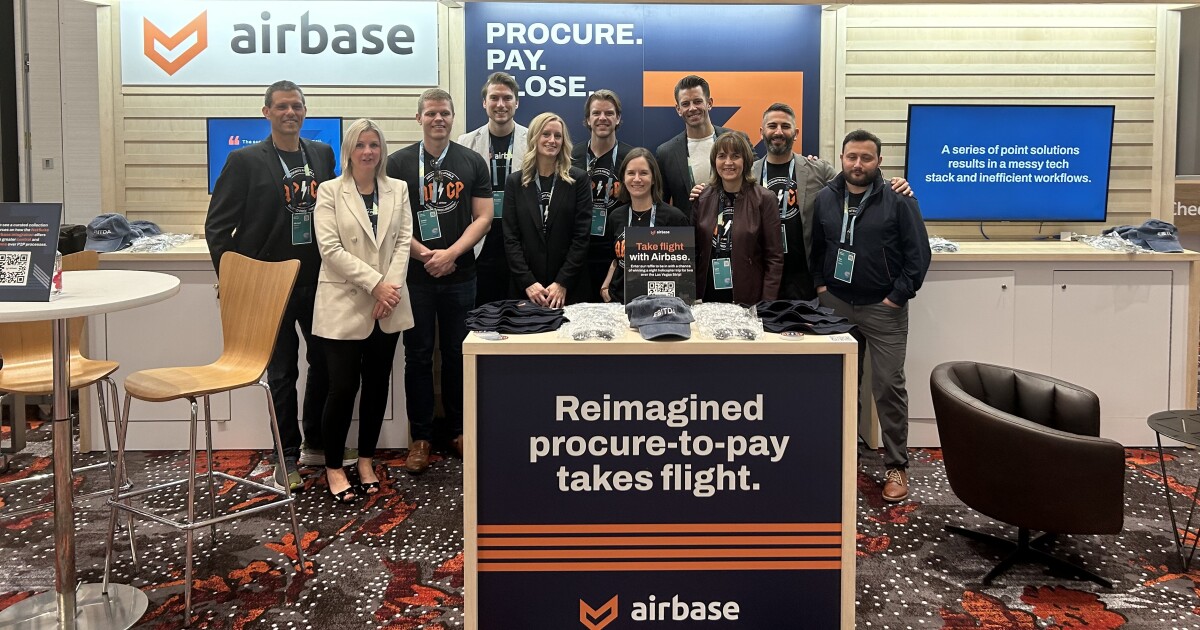
HR and payroll solutions provider Paylocity has acquired spend management and AP automation software company Airbase.

“I’m very excited about the acquisition of Airbase, which we believe will allow us to provide companies with an integrated software platform to manage all aspects of their operational spend,” said Toby Williams, president and CEO of Paylocity. “Many companies use disparate software solutions or manual processes to manage their labor costs and non-labor vendor and procurement spend, and we expect this acquisition will give us the ability to provide a comprehensive solution and modern client experience for managing all spend on a single integrated platform. Airbase represents an exciting opportunity to expand our relationship with our nearly 40,000 clients to offer an integrated software platform for running their business operations, while also offering a very compelling value proposition for prospects across our target market.”

The acquisition of Airbase represents an expansion of Paylocity’s suite from just human capital management further into the office of the CFO. Adding Airbase’s capacities to its own software gives users the ability to see payroll and non-payroll spending through a single view, which allows for real-time visibility for a faster financial close, improved planning and stronger financial controls. Users will now have tools for bill pay and AP automation, expense management, corporate cards, procurement, integrations with third party systems like Oracle and Sage, as well as QuickBooks Workflow Automation. Paylocity said it wants this added capacity to become a key differentiator for its product.

Paylocity acquired Airbase for about $325 million, funded not by outside investors but through its revolving credit facility. The company had also been planning a $350 million share repurchase program, and said it does not expect the acquisition to interfere with this.

The transaction is expected to close in the first or second quarter of fiscal 2025. The acquisition of Airbase is expected to represent approximately 1% of Paylocity’s total revenue in fiscal 2025 and is expected to dilute its adjusted EBITDA margin by approximately 100 basis points in fiscal 2025. Paylocity will update financial guidance in its first quarter fiscal 2025 earnings release.


Continue Reading

Accounting

Mandatory ESG Reporting Standards Demand Standardized Non-Financial Audit Trails

Published

on

Mandatory ESG Reporting Standards Demand Standardized Non-Financial Audit Trails

Corporate accounting departments face an expanded regulatory mandate as mandatory sustainability and Environmental, Social, and Governance (ESG) reporting frameworks take full effect internationally. Governed by the European Union’s Corporate Sustainability Reporting Directive (CSRD) and the International Sustainability Standards Board (ISSB) IFRS S1 and S2 standards, enterprise financial controllers are now legally required to track, verify, and report non-financial data with the same internal controls and auditability as traditional financial statements.

The expansion shifts ESG compliance

This regulatory expansion shifts ESG compliance from marketing departments to corporate accounting offices. Financial managers are now responsible for gathering, consolidating, and verifying carbon emissions metrics, supply chain labor conditions, water usage, and climate risk exposures across multi-tiered corporate structures. These non-financial metrics must be integrated into standardized general ledgers to withstand rigorous third-party audit assurance processes.

To comply with these rigorous reporting mandates, accounting software providers have added dedicated ESG modules designed to aggregate data from IoT sensors, utility platforms, and vendor management systems. Controllers are implementing internal control frameworks—modeled after traditional COSO frameworks—to ensure the completeness, accuracy, and consistency of sustainability disclosures, protecting organizations against greenwashing penalties and litigation risks.

The transition requires significant cross-functional collaboration between accounting teams, legal counsel, and operational directors. Accounting professionals are expanding their technical expertise beyond financial ledgers to master carbon accounting methodologies, lifecycle assessment standards, and non-financial data governance protocols, fundamentally expanding the role of the modern corporate accountant.

Why This Information Matters
Mandatory ESG disclosures require companies to treat environmental and social metrics as audited financial records. Executives, accountants, and board members must institute formal tracking and assurance processes to satisfy legal mandates, maintain investor confidence, and mitigate regulatory non-compliance risks.

Continue Reading

Accounting

SEC’s Semiannual Reporting Proposal Faces Investor Pushback: What CFOs Need to Know

Published

on

U.S. Securities and Exchange Commission (SEC)

A proposal from the U.S. Securities and Exchange Commission to potentially shift some public companies away from quarterly financial reporting toward a semiannual model is drawing significant pushback from investors, even as it continues moving through the regulatory process. The debate has direct implications for corporate finance teams, auditors, and the broader transparency of U.S. capital markets.

What the SEC Proposed

According to a summary published by accounting advisory firm Cohen & Co., the SEC issued a proposed rule on May 19, 2026, aimed at simplifying financial reporting requirements for many U.S. public companies. The proposal would potentially reduce the frequency of certain mandatory disclosures from quarterly to semiannual, a structural change that has not been made to core U.S. reporting requirements in decades.

The proposal follows an extended debate within U.S. policy circles, with proponents arguing that reduced reporting frequency could lower compliance costs and free up management time for longer-term strategic planning rather than quarter-to-quarter results management.

Why Investors Are Pushing Back

Comment letters submitted in response to the proposal have been extensive, and according to Cohen & Co.’s review of the public record, investors “appear to be largely opposed” to the shift, viewing frequent interim reporting as a core benefit of U.S. capital markets relative to other jurisdictions.

Accounting and law firms have taken a more measured position, generally urging any changes to remain aligned with the Financial Accounting Standards Board (FASB), whose existing disclosure requirements and guidance are built around a quarterly reporting cadence. A shift to semiannual reporting without corresponding changes to FASB guidance could create friction between SEC filing requirements and GAAP-based disclosure expectations.

Lessons From the U.K. Experience

The debate is not without precedent. The United Kingdom moved away from mandatory quarterly reporting for listed companies in 2014, returning to a semiannual disclosure requirement. According to Cohen & Co.’s analysis, that experience offers a cautionary data point: there was no measurable increase in capital expenditure or R&D investment following the change, while analyst coverage of affected companies declined as reliable interim information became less available — a particular risk for smaller and newly public companies that rely on analyst coverage to maintain investor visibility.

Practical Implications for Finance Teams

Beyond the debate over disclosure philosophy, the proposal carries practical complications. Many companies have debt covenants and credit agreements structured around quarterly financial delivery; a shift to semiannual reporting could require renegotiating those terms. Reduced reporting frequency would also extend the “window of market silence” between disclosures, a factor that governance and investor-relations teams would need to manage carefully to avoid information asymmetry.

Separately, and unrelated to the reporting-frequency debate, the SEC and FASB have continued finalizing more routine updates this year. New Accounting Standards Updates are taking effect for December 31, 2026, fiscal year-ends covering income tax disclosures, credit loss measurement, induced debt conversions, and stock compensation, according to Eide Bailly’s review of 2026 ASU activity. Additional guidance on paid-in-kind dividends and environmental credits is also on the near-term horizon.

What to Watch Next

The semiannual reporting proposal remains in the comment and review phase, and no final rule has been adopted as of this writing. Finance leaders should monitor the SEC’s regulatory agenda for further movement, while treating the current quarterly reporting requirement as the operative standard until any final rule is issued and an effective date is set.

Given the extent of investor opposition documented in the comment file, a full shift to mandatory semiannual reporting appears more likely to result in either a scaled-back compromise or continued study rather than swift adoption — though the SEC’s ultimate direction remains uncertain.


Continue Reading

Accounting

AI-Driven Automation and Continuous Accounting Frameworks

Published

on

The accounting profession is undergoing a fundamental structural transition as enterprise finance departments shift from periodic month-end closes toward automated continuous accounting models. By integrating specialized machine learning algorithms directly into enterprise resource planning (ERP) platforms, chief accounting officers are transforming financial reporting from a retrospective exercise into a real-time operational asset.

The Shift from Periodic Close to Continuous Financial Reporting
Traditional accounting workflows heavily relied on manual data reconciliation, spreadsheet calculations, and multi-week closing cycles at the end of each fiscal period. In contrast, continuous accounting frameworks utilize automated software agents to process, validate, and post transactional data in real time as business activities occur.

Automated bank reconciliation tools cross-reference incoming bank feeds, invoice records, and purchase orders automatically. By resolving transactional variances instantly throughout the month, corporate accounting teams eliminate the traditional workload spikes associated with quarterly and annual closes.

Machine Learning in Audit Trails and Anomaly Detection
Advanced natural language processing (NLP) and machine learning tools are redefining internal audit and financial control environments. Automated systems analyze 100% of general ledger entries, identifying anomalous transactions, duplicate payments, and unauthorized journal entries in real time.

Rather than relying on random statistical sampling, corporate internal auditors can focus their attention on high-risk flags automatically surfaced by algorithmic monitoring platforms. This continuous risk assessment strengthens internal controls over financial reporting (ICFR) and significantly reduces fraud risk.

Evolving Roles for Accounting Professionals
As routine data entry and manual reconciliation tasks become fully automated, the skill set required for accounting professionals is shifting toward data analysis, system design, and strategic business advisory.
– Systems Governance: Accountants are increasingly responsible for monitoring algorithmic accuracy and managing data integration pipelines.
– Business Partnership: Finance professionals leverage real-time financial dashboards to advise operational leaders on margin management and working capital allocation.
– Regulatory Compliance Management: Accounting teams utilize automated platforms to ensure compliance with dynamic tax codes and international accounting standards.

Core Implementation Recommendations
1. Deploy Automated Reconciliation Tools: Integrate continuous transaction processing modules into existing enterprise ERP architectures.
2. Establish Algorithmic Governance Controls: Implement strict internal testing protocols to ensure automated accounting rules comply with GAAP/IFRS standards.
3. Reskill Accounting Teams: Invest in training finance staff on data analytics, workflow automation, and predictive financial modeling.

Continue Reading

Trending