
Personal Finance
More colleges set to close in 2025, while ‘Ivy Plus’ schools thrive

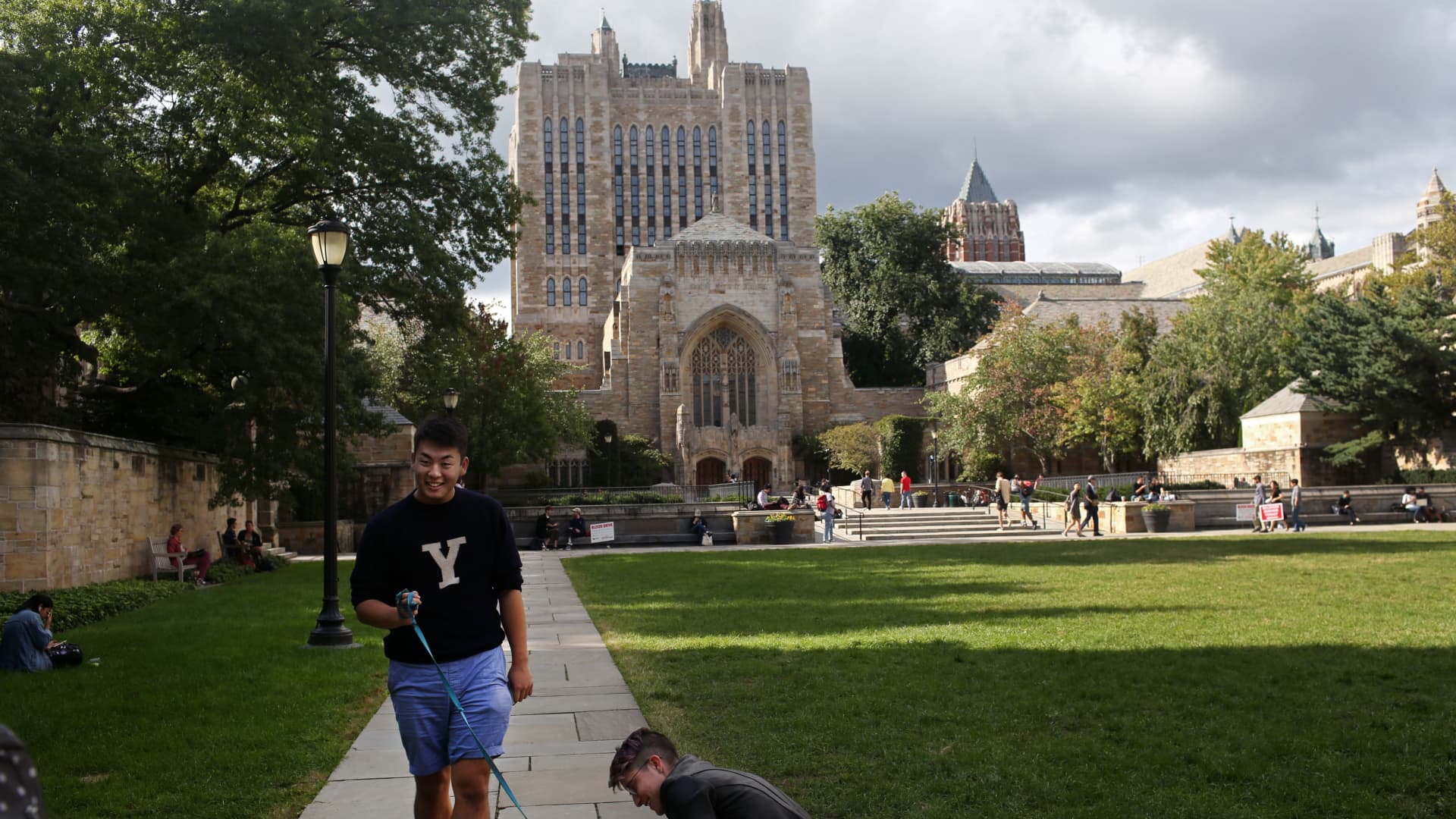

Many colleges are under financial pressure, and the cracks are starting to show.
At least 20 colleges closed in 2024, and more are set to shut down after the current academic year, according to the latest tally by Implan, an economic software and analysis company.
Altogether, more than 40 colleges have closed since 2020, according to a separate report by Best Colleges.
More from Personal Finance:
Teens are losing faith in college
These are the top 10 highest-paying college majors
The sticker price at some colleges is now nearly $100,000 a year
As the sticker price at some private colleges nears six figures a year, students have increasingly opted for less expensive public schools or alternatives to a four-year degree altogether, such as trade programs or apprenticeships.
At the same time, the population of college-age students is also shrinking, a trend referred to as the “enrollment cliff.”
Experts have continuously warned that ongoing problems with the new Free Application for Federal Student Aid form have resulted in fewer students applying for financial aid, which could also contribute to declining enrollment.
That has left some colleges and universities in a bind, especially “small private — often liberal arts — schools,” said Candi Clouse, a vice president at Implan.
Meanwhile, the country’s most elite institutions are thriving.
College applications jump
Coming out of the pandemic, a small group of universities, including many in the Ivy League, experienced a record-breaking increase in applications, reports show.
Last year, Yale University, for example, accepted 3.73% of the record-high 57,465 students who applied to the Class of 2028.
Overall, the number of college applicants jumped 11% in the 2023-24 school year, even as enrollment flatlined, the latest data from the Common Application found, suggesting more students are applying to the same schools.
If you are not a big brand, you have a real problem on your hands.
Hafeez Lakhani
founder and president of Lakhani Coaching
“There’s been a paradox in higher education for five-plus years,” said Hafeez Lakhani, founder and president of Lakhani Coaching in New York.
“At the very same time you have an enrollment crisis building, you have record application volume at the most selective schools,” he said. “The consensus is, it’s only worth going to college if it’s a life-changing college.”
Meanwhile, private colleges that are less prestigious but equally expensive are struggling to attract applicants, he added.
For a majority of students, “the costs are nowhere near reasonable,” Lakhani said.
“If you are not a big brand, you have a real problem on your hands,” he said.
College is becoming a path for only those with the means to pay for it, other reports show.
Children from families in the top 1% are more than twice as likely to attend a so-called Ivy Plus school as those from middle-class families with comparable SAT or ACT scores, according to the National Bureau of Economic Research.
Though opinions on which schools should be considered Ivy Plus vary, the group generally includes the eight private colleges that comprise the Ivy League — Brown, Columbia, Cornell, Dartmouth, Harvard, University of Pennsylvania, Princeton and Yale — plus the University of Chicago, Duke, Massachusetts Institute of Technology, and Stanford.
Most Americans still agree a college education is worthwhile when it comes to career goals and advancement. However, only half believe the economic benefits outweigh the costs, according to a separate report by Public Agenda, USA Today and Hidden Common Ground.
The rising cost of college and ballooning student loan balances have played a big role in changing views about the higher education system, which many think is rigged to benefit the wealthy, the report found.
Tuition and fees plus room and board for a four-year private college averaged $56,190 in the 2023-24 school year. At four-year, in-state public colleges, it was $24,030, according to the College Board, which tracks trends in college pricing and student aid.
Already, the majority of applicants hail from the wealthiest zip codes, the Common Application found.

Personal Finance
Algorithmic Wealth Management: Balancing Automated Financial Planning with Human Oversight


Personal Finance
High-Yield Optimization: Structuring Personal Cash Reserves in a Sustained Rate Environment


Global Stock Market Analysis and Key Trends Across Europe and East Asia

Memory Stock Rally and Recent Volatility increased fear among tech investors

Energy Stocks Outperform as Crude Surges Past $100

Armanino adds Strategic Accounting Outsourced Solutions

New 2023 K-1 instructions stir the CAMT pot for partnerships and corporations

Tax Strategy: Employee Retention Credit update
-
 Economics6 days ago
The Warsh Shift: How the New Fed Chair Is Balancing War Drags and Tech Winds
-

 Economics5 days ago
Global Trade Realignment and Supply Chains in 2026
-

 Economics5 days ago
Labor Market Calibration: Analyzing the Shift Toward Skill-Based Allocation in 2026
-
 Finance1 week ago
South Korea Raises Interest Rates to 2.75% for the First Time in More Than Three Years
-
 Finance5 days ago
Tokenized Real-World Assets: Institutional Ledger Adoption Achieves Scale in July 2026
-
 Leaders1 week ago
Berkshire Hathaway Chairman Reshapes His Long-Term Philanthropic Strategy
-
 Economics1 week ago
Global Stock Market Weekly Recap: Tech Sell-Off Sparks International Rout
-

 Economics4 days ago
Global Grid Upgrades Reshape Macro Economics