Connect with us

Accounting

Standardizing Global ESG Reporting: Key Compliance Imperatives for Mid-Year 2026

Published

on

Standardizing Global ESG Reporting: Key Compliance Imperatives for Mid-Year 2026

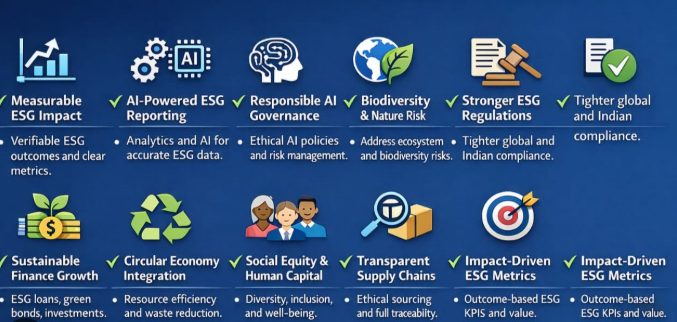
As mid-2026 financial reporting deadlines approach, corporate accounting teams are facing unprecedented rigor in Environmental, Social, and Governance (ESG) disclosures. With the full-scale global adoption of the International Sustainability Standards Board (ISSB) standards—specifically IFRS S1 and IFRS S2—sustainability accounting has officially transitioned from voluntary marketing metrics to mandatory, auditable financial disclosures. Companies subject to these standards must present climate-related risks and opportunities with the exact same quantitative precision and internal control discipline applied to traditional financial balance sheets.

The centerpiece of these updated requirements is the granular quantification of Scope 1, Scope 2, and material Scope 3 emissions, alongside detailed financial risk exposures related to climate transition scenarios. Accounting for Scope 3 emissions—which encompass the entire value chain, from raw material procurement to end-of-life product disposal—presents a substantial data management challenge. Corporate finance teams must establish standardized data exchange protocols with third-party vendors and international suppliers, replacing unverified estimations with primary, verifiable carbon accounting metrics.

To satisfy independent assurance standards, organizations are integrating climate data capture directly into their core ERP systems. Internal control frameworks, such as the Committee of Sponsoring Organizations of the Treadway Commission (COSO) guidance, are being systematically expanded to cover non-financial sustainability metrics. External auditors are applying rigorous limited and reasonable assurance testing to these disclosures, placing climate liability risk directly on audit committees and chief financial officers.

For accounting leaders, navigating this regulatory climate requires establishing cross-functional task forces that unify financial controllers, sustainability specialists, and legal counsel. By treating ESG metrics as an integral dimension of corporate risk management rather than a separate reporting burden, companies can enhance investor trust, lower capital costs, and protect themselves against rising regulatory non-compliance penalties.

Continue Reading
Click to comment

Leave a Reply

Your email address will not be published. Required fields are marked *

Accounting

U.S. Imposes New 50% Tariffs on Canadian Imports Under Rare Legal Provision

Published

on

U.S. Imposes New 50% Tariffs on Canadian Imports Under Rare Legal Provision

WASHINGTON — In a major escalation of cross-border trade friction, U.S. President Donald Trump has signed executive orders imposing new 50% tariffs on a wide selection of Canadian exports, citing discriminatory practices by Ottawa targeting American auto, dairy, and beverage industries.

The new duties, announced Monday, will take effect in 30 days. They target a broad spectrum of consumer and industrial goods—ranging from wine, liquor, and milk products to commercial cement, furniture, clothing, and hockey equipment.

Untested Legal Mechanism

To enact the sweeping measures, the administration invoked Section 338 of the Tariff Act of 1930—a rarely used legal provision allowing the executive branch to levy additional tariffs of up to 50% on foreign nations deemed to discriminate against U.S. commerce.

White House officials noted that Section 338 addresses trade discrimination rather than national security or economic emergencies. The move comes months after prior global emergency tariffs faced legal challenges in domestic courts, signaling Washington’s pivot toward alternate statutory authorities to maintain import duties.

Senior administration officials briefed reporters that the measure directly responds to Canadian provincial bans on U.S. alcohol, restrictions on American vehicle exports, and import quota disparities affecting U.S. dairy and cheese producers relative to third-party trading partners.

“While the administration continues to secure reciprocal trade agreements globally, Canada retaliated against efforts to protect domestic industry,” U.S. Trade Representative Jamieson Greer stated.

USMCA Impact and Carve-Outs

Significantly, the newly ordered 50% duties will apply to designated items even if they otherwise comply with the United States-Mexico-Canada Agreement (USMCA).

However, the administration confirmed key targeted exemptions:

  • Energy products (including oil and natural gas)
  • Potash and critical minerals
  • Fish and seafood
  • Goods already governed by sector-specific duties (such as existing steel and aluminum tariffs)

Administration representatives emphasized that the tariffs do not stem from recent disputes concerning drifting Canadian wildfire smoke, noting that policy options regarding environmental spillover remain under separate review.

Canadian Response and Market Reaction

Following the White House announcement, the Canadian dollar experienced a sharp decline against the U.S. dollar, falling approximately 0.4% during evening trading.

Canadian Prime Minister Mark Carney issued a statement emphasizing that Canada’s earlier counter-duties had merely matched previous U.S. trade actions. “Canada stands ready to engage intensively to address outstanding issues with the U.S. to the mutual benefit of our citizens,” Carney stated, pointing to detailed proposals Ottawa submitted to modernize the USMCA framework.

Ontario Premier Doug Ford took a firmer stance, urging a “dollar-for-dollar” reciprocal response if the measures go into effect on August 19.

With a 30-day implementation window before the duties officially lock in, industry associations and trade groups on both sides of the border are calling for urgent bilateral negotiations to avert further supply chain disruption across North America.

Continue Reading

Accounting

Automated Continuous Auditing: Transforming Compliance and Real-Time Financial Oversight

Published

on

Transforming Compliance and Real-Time Financial Oversight

The traditional accounting paradigm—defined by periodic monthly closures and post-hoc annual audits—is rapidly giving way to continuous, automated financial oversight. As of July 2026, forward-thinking accounting practices and multinational corporate finance departments are leveraging continuous auditing systems powered by advanced machine learning models. These systems monitor operational transactions in real time, shifting audit methodologies from sample-based post-analysis to absolute, 100% transaction-level verification.

The operational advantages of continuous auditing are transformative. Standard auditing procedures historically relied on statistical sampling, which, despite rigorous methodology, inherently left gaps where anomalies or fraudulent transactions could go undetected for months. Modern continuous auditing platforms integrate directly with enterprise resource planning (ERP) databases, instantly cross-referencing purchase orders, invoices, bank feeds, and tax records. Any deviation from established control parameters or unusual transaction behavior triggers immediate flags for internal audit teams, dramatically reducing detection lag from quarters to seconds.

Beyond fraud prevention, continuous auditing fundamentally alters internal reporting and decision-making. Executive leadership no longer has to wait weeks after the close of a quarter to evaluate precise financial standing; real-time verified ledger data provides an uninterrupted view of operating margins, tax liabilities, and cash flow dynamics. This real-time visibility enables corporate controllers to adjust capital allocation strategies dynamically, mitigating liquidity constraints and capitalizing on emerging commercial opportunities far more efficiently than competitors bound to legacy reporting cycles.

However, implementing continuous auditing requires accounting professionals to acquire new analytical capabilities. The role of the auditor is evolving from manual data reconciliation toward system validation, algorithmic model governance, and strategic risk interpretation. Accounting firms and corporate finance departments must invest in continuous technical education, ensuring that audit staff possess the data engineering skills necessary to design, maintain, and evaluate complex automated compliance systems.

Continue Reading

Accounting

Japan Reclassifies Cryptocurrency as a Financial Asset in Landmark Regulatory Reform

Published

on

japan prime minister

Financial

New Law Brings Digital Assets Closer to Traditional Investments

Japan has taken a major step in modernizing its cryptocurrency regulations by approving legislation that officially recognizes digital assets as financial assets rather than treating them primarily as payment instruments. The policy change represents one of the country’s most significant crypto reforms and is expected to reshape how cryptocurrencies are regulated, traded, and taxed in the years ahead.

Previously, cryptocurrencies in Japan were governed mainly under payment services rules. The new framework moves digital assets under financial market legislation, bringing them closer to stocks, bonds, and other investment products. Lawmakers said the change reflects the growing role of cryptocurrencies as investment vehicles rather than simply alternative payment methods.

Stronger Investor Protection and Market Oversight

The revised legal framework introduces stricter oversight for cryptocurrency exchanges and other market participants. New requirements include enhanced disclosure obligations, stronger investor protection measures, tighter supervision of crypto businesses, and insider trading restrictions similar to those that already apply to traditional securities markets.

The legislation also increases penalties for unregistered crypto operators, reflecting Japan’s continued focus on maintaining one of the world’s most regulated digital asset markets. Financial regulators believe stronger rules will improve market integrity while encouraging responsible innovation within the blockchain industry.

Potential Benefits for Investors

The regulatory overhaul could pave the way for future cryptocurrency investment products, including the possible introduction of spot cryptocurrency exchange-traded funds (ETFs). The new classification may also support broader institutional participation by providing greater legal clarity for banks, asset managers, and investment firms considering digital asset investments.

Lawmakers have also discussed reducing Japan’s relatively high tax burden on cryptocurrency gains in future legislation, although any tax changes would require separate approval before taking effect.

Looking Ahead

Japan’s decision reinforces its reputation as one of the world’s leading jurisdictions for cryptocurrency regulation. By recognizing crypto as a financial asset, the country aims to balance innovation with investor protection while creating a clearer legal framework for the rapidly evolving digital asset industry.

As implementation moves forward, investors and cryptocurrency businesses will be watching closely to see how the new rules influence market growth, institutional adoption, and Japan’s position in the global blockchain economy. The reform could also encourage other countries to review their own regulatory approaches as digital assets continue to become a larger part of the international financial system.

Continue Reading

Trending