Connect with us

Accounting

AICPA weighs in on state partnership income sourcing rules

Published

on

The American Institute of CPAs has sent a letter to the Multistate Tax Commission and a related work group recommending changes in their proposed approach to state tax sourcing of partnership income.

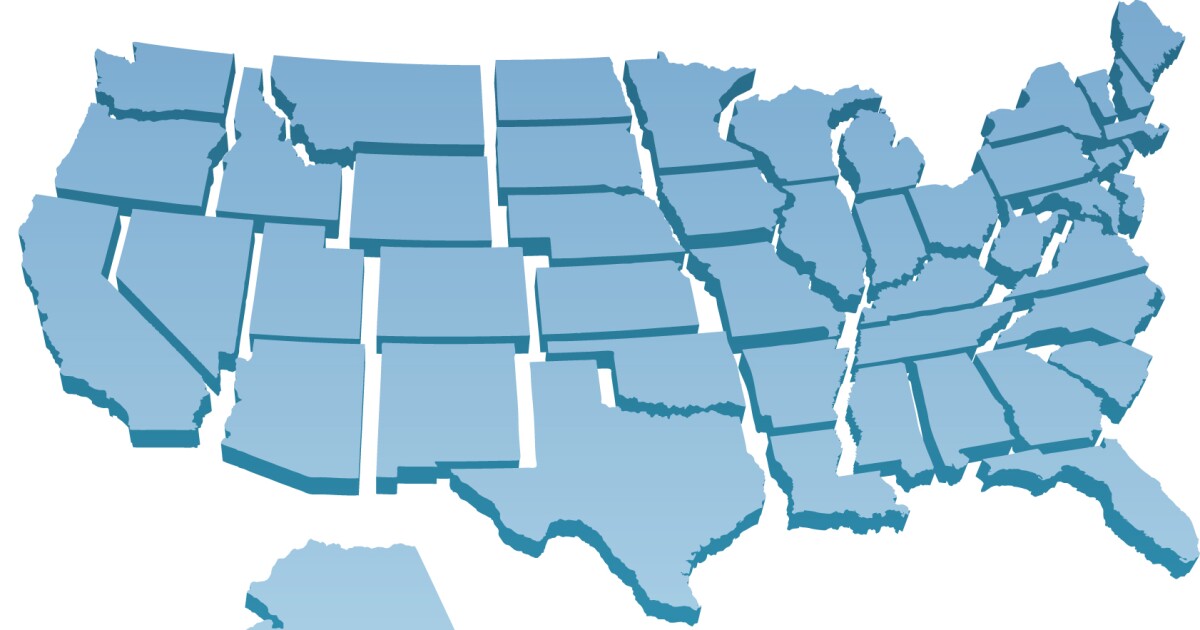
US map showing separate states

The AICPA comment letter includes recommendations regarding the approach of the MTC’s draft white paper on partnership structures, special allocations, related-party transactions, the effect on the ability of states to tax partnership income, and the determination of how partnership income is sourced. The letter asks for a definition of which rules partnerships should apply when computing entry-level taxes. Other recommendations ask the MTC to update its language regarding states not applying the same approach to sourcing multistate income of a business regardless of form of business, and add language to address where states have sourcing rules for income of businesses that are fundamentally different for nonresident or corporate partners.

“We understand the complexity of partnership structures, special allocations, and related-party transactions and their effect on the ability of states to tax partnership income and the determination of how partnership income is sourced,” said the AICPA letter. 

The AICPA wants to clarify why the sourcing rules are applied at the partner level rather than the partnership level, and have the MTC add a recent decision by the DC Circuit Court in the case Rawat v. Commissioner of Internal Revenue regarding the appropriate law for determining the character of a partner’s gain on disposition of their interest in the partnership. It also wants the MTC to apply its alternative approach only when there’s evidence the original transfer was intended to evade tax regarding transactions between partners and partnerships or other related entities.

It wants the MTC to offer guidance on transactions involving partners or shareholders who act outside their capacity as partners or shareholders to clarify the reason for the difference in treatment for partnerships versus corporations. The Institute recommended the MTC add a step or consideration to its framework to first determine if the taxpayer is carrying on a trade or business before determining whether it is unitary, and add language noting that the state sourcing rule should not automatically assume the partnership is engaged in a business activity that gives rise to apportionable income.

Taxpayers should have the flexibility to apply the item-based approach as an alternative approach in addition to allowing the distributive share-based approach for determining the share of a partner’s apportionment factors, the AICPA suggested  The MTC should also remove the phrase “while not clearly required for blended apportionment” from the statement on the unitary business principle, the letter recommended. 

“Taxpayers and practitioners face much complexity with partnership structures, special allocations and related-party transactions,” said Ning Yim, senior manager for tax policy and advocacy with the AICPA, in a statement. “In addition, the effect on the ability of states to tax partnership income and the determination of how partnership income is sourced is a challenge. Accordingly, we offer additional recommendations regarding the approach of the MTC white paper on these issues.”


Continue Reading

Accounting

Global ESG Reporting Standards and Double Materiality Compliance

Published

on

Corporate accounting departments face expanding reporting expectations as international sustainability disclosure standards achieve regulatory enforcement across major global jurisdictions. Chief Accounting Officers (CAOs) and corporate controllers are establishing rigorous internal accounting controls to treat Environmental, Social, and Governance (ESG) metrics with the same data precision, auditability, and governance as traditional financial statements.

Regulatory Harmonization Under Global Sustainability Frameworks
The implementation of standardized sustainability reporting frameworks—notably rules established by international sustainability accounting boards—has created unified expectations for public and large private enterprises. Corporations must report standardized metrics covering greenhouse gas emissions (Scope 1, 2, and material Scope 3), energy utilization, workforce demographics, and supply chain governance.

In Europe and other participating international jurisdictions, double materiality principles are mandatory. Under double materiality, organizations must report both how external sustainability risks impact corporate financial performance, and how internal corporate operations affect surrounding environmental and social structures.

Integrating Sustainability Metrics into Core ERP Systems
To provide auditable non-financial data, enterprise organizations are integrating specialized carbon accounting and ESG management platforms directly into core ERP systems. Automated data collectors capture energy utility invoices, logistics fuel consumption metrics, and vendor compliance records in real time.

Establishing automated, traceable data pipelines ensures that non-financial reporting is supported by clear audit trails. This structured approach allows external financial auditors to provide reasonable assurance on sustainability disclosures during annual corporate reporting cycles.

Financial Impacts and Capital Market Disclosure
Accurate ESG reporting directly influences corporate cost of capital and institutional credit ratings. Commercial lenders and institutional asset managers systematically incorporate sustainability metrics into risk pricing models. Companies that demonstrate transparent, verifiable progress in operational energy efficiency and climate risk mitigation benefit from expanded access to green bond markets and lower debt pricing.

Action Steps for Accounting Leadership
1. Implement Double Materiality Frameworks: Conduct comprehensive assessments to identify material financial and operational sustainability metrics.
2. Build Auditable Non-Financial Data Pipelines: Automate ESG data collection within core accounting software to ensure data integrity.
3. Align Sustainability with Annual Financial Filings: Prepare non-financial disclosures concurrently with financial statements to satisfy regulatory audit expectations.

Continue Reading

Accounting

Modernizing Internal Controls: Machine Learning and Continuous Monitoring in Auditing

Published

on

Internal audit departments and corporate risk managers are modernizing internal control frameworks by shifting from periodic sampling techniques to continuous monitoring and machine learning analytics. As operational data volumes increase across enterprise organizations, automated control testing ensures financial integrity, prevents corporate fraud, and streamlines annual audit engagements.

The Limitation of Periodic Audit Sampling
Historically, internal and external auditors evaluated internal controls by reviewing random samples of financial transactions—often analyzing less than five percent of total ledger entries. In complex enterprise environments, periodic sampling methods carry inherent risks of overlooking localized financial misstatements, unauthorized disbursements, or operational control breakdowns.

In 2026, progressive internal audit functions are utilizing automated continuous monitoring platforms that evaluate one hundred percent of financial transactions in real time. Continuous control auditing systems continuously monitor general ledger entries, procurement approvals, and expense reimbursements across all operating subsidiaries.

AI-Powered Fraud Detection and Anomaly Identification
Machine learning models trained on historical corporate financial data excel at identifying subtle transactional anomalies that indicate potential fraud or operational error. Automated systems instantly flag duplicate invoice payments, unapproved vendor creation, unusual journal entry timing, and unauthorized override of authority thresholds.

When an anomaly is detected, the automated auditing platform generates an instant risk alert, allowing internal audit teams to investigate root causes immediately. Early detection prevents minor operational errors from escalating into material weaknesses in financial reporting.

Streamlining External Audit Preparation
Continuous internal control monitoring delivers significant benefits during annual external financial audits. External audit firms can review continuous audit logs and automated control testing documentation, reducing the time required for manual field testing.

This integrated approach lowers overall audit compliance fees, reduces administrative burdens on corporate accounting staff, and provides senior management and audit committees with real-time visibility into the organization’s overall risk profile.

Core Implementation Guidelines
1. Transition to 100% Data Testing: Replace legacy sampling methods with automated continuous audit monitoring systems.
2. Deploy Anomaly Detection Algorithms: Implement machine learning models to identify unauthorized transactions and operational control overrides.
3. Align Internal and External Audit Workflows: Coordinate continuous control testing protocols with external auditors to optimize annual compliance cycles.

Continue Reading

Accounting

Automated Tax Compliance and Global Regulatory Harmonization in 2026

Published

on

Corporate tax accounting departments are navigating an era of unprecedented regulatory complexity as global tax harmonization frameworks take full effect alongside real-time digital tax reporting mandates. Tax directors and accounting teams are adopting cloud-based tax compliance automation tools to manage multi-jurisdictional tax liabilities and satisfy stringent reporting rules across international jurisdictions.

Implementation of Global Minimum Tax Provisions
The implementation of international tax reform agreements—notably the Pillar Two global minimum tax framework—has reshaped multinational corporate tax planning. Multinational enterprises with consolidated revenues exceeding established thresholds must ensure an effective tax rate of at least 15% across every jurisdiction in which they operate.

Accounting teams are implementing specialized tax calculation modules integrated directly into enterprise resource planning (ERP) platforms. These automated tools calculate effective tax rates per country, identify top-up tax liabilities, and generate standardized compliance documentation required by national tax authorities.

Real-Time Digital Invoicing and E-Reporting Mandates
Tax authorities across Europe, Latin America, and Asia-Pacific have enacted mandatory electronic invoicing (e-invoicing) and continuous transaction controls (CTC). Under these systems, corporate transaction data must be submitted electronically to government portals in real time at the point of sale or invoice issuance.

This shift toward continuous digital tax reporting eliminates traditional annual tax audits in favor of ongoing automated compliance monitoring. Accounting departments are upgrading invoicing software to ensure seamless XML data formatting, digital signature authentication, and real-time validation against tax authority databases.

Automation and Data Analytics in Corporate Tax Strategy
To keep pace with dynamic tax legislation, tax departments are transitioning from reactive compliance teams to proactive strategic advisors. Machine learning algorithms analyze corporate transactional data to identify tax credits, research and development (R&D) incentives, and cross-border transfer pricing adjustments.

By automating routine tax return filings and calculations, corporate tax directors can focus on long-term capital structuring, evaluating the tax implications of corporate mergers, and optimizing international supply chain networks.

Strategic Priorities for Tax Executives
1. ERP System Upgrades: Ensure enterprise software is capable of generating real-time, granular tax data required for global minimum tax compliance.
2. E-Invoicing Integration: Implement scalable e-invoicing platforms to satisfy regional continuous transaction control regulations.
3. Strategic Tax Analytics: Utilize predictive tax modeling tools to evaluate structural changes in corporate operations and cross-border trade.

Continue Reading

Trending