
Accounting
Align fintech investments with organizational strategy

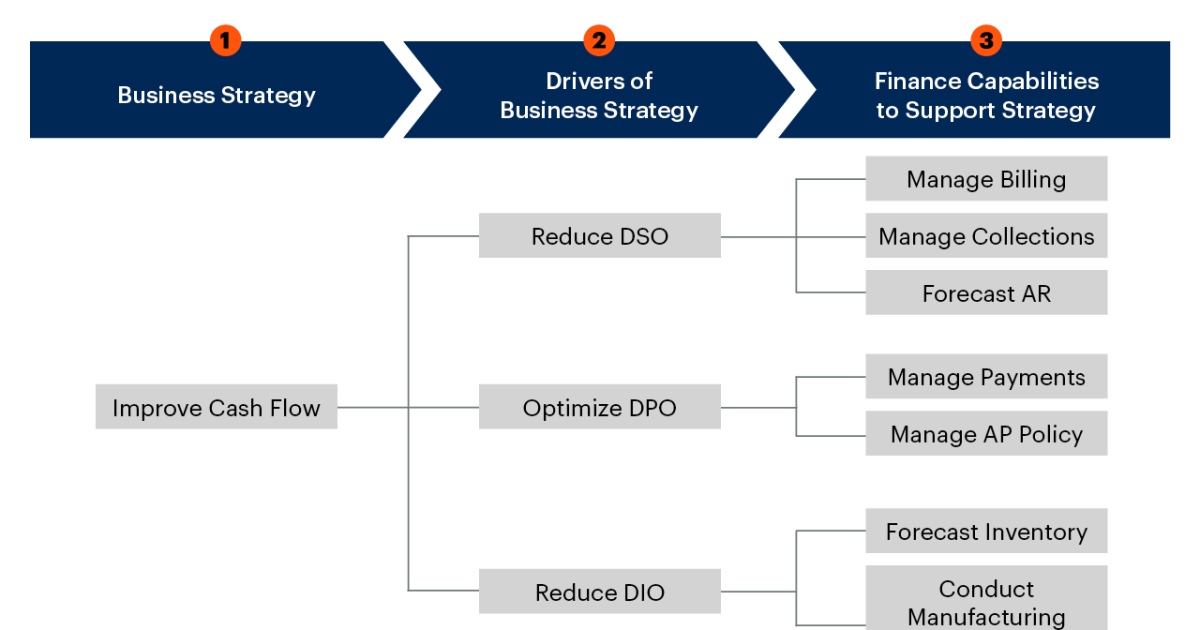
To maximize value and strategic impact, finance leaders must ensure technology investments not only drive efficiency but also align with wider organizational strategy.
Leading finance teams understand that technology planning must begin with a clear definition of desired business outcomes leading to the identification of finance capabilities that can help to deliver these outcomes. This in turn guides the selection of technologies that fully align to wider organizational strategy.
Historically, finance technology investments have often looked somewhat like buying solutions in search of a problem: prioritizing efficiency and standardization to cut costs and increase control. However, as organizations demand greater agility, deeper insights and continuous innovation, Finance leaders will find that focusing solely on technical features and functionalities risks misalignment with business priorities and suboptimal returns.
Without the strategic rationale or a clear “value story” connecting technology investments to tangible organizational outcomes, finance leaders will struggle to communicate impact, prioritize spending and adapt to shifting strategies.
Translating strategy into finance capabilities
To align technology investments with organizational strategy, finance leaders must translate business objectives into key outcomes and identify the finance capabilities needed to achieve them. Finance capabilities — distinct from processes — designate what needs to be done, not how it is done. Clearly identifying finance capabilities enables more innovative thinking on subsequent technology investments and ensures more effective support for the organization’s goals.
Step 1: Identify organizational outcome drivers
Finance leaders should leverage driver maps to identify key factors influencing organizational outcomes. For example, a driver map for an organizational goal to increase profitability might highlight revenue, cost control, pricing strategy and customer retention as primary drivers. These can be further broken down; for instance, revenue could be driven by sales volume in one business unit and product mix in another.
Step 2: Identify finance capabilities for each driver
Once the drivers of key organizational outcomes have been defined, Finance leaders should identify the finance activities required to support each. For instance, if improving cash flow is a priority, relevant capabilities might include forecasting inventory, managing collections and optimizing accounts payable policies.
Finance capabilities should be classified into three categories, each with a distinct strategic value:
- Core capabilities: Essential for operations, these are standard and stable. Think of accounts payable processing and managing travel and expenses.
- Differentiated capabilities: These drive competitive advantage and support organizational growth. Scenario planning or profitability analysis are typical examples.
- Innovative capabilities: Developed through experimentation, these support new or emerging strategies. Predictive analytics or digital asset management fall into this category.
A typical finance organization might allocate 60-65% of capabilities as core, 20-25% as differentiated and 10-15% as innovative, though these proportions should be tailored to the organization’s technology maturity and priorities.

Assessing and planning capability maturity
After categorizing capabilities, finance leaders should evaluate their current maturity:
- Below industry standard: Capabilities do not adequately support business strategy.
- Industry standard: Capabilities meet standard practices and adequately support outcomes.
- Industry leader: Capabilities set best practices and strongly drive strategy.
- Distinguished leader: Capabilities influence future business strategy and industry direction.
Not every capability needs to reach the highest maturity level. For example, core capabilities should aim for industry standard, differentiated capabilities for industry leaders, and only truly innovative capabilities should target distinguished leader status. This approach ensures resources are allocated where they deliver the most strategic value.
For instance, a capability like “manage collections” may shift from core to differentiated if the organization prioritizes cash flow improvement, requiring more targeted and value-added collection strategies.
Linking technology investments to finance capabilities
The finance capability roadmap serves as a bridge between business strategy and technology strategy. Highlighting areas where current technology investments are misaligned with future needs empowers informed decisions on where to invest, divest or realign resources.
Finance leaders should collaborate with CIOs and IT vendors to identify which technologies support each prioritized capability – down to the module level. This clarity ensures each investment directly links to a business outcome.
For instance, to improve margins by reducing product cost, business intelligence applications can deliver driver-based cost analytics. Or, to increase revenue through optimized pricing, machine learning models within financial planning software can provide scenario-based pricing analysis.
Shifting to value-based technology decision making
As finance leaders move from traditional technology planning to a more strategic approach, they must shift their mindset toward value-based decision making. Put into practice, this means focusing their technology investments on the areas that most directly support organizational goals. For core capabilities, the priority is to invest in technologies that deliver efficiency, compliance and stability. For differentiated capabilities, finance leaders should seek out solutions that enable competitiveness and agility. Finally, for innovative capabilities, emphasis should be on technologies that drive future strategic readiness, ensuring the organization is prepared to adapt and grow in a rapidly changing environment.
There is much to consider when identifying and selecting the right finance technology investments. By aligning these investments with organizational strategy, finance leaders can ensure that expenditure delivers measurable value, supports business priorities and positions the organization for future growth. This outcome-driven approach not only maximizes ROI but also strengthens finance’s role as a strategic partner for now and into the future.





U.S.- Canada Trade Talks Collapse; Carney Says Retaliatory Tariffs Begin September 8

Flock Cameras and the Future of Public Security

AI Infrastructure Boom Hits Physical Limits: Power, Financing, and Supply Chain Strain

Armanino adds Strategic Accounting Outsourced Solutions

New 2023 K-1 instructions stir the CAMT pot for partnerships and corporations

Tax Strategy: Employee Retention Credit update
-

 Stock News1 week ago
Nvidia Earnings Preview: What Wall Street Expects From the AI Bellwether’s Q2 Report
-

 Accounting1 week ago
SEC’s Semiannual Reporting Proposal Faces Investor Pushback: What CFOs Need to Know
-

 Stock News1 week ago
Nvidia Q2 FY2027 Earnings beats Wall Street Expectation with Record $96.2 Billion Revenue
-

 Finance1 week ago
Treasury Bond Volatility Forces Bessent to Double Debt Buyback Size as Yields Swing
-
 Technology5 days ago
AI Infrastructure Boom Hits Physical Limits: Power, Financing, and Supply Chain Strain
-
 Technology3 days ago
Flock Cameras and the Future of Public Security
-
 Economics3 days ago
U.S.- Canada Trade Talks Collapse; Carney Says Retaliatory Tariffs Begin September 8