
Personal Finance
As Social Security faces an uncertain future, some say it should be privatized

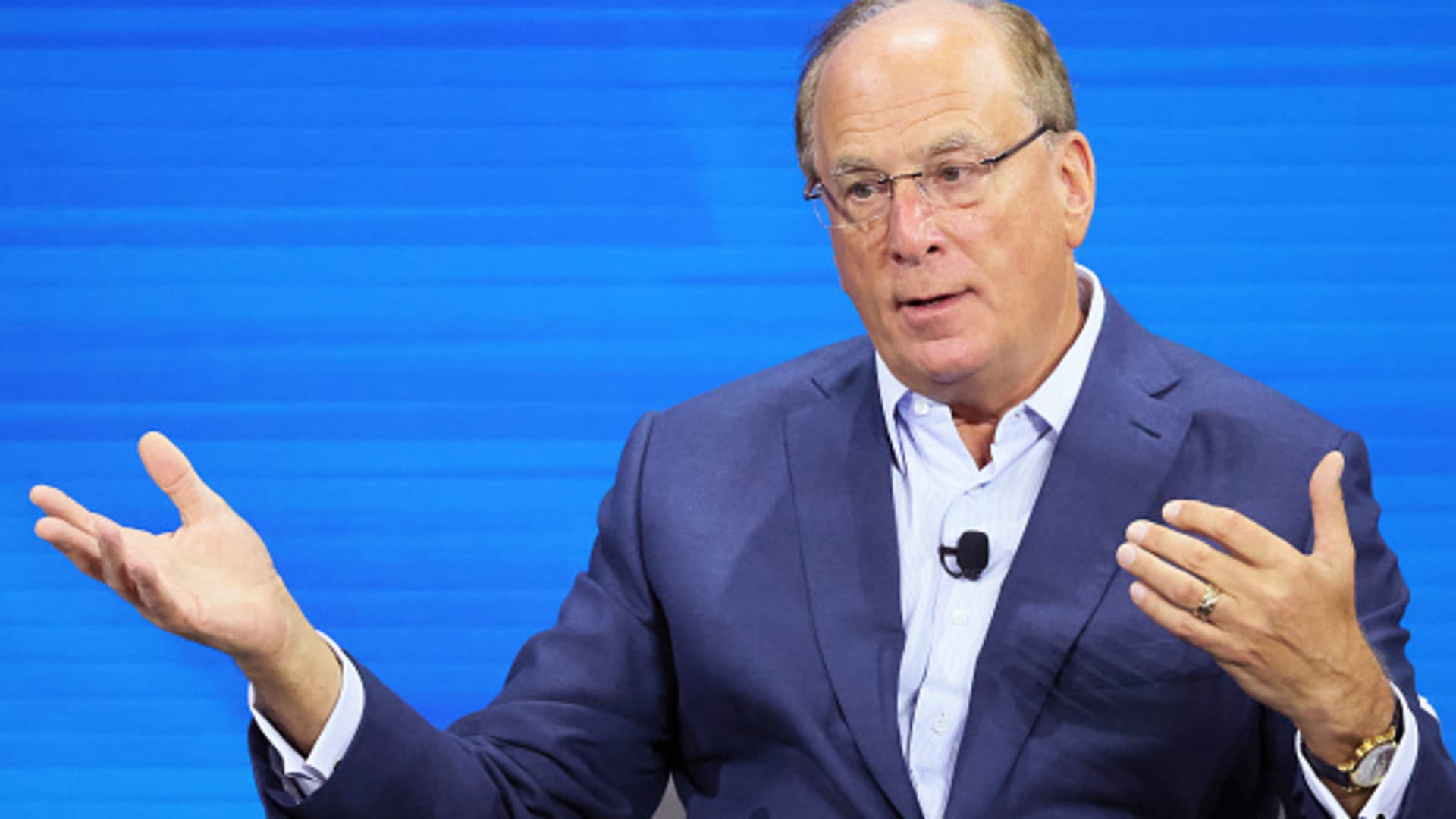
BlackRock CEO Larry Fink speaks during the New York Times DealBook Summit Nov. 30, 2022 in New York City.
Michael M. Santiago | Getty Images News | Getty Images
President Donald Trump‘s efforts to slash federal government spending has ignited a new debate about the future of Social Security.
One idea that has been brought up before — privatizing the now public program — is getting new attention.
At the BlackRock retirement summit in Washington, D.C., on Wednesday, CEO Larry Fink said he supports more individual ownership in Social Security, though he said he would not necessarily use the term privatizing because it has toxic connotations.
“The problem we have now, we have a plan called Social Security that doesn’t grow with the economy,” Fink said.
More from Personal Finance:
Trump says Education Dept. shouldn’t handle student loans
Potential cuts to Medicaid could include work requirements
Rules for repaying Social Security benefits are getting stricter
Social Security is a pay-as-you-go system — today’s payroll tax contributions generally fund benefits for current retirees and other beneficiaries.
Any leftover money that is not used to either pay benefits or fund the program’s administrative costs is put into the program’s trust funds. That money is invested in special Treasury bonds that earn a market rate of interest and which are guaranteed by the U.S. government, according to the Social Security Administration.
Privatizing the program could provide a way to invest money on behalf of individual workers that potentially earns a higher return, according to supporters of the idea.
“If we create a plan that every American can grow with our economy, they’re going to feel more attached to our economy,” Fink said.
‘Real battle’ brewing over Social Security’s future
Opponents say that change could interfere with the safety and predictability of Social Security’s benefit payments.
“There’s a lot of people out there in the private sector that say, ‘You give me $2.7 trillion and let me invest that, and I can turn you a lot better, greater dividend around than the Treasury bills can,'” Rep. John Larson, D-Conn., said in an interview with CNBC.com at his Capitol Hill office on Tuesday.
While investing more aggressively provides the possibility for better returns, it also opens up the risk of poor performance and losses.
In 2008, the stock market dropped along with many people’s 401(k) plans, Larson said. Yet Social Security never missed a payment, he said.
Americans now face a decision as to whether they want capitalism or the government to guarantee their retirement, Larson said.
Larson believes the Trump administration’s goal is to privatize Social Security. When asked for comment, the White House referred CNBC to a new fact sheet issued this week affirming, “President Trump will always protect Social Security, Medicare.” That document does not mention privatizing the program.
House Ways and Means lawmakers on Wednesday voted to block a full House vote on a resolution of inquiry that Larson proposed to require disclosure of so-called Department of Government Efficiency activity at the Social Security Administration. At the hearing, Larson said he is concerned the Trump administration could try to privatize the program.
“We, I think, are in real battle here, and it’s really, in many respects, not unlike the battle that Roosevelt faced initially,” Larson told CNBC.com on Tuesday.
Privatizing Social Security has been considered before
The Social Security Act that created the program was signed into law by President Franklin D. Roosevelt in 1935.
The idea of privatizing the program was proposed in 2005 by President George W. Bush.
Had those efforts been successful, Americans would have seen their retirement money increase four-fold, based on the returns of the S&P 500 index over that time, Fink said.
“I think more Americans would be a little more hopeful today with their retirement savings than just getting that bond payment,” Fink said.
Had Bush’s proposals gone through, Americans “probably would have been” better off today, said Andrew Biggs, a senior fellow at the American Enterprise Institute who served as associate director of Bush’s White House National Economic Council in 2005.
But the question now as to whether to invest Americans’ retirement money in government bonds or equities is misguided, Biggs said.
If someone has not saved money for retirement, the dilemma of where to invest is not relevant since they do not have the funds, he said. The same is true of the federal government, which currently does not have a significant surplus for the pay-as-you-go program.

Moreover, if Social Security transitions to personalized accounts, there would also need to be extra money available to fund the transition costs to keep benefits going to current retirees, he said.
“It’s a question of saving more,” Biggs said.
Generally, Social Security reform discussions focus on making changes to improve the current system — raising taxes, cutting benefits or a combination of both.
Larson has a proposal to improve Social Security’s solvency by raising taxes on the wealthy while implementing benefit increases.
Yet it remains to be seen whether Republicans, who generally oppose tax increases, and Democrats, who do not want benefit cuts, can reach a bipartisan compromise.
Starting reform discussions based on the program’s current structure is limiting, Biggs said.
“We really do have a failure of imagination on Social Security reform,” Biggs said. “I think what Larry Fink is saying is, ‘Let’s think big on it.’ I think he’s absolutely correct on that point.”

Personal Finance
Next-Generation Retirement Planning: Managing Longevity Risk and Variable Income Streams


U.S.- Canada Trade Talks Collapse; Carney Says Retaliatory Tariffs Begin September 8

Flock Cameras and the Future of Public Security

AI Infrastructure Boom Hits Physical Limits: Power, Financing, and Supply Chain Strain

Armanino adds Strategic Accounting Outsourced Solutions

New 2023 K-1 instructions stir the CAMT pot for partnerships and corporations

Tax Strategy: Employee Retention Credit update
-

 Stock News1 week ago
Nvidia Q2 FY2027 Earnings beats Wall Street Expectation with Record $96.2 Billion Revenue
-
 Technology5 days ago
AI Infrastructure Boom Hits Physical Limits: Power, Financing, and Supply Chain Strain
-
 Technology3 days ago
Flock Cameras and the Future of Public Security
-
 Economics3 days ago
U.S.- Canada Trade Talks Collapse; Carney Says Retaliatory Tariffs Begin September 8