
Personal Finance
Biden administration could start forgiving student debt this year

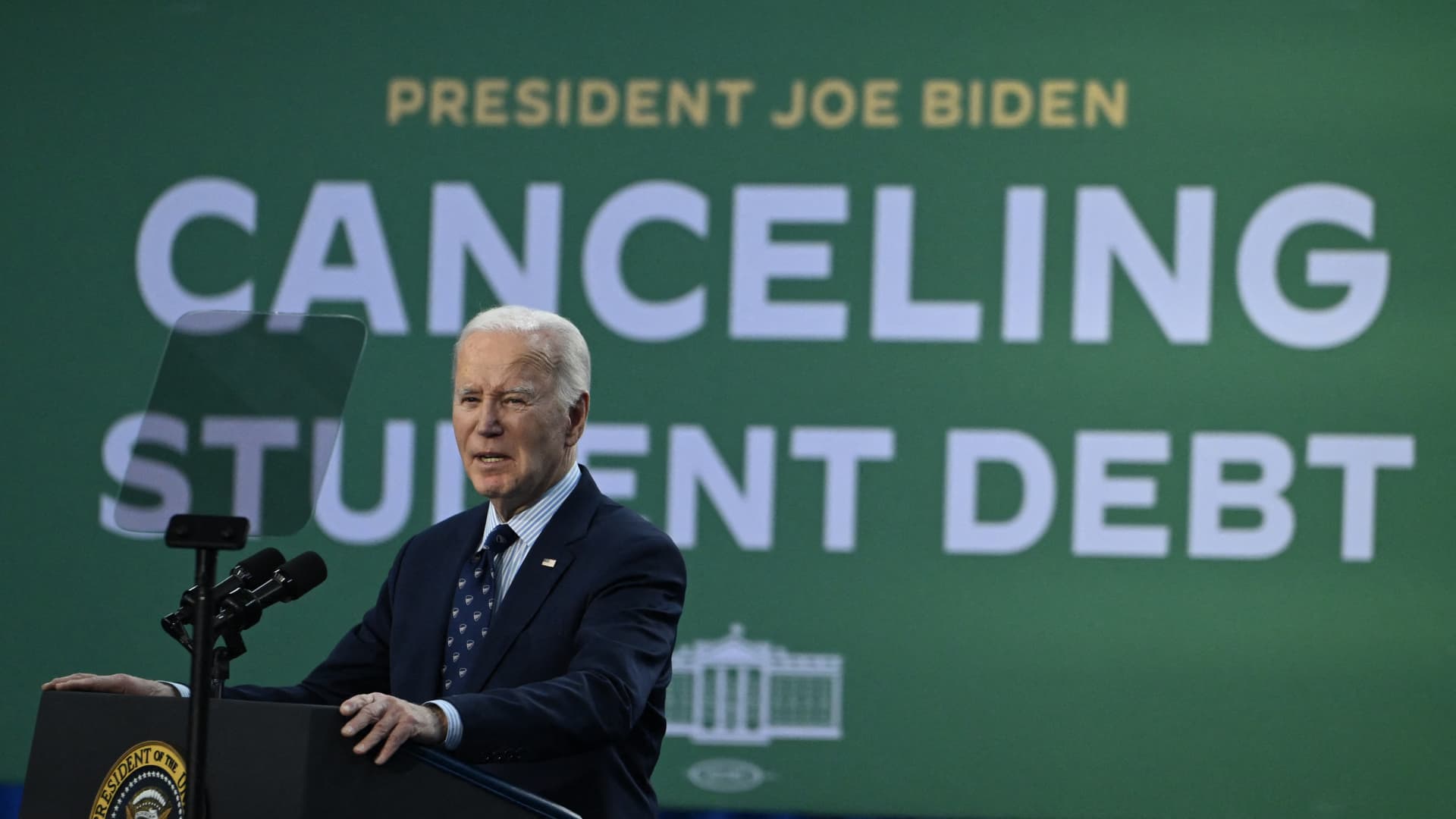
US President Joe Biden speaks about student loan relief at Madison College in Madison, Wisconsin, on April 8, 2024.
Andrew Caballero-reynolds | AFP | Getty Images
A race to still forgive debt after Supreme Court verdict
President Joe Biden‘s 2020 campaign promise to erase student debt was thwarted at the Supreme Court last June. The conservative justices ruled that Biden’s $400 billion loan cancellation plan was unconstitutional.
After that, the president directed the U.S. Department of Education to examine its existing authority to forgive student debt. Mainly by improving current loan relief programs, the department has cleared the education debts of 4 million people, totaling $146 billion in aid, while Biden has been in office.
Yet Biden has been under intense pressure to do more.
“Over 40 million people were promised cancellation, a number that dwarfs the [people] who have received some measure of relief,” said Astra Taylor, co-founder of the Debt Collective, a union for debtors.
More from Personal Finance:
Cash savers still have an opportunity to beat inflation
Should you refinance your mortgage?
Here’s what’s wrong with TikTok’s viral savings challenges
On Monday, at an event in Madison, Wisconsin, Biden blamed the Supreme Court and Republicans for stopping his first relief plan.
“Tens of millions of people’s debt was literally about to get canceled, but then some of my Republican friends, elected officials and special interests sued us, and the Supreme Court blocked us,” Biden said. “But that didn’t stop us.”
The president announced the details of his Plan B for student loan forgiveness, which is narrower than his first attempt but could still reach tens of millions of people.
Instead of canceling loans for nearly all federal student loan borrowers, this program targets the aid at certain groups of people, including those experiencing financial hardship and graduates of poor-quality schools. Meanwhile, some 25 million people could get interest on their debt cleared under the plan.
Can Biden get borrowers relief by November?
Kantrowitz said he anticipates the Biden administration will try to get people the new relief before they cast their votes in November.
Almost half of voters in a recent survey, or 48%, said canceling student loan debt is an important issue to them in the 2024 presidential and congressional elections. SocialSphere, a research and consulting firm, polled 3,812 registered voters, including 2,601 Gen Z and millennial respondents, in mid-March.
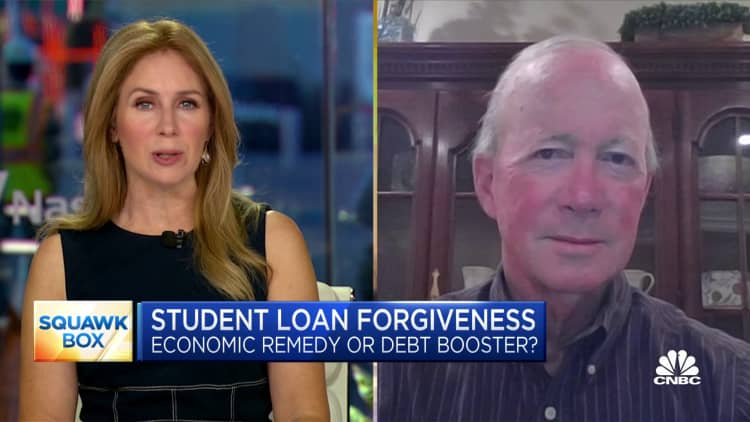
Forgiving student debt could especially help Biden with young voters, a demographic he has been struggling with. About 70% of Gen Z respondents said student debt cancellation was important to them in the election, that same survey found.
The issue is a chance for Biden to differentiate himself from his likely Republican opponent Donald Trump, who has a record of opposing debt relief for students.
Former President Donald Trump speaks during a press conference at 40 Wall Street on March 25, 2024 in New York City.
Michael M. Santiago | Getty Images
While in office, the former president called for the elimination of the popular Public Service Loan Forgiveness program, signed into law by President George W. Bush in 2007. Trump also sided with the Supreme Court in its ruling to strike down Biden’s plan.
“Today, the Supreme Court also ruled that President Biden cannot wipe out hundreds of billions, perhaps trillions of dollars, in student loan debt, which would have been very unfair to the millions and millions of people who paid their debt through hard work and diligence; very unfair,” Trump said at a campaign event in June 2023.
Legal threats already brewing
Biden rolled out his first student loan forgiveness plan in August 2022 through an execution action, which he hoped would allow him to deliver the relief quickly. Borrowers were told they could expect the relief within six weeks after applying.
That timeline was stymied, of course, by legal challenges and eventually dashed at the Supreme Court.
Issues like student loan forgiveness, which present a sharp contrast between Democrats and Republicans, are more likely to impact the election.
Mark Kantrowitz
higher education expert
Now, Biden has turned to the negotiated rulemaking process, a difference he hopes will make it harder for the courts to stop him this time.
“The rulemaking process is stronger than executive action,” Kantrowitz said.
But the procedure can be lengthy, with several steps. It involves a committee of negotiators meeting and proposing a rule, the publishing of that proposed rule in the Federal Register and then a public comment period. After all these steps, the U.S. Department of Education can publish its final rule.
As of now, the negotiators have wrapped up their sessions and the Biden administration is poised to release its proposal. In theory, the Education Department could publish its final rule sometime this summer, Kantrowitz said.
Although the regulations legally wouldn’t go into effect until July 2025 based on that timeline, Education Department officials could choose to make some of the provisions effective sooner simply by posting a note in the Federal Register, Kantrowitz said.
“So they could easily implement it before the election,” he said.
However, legal challenges to the plan could delay that goal. Such threats are already brewing.
On Monday, after Biden announced his Plan B for student loan forgiveness, Missouri Attorney General Andrew Bailey, a Republican, wrote on X that the president “is trying to unabashedly eclipse the Constitution.”
“See you in court,” Bailey wrote.


Personal Finance
Next-Generation Retirement Planning: Managing Longevity Risk and Variable Income Streams


U.S.- Canada Trade Talks Collapse; Carney Says Retaliatory Tariffs Begin September 8

Flock Cameras and the Future of Public Security

AI Infrastructure Boom Hits Physical Limits: Power, Financing, and Supply Chain Strain

Armanino adds Strategic Accounting Outsourced Solutions

New 2023 K-1 instructions stir the CAMT pot for partnerships and corporations

Tax Strategy: Employee Retention Credit update
-

 Stock News1 week ago
Nvidia Earnings Preview: What Wall Street Expects From the AI Bellwether’s Q2 Report
-

 Accounting1 week ago
SEC’s Semiannual Reporting Proposal Faces Investor Pushback: What CFOs Need to Know
-

 Stock News1 week ago
Nvidia Q2 FY2027 Earnings beats Wall Street Expectation with Record $96.2 Billion Revenue
-

 Finance1 week ago
Treasury Bond Volatility Forces Bessent to Double Debt Buyback Size as Yields Swing
-
 Technology5 days ago
AI Infrastructure Boom Hits Physical Limits: Power, Financing, and Supply Chain Strain
-
 Technology3 days ago
Flock Cameras and the Future of Public Security
-
 Economics3 days ago
U.S.- Canada Trade Talks Collapse; Carney Says Retaliatory Tariffs Begin September 8