
Personal Finance
Biden makes another push for tuition-free community college. It may work

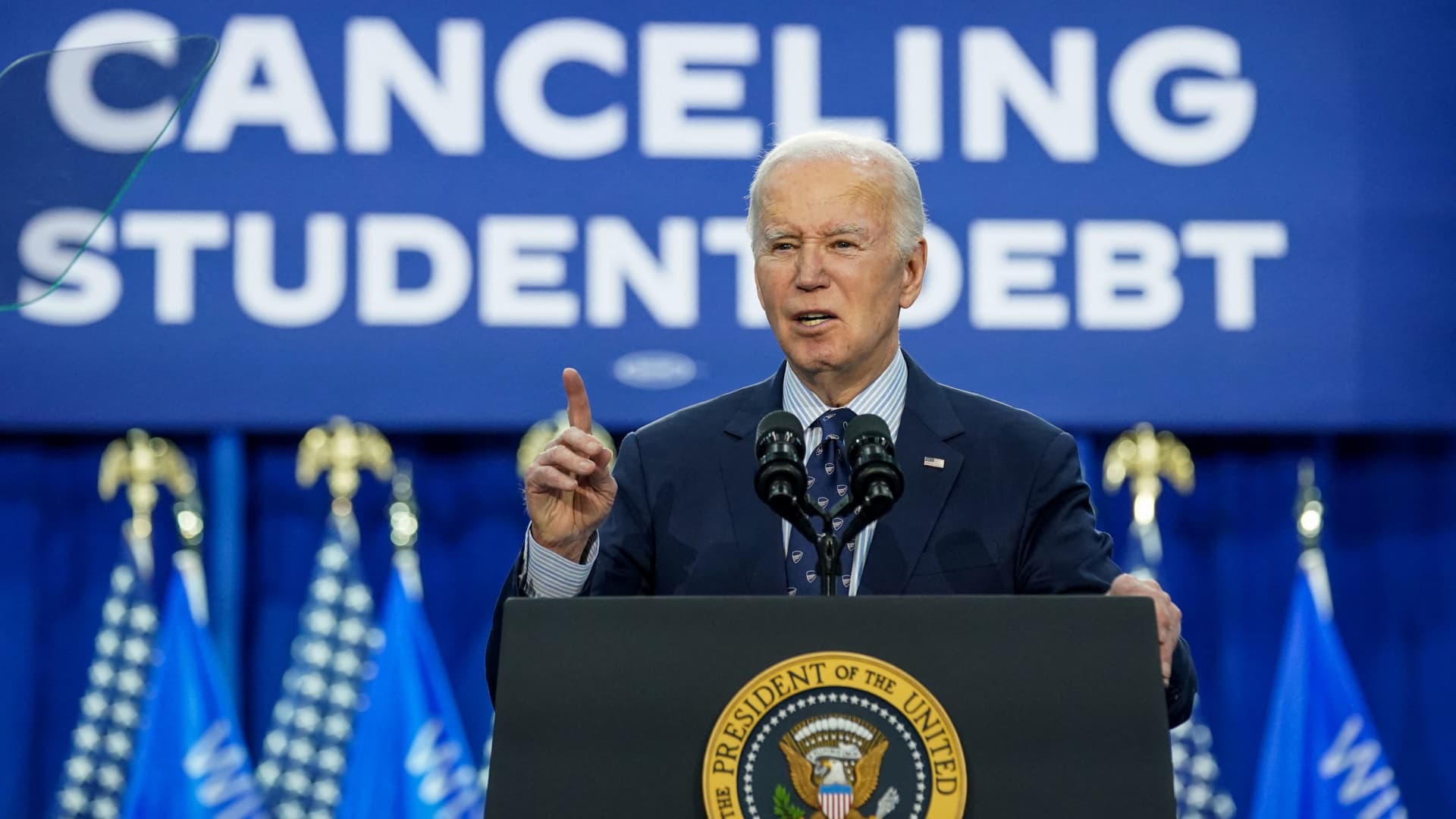
When President Joe Biden unveiled the details of his Plan B for student loan forgiveness, he revealed that his hope to make some college free was not dead.
“I also want to make community college tuition free so you don’t need loans at all,” Biden said after including free community college as part of his $7.3 trillion budget for fiscal 2025.
Unlike loan forgiveness, free college is a better way to combat the college affordability crisis, some experts say — and although a federal effort has yet to get off the ground, it could have a good chance of securing widespread approval going forward.
“Student loan forgiveness is a Band-Aid,” said Ryan Morgan, CEO of the Campaign for Free College Tuition. “It’s not a permanent solution but it’s certainly better than nothing.”
More from Personal Finance:
FAFSA fiasco may cause drop in college enrollment, experts say
Harvard is back on top as the ultimate ‘dream’ school
This could be the best year to lobby for more college financial aid
Critics have panned the president’s efforts on loan forgiveness for overstepping his authority while only impacting those graduates with existing education debt.
“Loan forgiveness is a snapshot in time in terms of a fix,” Morgan said.
Alternatively, free college appeals more broadly to those struggling in the face of rising college costs, rather than after the fact.
“If you remove cost as the barrier than everyone who wants to, and is qualified to go, can attend some sort of higher education program,” Morgan said.
“That makes it “a very popular bi-partisan issue,” he added.
And yet, the Biden administration’s plan to make community college tuition-free for two years was ultimately stripped from the Build Back Better Act in 2021.
However, while the White House turned its focus to student loan forgiveness, states have been moving forward with plans to pass legislation of their own to make some college tuition-free.
As of the latest tally, 35 states already have some type of program in place.
Most are “last-dollar” scholarships, meaning the program pays for whatever tuition and fees are left after financial aid and other grants are applied. In other words, students receive a scholarship for the amount of tuition that is not covered by existing state or federal aid.
The problem with free college
Critics say lower-income students, through a combination of existing grants and scholarships, already pay little in tuition to state schools, if anything at all.
“The reality is that there’s a very good chance you aren’t going to pay tuition,” said Sandy Baum, senior fellow at Urban Institute’s Center on Education Data and Policy. “That’s not really solving an access problem.”
Further, in most cases the money does not cover fees, books, or room and board, which are all costs that lower-income students struggle with, and community college may not be the stepping stone to a four-year school it is often believed to be.
In fact, just 16% of all community college students go on and attain a bachelor’s degree, according to recent reports by the Community College Research Center at Columbia University, the Aspen Institute College Excellence Program and the National Student Clearinghouse Research Center.
“It’s a really risky way to think you are going to save money because very few people go on to get a bachelor’s degree,” Baum said.
In addition, community college is already significantly less expensive. At two-year public schools, tuition and fees averages $3,990 for the 2023-24 school year, according to the College Board. Alternatively, at four-year, in-state public schools, that number is $11,260 per year and, at four-year private universities, it’s $41,540.
New Mexico’s program is ‘our gold star’
Among all state-based plans, the New Mexico Opportunity Scholarship Act has been hailed as the most extensive tuition-free scholarship program in the country — “that’s our gold star in terms of programs,” Morgan said.
New Mexico’s Opportunity Scholarship goes a step further than most by opening up access to returning adult learners, part-time students and immigrants, regardless of their immigration status, in addition to recent high school graduates. (The average scholarship recipient in New Mexico is under 25 years old, female and Hispanic.)
In New Mexico, the state aid is applied first, so federal aid and private scholarships can go toward books, room and board and childcare to help cover the total cost of going to school.
Since its inception in 2022, overall college enrollment has increased by nearly 7% in the state, reversing more than a decade of declines, according to Higher Education Department Secretary Stephanie Rodriguez.
That’s “telling us that students are ready to go to school, they want to be there and they want to reskill or upskill,” she said.
“It’s gratifying to see that the scholarship is doing exactly what it was intended to do,” Rodriguez added.

Personal Finance
Next-Generation Retirement Planning: Managing Longevity Risk and Variable Income Streams


U.S.- Canada Trade Talks Collapse; Carney Says Retaliatory Tariffs Begin September 8

Flock Cameras and the Future of Public Security

AI Infrastructure Boom Hits Physical Limits: Power, Financing, and Supply Chain Strain

Armanino adds Strategic Accounting Outsourced Solutions

New 2023 K-1 instructions stir the CAMT pot for partnerships and corporations

Tax Strategy: Employee Retention Credit update
-

 Stock News1 week ago
Nvidia Q2 FY2027 Earnings beats Wall Street Expectation with Record $96.2 Billion Revenue
-
 Technology5 days ago
AI Infrastructure Boom Hits Physical Limits: Power, Financing, and Supply Chain Strain
-
 Technology3 days ago
Flock Cameras and the Future of Public Security
-
 Economics3 days ago
U.S.- Canada Trade Talks Collapse; Carney Says Retaliatory Tariffs Begin September 8