
Personal Finance
Biden’s fiduciary rule may be at risk after Trump takes office


Brandon Bell | Getty Images News | Getty Images
A Labor Department rule that shields retirement savers from getting harmful investment advice is at risk of being overturned during President-elect Donald Trump’s second term — an outcome that would have an element of déjà vu, said legal experts.
The Biden-era regulation, issued in April, aims to rein in conflicts of interest that may taint investment recommendations from unscrupulous advisors, brokers or insurance agents.
Officials worry such conflicts might lead an agent to profit at the consumer’s expense, such as when investors are advised to roll money from workplace retirement plans like a 401(k) to an individual retirement account.
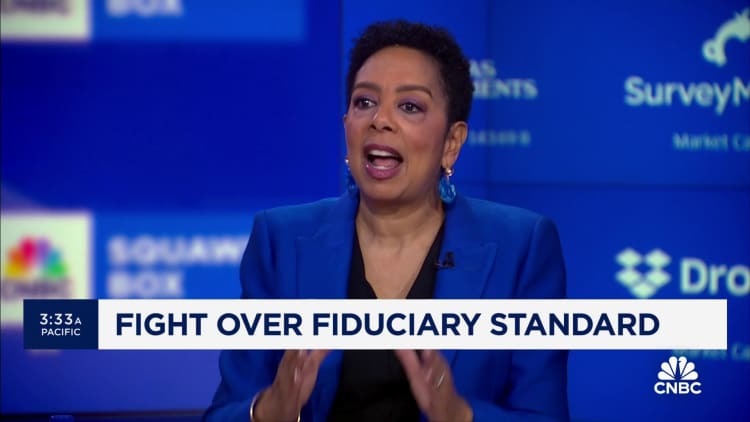
The most immediate threat to President Joe Biden’s Retirement Security Rule is that the Trump administration declines to keep defending it in court, attorneys said.
The rule faces an uphill legal battle. Two Texas federal courts have already stalled its implementation and seem very likely to kill it, legal experts said.
“At that point, the Trump administration could walk away from the case, just abandon it,” said Fred Reish, a retirement law expert and partner at Faegre Drinker Biddle & Reath LLP.
‘Here we go again’?
What the DOL fiduciary rule does
A primary goal of the Department of Labor rule is to raise the investment-advice standard tied to 401(k)-to-IRA rollovers, especially those for certain insurance products, experts said.
Rollovers are common for recent retirees. They are becoming more prevalent as baby boomers reach retirement age.
About 5.7 million people rolled over $618 billion into IRAs in 2020, according to the most recent IRS data. By 2022, that dollar amount had grown to $779 billion, according to the White House Council of Economic Advisers.
The new Labor rule “makes it highly likely that rollover recommendations are subject to a fiduciary standard,” Reish said.
U.S. Labor Secretary Julie Su.
Chip Somodevilla | Getty Images News | Getty Images
A fiduciary standard is a legal structure whereby financial professionals — brokers, advisors, insurance agents and others — must recommend investments that are in a client’s best interest instead of ones, for example, that generate more of a profit for the agent.
However, relative to rollovers, many retirement investors may not get such fiduciary advice, attorneys said.
The Employee Retirement Income Security Act stipulates that one-time advice to an investor — instead of an ongoing client relationship — generally doesn’t meet the fiduciary bar.
Since rollovers are often a one-off transaction, many aren’t covered by this heightened protection under the Employee Retirement Income Security Act, attorneys said.
The Biden-era rule would likely have the largest impact on insurance agents that sell “non-securities” products, which include certain annuities like indexed annuities, attorneys said.

Such agents would likely be required to assess additional factors in their rollover analyses, including whether it’s in a consumer’s best interest to take money from their 401(k) plan and move it to an annuity, Reish said.
Investment advisors and brokers who sell securities products, such as mutual funds or exchange-traded funds, are already subject to a Securities and Exchange Commission rule issued in 2019 that is “in many ways like the DOL’s rule,” Reish said.
Texas courts likely to strike down DOL rule
Two federal district courts in Texas issued a national “stay” of the regulation, in separate rulings in July.
They indefinitely delayed the rule’s Sept. 23 start date while the courts conduct a more detailed review of the lawsuits, which were filed by several insurance industry groups.
Lawyers expect the courts to overturn the rule. Indeed, the judges hinted at that outcome.
“The Rule is almost certainly unlawful for a broad class of investment professionals in the industry — not just plaintiffs,” according to a July 26 order by the U.S. District Court for the Northern District of Texas, in the lawsuit American Council of Life Insurers v. United States Department of Labor.
ACLI and other insurance industry groups lauded that decision, calling the regulation “DOL’s latest attempt to vastly expand its statutory authority by imposing fiduciary status on almost every financial professional who sells retirement products.”
The other Texas case is Federation of Americans for Consumer Choice v. Department of Labor.
If the case were appealed by either side, it would go to the U.S. Fifth Circuit Court of Appeals — the same one that killed a similar Obama-era fiduciary rule.
At either stage, the Trump administration could choose to stop defending the regulation, attorneys said.
Trump has signaled an intention to pursue a deregulatory agenda during his second term.
“None of that is certain,” Reish said. “President-elect Trump is both a Republican and a populist. We don’t know if conservative Republican philosophies will prevail on any given issue, or whether a populist approach would prevail.”

Personal Finance
Next-Generation Retirement Planning: Managing Longevity Risk and Variable Income Streams


U.S.- Canada Trade Talks Collapse; Carney Says Retaliatory Tariffs Begin September 8

Flock Cameras and the Future of Public Security

AI Infrastructure Boom Hits Physical Limits: Power, Financing, and Supply Chain Strain

Armanino adds Strategic Accounting Outsourced Solutions

New 2023 K-1 instructions stir the CAMT pot for partnerships and corporations

Tax Strategy: Employee Retention Credit update
-

 Stock News1 week ago
Nvidia Q2 FY2027 Earnings beats Wall Street Expectation with Record $96.2 Billion Revenue
-
 Technology5 days ago
AI Infrastructure Boom Hits Physical Limits: Power, Financing, and Supply Chain Strain
-
 Technology3 days ago
Flock Cameras and the Future of Public Security
-
 Economics3 days ago
U.S.- Canada Trade Talks Collapse; Carney Says Retaliatory Tariffs Begin September 8