
Accounting
Bonadio Group CEO shares successful accounting M&A strategy

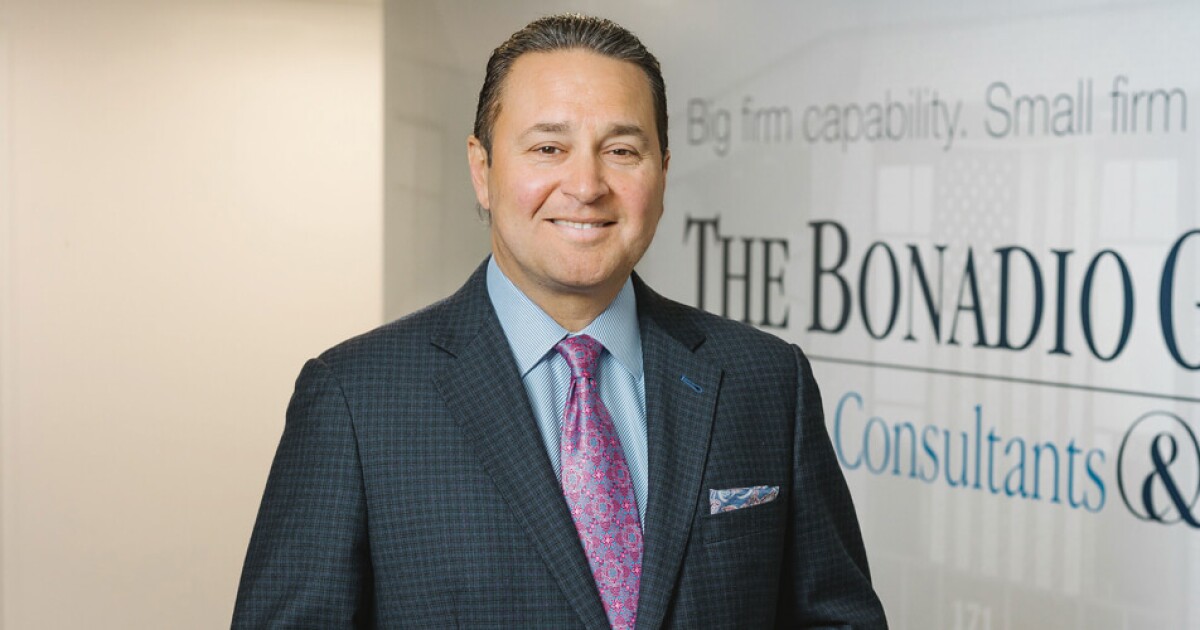
The Bonadio Group, a Top 50 Firm based in Pittsford, New York, has executed 22 successful mergers over the last 27 years, many of which have been overseen by CEO and managing partner Bruce Zicari.
Harvard Business Review found that between
1. Ensure that every leader at your business is 100% in agreement with the acquisition.
2. Define an approach to vetting merger candidates, including reviews of finances and culture.
3. Prioritize post-merger integration, including “buddy systems” and software transition training.
4. Always be deliberate and intentional in your employee and client communication.
5. Consider moving some of your people into a brand new merged in office.
“We’ve done many mergers over the last 25 years, and we’ve certainly learned a lot of good lessons over the years,” said Zicari. “I think we’ve gotten better and better at them. We’ve made a lot of mistakes over the years, but learned from those mistakes. At a high level, we really take our time with mergers. We spend a lot of time on the front end, getting to know the firm that we’re looking at.”

Bonadio partners meet with the other firm’s partners, not only in business meetings, but also at social meetings and dinners. “It usually takes anywhere from six months to almost a year,” said Zicari. “We have a process where we have a very long series of meetings to make sure we get to know each other, to make sure as best we can determine that there is a good cultural fit, and a good alignment of our values and our vision for the future in terms of strategy. If the culture fits, and we see the world the same way, and we have the same values, everything else really works out.”
He views careful due diligence as essential. The firm has a comprehensive checklist for not only the typical forms of due diligence, including legal, financial and IT matters, but it also does a cultural assessment. “We hire an independent third party that knows and trusts us, knows the accounting industry very well, and they go in and meet with the partners of the firm that we’re looking at acquiring, and they do a cultural assessment,” said Zicari. “That’s another checkpoint for us to make sure that we’re doing a merger with somebody who sees the world the same way. That’s so important. If we have a good cultural match, everything else ends up working out. That’s something that’s worked very well for us over the years.”
He sees this as taking a different approach than the increasing number of accounting firms controlled by private equity.
“With all of the recent private equity transactions, I am seeing firms make acquisitions very quickly,” said Zicari. “They’re making a lot of transactions in a very short period of time. Although we’re competing against private equity, I think our advantage is that we are going to take our time. We’re going to get to know them.”
All the partners have to basically agree that the merger is a good move. “In the meetings we have prior to the merger, as well as the cultural assessment, we make sure that there’s clear alignment, that there are clear expectations on both sides, and we make sure that every partner is 100% in,” said Zicari. “We will not do a merger unless every partner is fully committed to the merger. We’ve walked away from mergers because there have been one or two partners not committed, and it just doesn’t work. If the partners aren’t committed, then the people aren’t committed, the clients aren’t committed, so we make sure there’s 100% alignment in that regard.”
The firm makes sure it’s being clear in any employee and client communications about the merger once it has been approved. “We have a very comprehensive communication process whereby we bring a whole team down to announce it to the employees,” said Zicari. “We make sure that all the clients are alerted exactly right at the time of the merger, and some of the larger clients are actually called ahead of time. We spend a lot of time with both the people and our clients post merger, explaining to them all the benefits of the merger.”
Both clients and staff need to be reassured. “We tell them you’re not going to see a lot of change,” said Zicari. “You’re going to continue to deal with the same partners and the same people. You’re going to continue to get the same great service, the same pricing. The benefit is that your firm now has 1,000 people behind them with resources and support to make sure that we can provide every service possible to bring value to those clients. Our philosophy is always just to make sure that we give the merged-in firm the very best resources and all the best service and surround them with the best expertise and resources to serve their clients even better than before.”
Having an integration process for after the merger is essential, “We like to say that once the documents are signed, it becomes official, but that’s just the very start of integrating and becoming one firm,” said Zicari. “We have a whole team of people that spend time in the weeks and months following the merger.”
That can involve relocating some employees. “If it’s a brand new office, we like to move a number of our people into that office, and move them geographically into the new office, to bring our culture to life there,” said Zicari.
“When we went into New York City, we relocated a number of our people from our upstate offices to New York City,” he added. “When we went into Dallas, we moved a number of people from upstate offices to Dallas.”
Younger employees seem to be especially interested in relocating to new offices. “A lot of our young people really jump at the idea of moving from upstate to some of these larger metropolitan areas,” said Zicari. “It’s a great way to transport our culture, bring our culture to life in these new offices, in these larger cities. Our goal is to try to get 10% of our people. If we do a merger in Dallas of 80 people, we try to get at least eight of our people to relocate and move into the new office and be part of the new merger.”
The firm has a “buddy system” in place. “We assign every one of the people in the new firm to somebody in our firm, so they will have somebody that they can call if they need anything,” Zicari explained. “We have a whole team of marketing, HR, IT, finance people that help integrate the new firm into ours. It’s not just the management of our firm that gets involved post integration. It’s really all of our support functions, all of our partners and all of our people through our buddy system. Everybody gets to know each other and work with each other. And then, we spend a lot of time not only integrating the systems, but just educating the new firm on all the different services we have to offer that they can bring to their clients in the months after the merger.”
The Bonadio Group is currently looking at several possible merger candidates. “We’re always meeting with firms,” said Zicari. “We always have a pipeline of potential mergers. Right now there’s somewhere around five or six potential mergers in the pipeline. We are planning on doing two smaller mergers this year, and we really hope to get those closed and make them part of our firm by the October, November or December timeframe.”
One will be in a new territory for Bonadio. “One is in the mid-Atlantic region, so we are kind of moving out of the Northeast into the mid-Atlantic region,” said Zicari. “That’s a new market for us. The other one is a niche practice. They all work virtually. It’s a smaller, boutique niche practice that’s going to bring some expertise to our tax department that they didn’t have before.”
The Bonadio Group regularly holds an Annual Purpose Day in the summer where employees volunteer to help their communities and get to know each other better. “We worked at somewhere around 40 or 50 different nonprofit entities across our footprint, across all of our offices,” said Zicari. “We had about 800 of our people that collectively did charitable projects for the better part of four or five hours, and then afterward we had a big picnic in each of our geographic regions to cap off the day. For a lot of people, it’s one of their favorite days. We really feel like we’re able to make a difference. And collectively, with 800 people working around our footprint, it’s a great way to really have a very significant, measurable, positive impact on many of these charitable organizations. It’s something we’ve been putting on for about five years now, and we’re very happy to give back to the communities that we’re in.”






U.S. Inflation Outlook for 2027

S&P 500 September Outlook: Tech Rally Holds Index at 7,600

India Unveils ‘Saptadhara’ Reform Agenda Targeting Technology, Youth Skilling, and Growth

Armanino adds Strategic Accounting Outsourced Solutions

New 2023 K-1 instructions stir the CAMT pot for partnerships and corporations

Tax Strategy: Employee Retention Credit update
-

 Technology1 week ago
AI Infrastructure Boom Hits Physical Limits: Power, Financing, and Supply Chain Strain
-
 Stock News4 days ago
S&P 500 September Outlook: Tech Rally Holds Index at 7,600
-

 Economics1 week ago
U.S.- Canada Trade Talks Collapse; Carney Says Retaliatory Tariffs Begin September 8
-

 Finance4 days ago
S&P 500 Outperforms Amid Strong Corporate Earnings as Treasury Yields Cap Equity Multiples
-

 Technology1 week ago
Flock Cameras and the Future of Public Security
-

 Insights4 days ago
Climate Resilience and Offshore Wind and Land Restoration Milestones
-

 Accounting4 days ago
Mandatory ESG Reporting Standards Demand Standardized Non-Financial Audit Trails
-
 Leaders4 days ago
India Unveils ‘Saptadhara’ Reform Agenda Targeting Technology, Youth Skilling, and Growth