
Personal Finance
Brain rot was word of the year, dynamic pricing was also a contender

9parusnikov | Istock | Getty Images
Oxford University Press may have crowned “brain rot” the word of the year, but “dynamic pricing” was also a top contender.
Originally coined by economists in the late 1920s, dynamic pricing refers to “the practice of varying the price for a product or service to reflect changing market conditions. In particular, the charging of a higher price at a time of greater demand,” the publishing house said on its site.
Many people associate it with shifting airline ticket prices or how ride-hailing service Uber adjusts fares at busy times. However, there was heightened awareness — and controversy — around the practice in 2024, especially when it came to buying highly sought-after event tickets.
More from Personal Finance:
‘I cry a lot but I am so productive, it’s an art’
Recession pop: How music hits on economic trends
‘I’m looking for a man in finance’
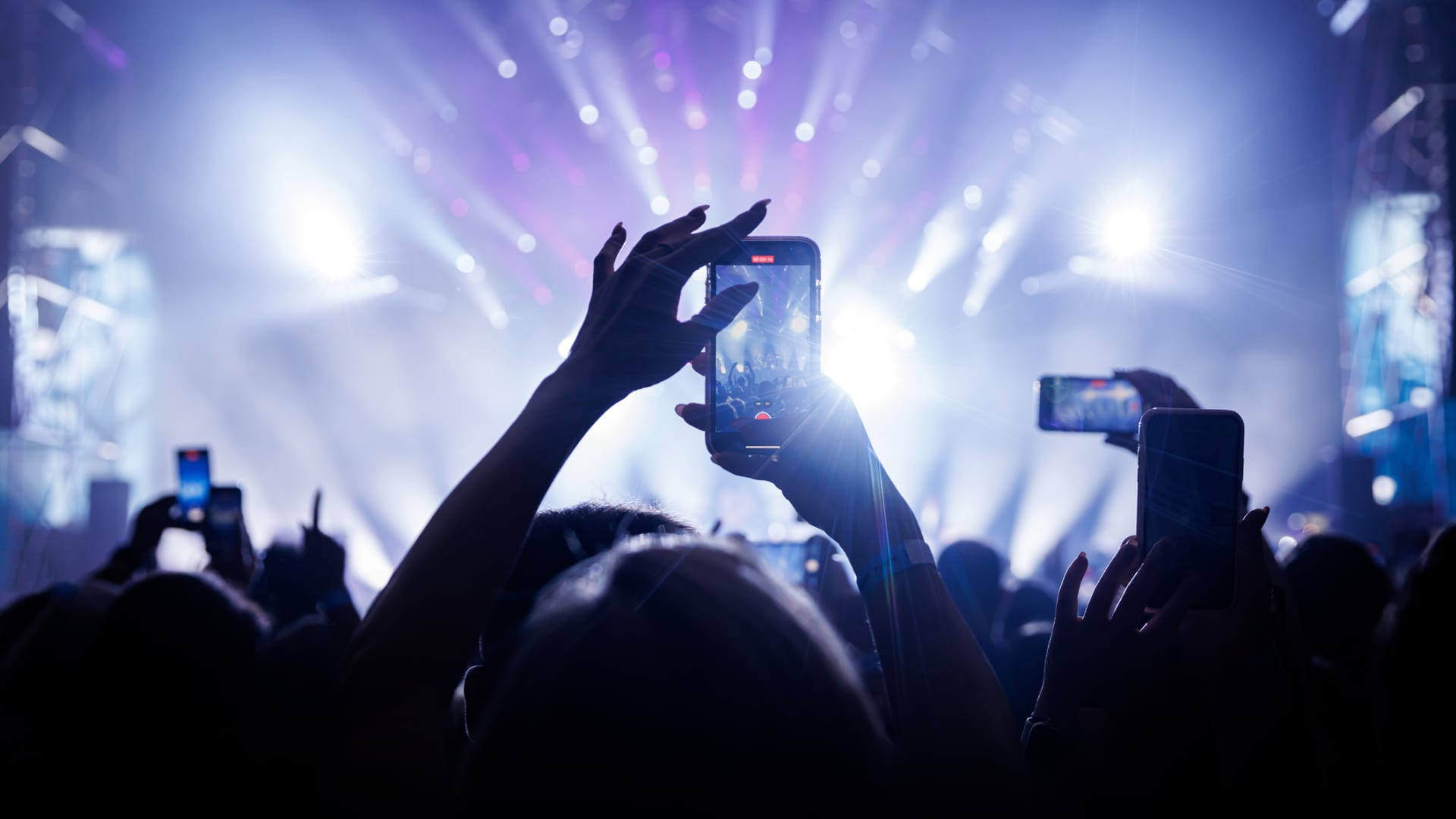
“In some high-profile cases, dynamic pricing was used in setting prices for concert tickets, resulting in fans (often reluctantly) paying very high prices to see their favourite artists. In some cases, fans were in a virtual queue for hours before realizing how much they would be asked to pay, leading to questions about the transparency of dynamic pricing practices, as well as value for money,” Oxford said.
How and when artists use dynamic pricing
Ticketmaster is under investigation in the U.K. for its recent use of dynamic pricing in sales of next year’s reunion concerts from Britpop band Oasis.
Many Oasis fans took to social media to complain that they ended up paying more than double the face value of the ticket without warning. The band said it would abandon the practice for the North American leg of its tour.
Taylor Swift performs at Scottish Gas Murrayfield Stadium on June 07, 2024 in Edinburgh, Scotland. Swift’s Eras World Tour plays 15 dates across Scotland, Wales and England in June and August.
Gareth Cattermole/tas24 | Getty Images Entertainment | Getty Images
Taylor Swift reportedly refused to dynamically price her Eras Tour tickets because “she didn’t want to do that to her fans,” Jay Marciano, chairman and CEO of AEG Presents, which promoted the event, told HITS Daily Double in October.
Also in an interview this fall, Robert Smith, the lead vocalist and guitarist for the Cure, said dynamic pricing is “driven by greed,” calling the practice a “scam.”
How and when dynamic pricing is used is at the discretion of the artist or management, according to Andrew Mall, an associate professor of music at Northeastern University — and it was often determined under the radar.
However, with so many recent high-profile tours, “for sure, dynamic pricing has surged to the forefront of concert goers’ attention,” he said.
‘A capitalist inevitability’
“We all know that if you are looking for an Uber or Lyft, there are certain times of night when it’s more expensive. The market seems to have adapted to that,” said Joe Bennett, a forensic musicologist at Berklee College of Music. “But concert tickets were generally a fixed price.”
Slowly, however, a change was taking hold.
Throughout the 21st century, revenue from recorded music has gone down while revenue from live music events has gone up. By the mid-2000s, concerts “provided a larger source of income for performers than record sales or publishing royalties,” economist Alan Krueger wrote in a paper on the economic issues and trends in the rock and roll industry. Live music industry revenue jumped 25% in 2023 alone, according to data from Statista.
In 2011, Ticketmaster first introduced an early version of dynamic ticket pricing, which is now the standard for live music ticketing sales. In more recent years, “ticket sales went crazy” driven by post-pandemic pent-up demand and a surge in mega-star stadium tours, Bennett said.
“You can see why it’s tempting,” he said. “The live music industry is constantly leaving money on the table that fans would pay. Dynamic pricing is sort of a capitalist inevitability given the forces at play, but I don’t want to live in a world where it costs a $1,000 for my daughter to see Taylor Swift.”
Still, it’s now common for ticket-selling platforms to charge more per ticket depending on demand for the event at any given time — whether consumers like it or not.
“It’s not very popular, as you might imagine,” said Matt Schulz, LendingTree’s chief credit analyst. “Businesses and musicians are trying to see what the market will bear, and it makes things really difficult for the consumer.”
Chalk it up to ‘funflation’
Despite complaints, consumers prove that they have a high tolerance for the increasing price tags of live events, also known as “funflation.” Younger adults, particularly Generation Z and millennials, have demonstrated they would even go into debt to pursue some of these experiences, recent reports show.
Nearly two out of five Gen Z and millennial travelers have spent up to $5,000 on tickets alone for destination live events, one recent study from Bread Financial found.
“Knowing your limits is important,” Schulz said. “As much as you might love your favorite musician, there should be a limit to how much debt you are willing to go into for them.”
Why dynamic pricing won’t go away
“Consumers don’t like the idea of dynamic pricing, but there is a renewed ‘YOLO’ [you only live once] attitude over the past few years since the pandemic and, increasingly, that drives a devil-may-care approach when it comes to spending on discretionary experiences,” said Greg McBride, chief financial analyst at Bankrate.com.
Even with household budgets strained, “you get to a point where there are just some experiences where consumers draw the line and say, that’s not something I’m willing to give up,” he said.

Ticket sellers are well aware of this mentality, too.
“Our research consistently tells us that concerts are a top priority for discretionary spending, and one of the last experiences fans will cut back on,” Live Nation said in a quarterly earnings call in 2023.
But as consumers continue to spare no expense to see their favorite artist or group, that means that means dynamic pricing is here to stay, at least for now.
“The live music sector has been leaning into this attitude for a long time,” Northeastern University’s Mall said.
Personal Finance
Next-Generation Retirement Planning: Managing Longevity Risk and Variable Income Streams


U.S.- Canada Trade Talks Collapse; Carney Says Retaliatory Tariffs Begin September 8

Flock Cameras and the Future of Public Security

AI Infrastructure Boom Hits Physical Limits: Power, Financing, and Supply Chain Strain

Armanino adds Strategic Accounting Outsourced Solutions

New 2023 K-1 instructions stir the CAMT pot for partnerships and corporations

Tax Strategy: Employee Retention Credit update
-

 Stock News1 week ago
Nvidia Q2 FY2027 Earnings beats Wall Street Expectation with Record $96.2 Billion Revenue
-
 Technology5 days ago
AI Infrastructure Boom Hits Physical Limits: Power, Financing, and Supply Chain Strain
-
 Technology3 days ago
Flock Cameras and the Future of Public Security
-
 Economics3 days ago
U.S.- Canada Trade Talks Collapse; Carney Says Retaliatory Tariffs Begin September 8