
Finance
Bret Taylor’s AI startup Sierra valued at $4.5 billion in funding

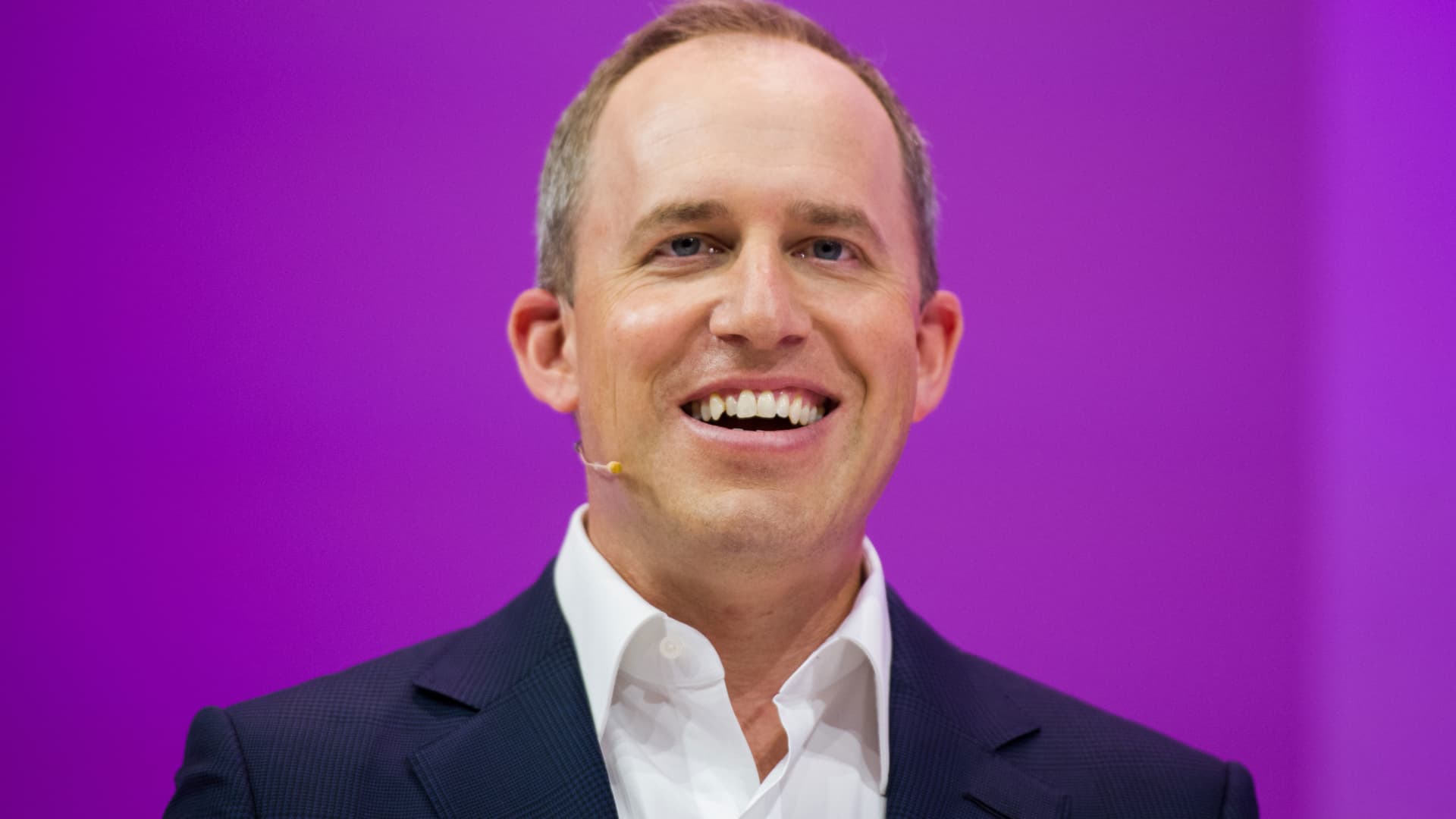
Bret Taylor, co-CEO of Salesforce, speaks at the Viva Technology Conference in Paris on June 15, 2022.
Nathan Laine | Bloomberg | Getty Images
Artificial intelligence startup Sierra, co-founded by ex-Salesforce co-CEO Bret Taylor, is more than quadrupling its valuation to $4.5 billion in a fresh funding round.
The San Francisco-based company, which was valued at $1 billion in January, raised $175 million in a funding round led by Greenoaks Capital. The Information reported earlier this month that Sierra was in the midst of raising capital.
Taylor is chairman of OpenAI’s board and previously ran Salesforce, alongside Marc Benioff. He was also chairman of Twitter when Elon Musk was negotiating to buy the social media company. Taylor is a longtime entrepreneur, widely credited with helping to create Google Maps. At Google, he met his Sierra co-founder Clay Bavor, who spent nearly two decades at the tech giant, leading virtual reality efforts and Google Labs.
Sierra is focused on helping enterprises like home security company ADT, Sonos, Weight Watchers and Casper personalize and implement AI agents for customer service. Taylor and Bavor unveiled the startup earlier this year.
“We think every company in the world, whether it’s a technology company or a 150-year-old company like ADT, can benefit from AI, and the technology is ready right now,” Taylor told CNBC in an interview. “We want to enable Sierra to address that market, and that means expanding internationally and to other industries.”
ICONIQ and Josh Kushner’s Thrive Capital contributed to the new funding round.
Taylor describes Sierra as “conversational AI,” and bristles at the word “chatbot,” even banning the phrase in the company’s downtown San Francisco office. Sierra is looking to create a more conversational style of interaction, Taylor said. He pointed to the ease of OpenAI’s ChatGPT and compared it to the frustrating experience of talking on the phone with an airline bot.
“When you think of chatbots, you think of those annoying, robotic things — you can feel the difference,” Taylor said, adding that Sierra is making their agents more “empathetic and conversational.”

Sierra’s team lets each client customize the agent’s personality to its corporate brand. Clothing company Chubbies, for example, took a more sarcastic route with a younger sounding agent named Duncan Smothers. Taylor said some luxury brands are opting for a British accent with a more serious tone.
“We really think that your conversational AI agent should be not only transactional, but a brand ambassador,” Taylor said. “It’s actually something that is a statement of your values. So do you want to be sarcastic? Do you want to use emoji? Do you want it to sound like text messaging, or do you want it to sound like a lawyer?”
Sierra uses what Bavor and Taylor describe as a “constellation” of models, with a “supervisor.” The technology uses one model to do the heavy lifting, with the expectation that it won’t be 100% reliable, but use a second model as a backup, to “check” the others and help with accuracy. The company currently relies on large language models from OpenAI, Anthropic and Meta, among others.
There’s competition in the space. Taylor’s former company, Salesforce, as well as Microsoft, in partnership with OpenAI, are exploring the AI agent space. Taylor compared Sierra to the companies that built cloud software on top of Amazon Web Services and other cloud infrastructure.
“In the cloud era, you had Shopify, Salesforce, ServiceNow and Adobe — I think the same thing will play out in AI with Sierra,” Taylor said. “We’re helping their branded customer facing agent.”
He mentioned startups like Cursor, which makes coding agents, and Harvey, which makes legal agents.
Sierra’s funding follows a flurry of major AI announcements in Silicon Valley. OpenAI raised billions of dollars at a $157 billion valuation. Perplexity is in the midst of raising a round that values the company at $9 billion, a source confirmed to CNBC. One in three venture dollars this year has gone to an AI startup, according to CB Insights.
“When a technology wave like this happens, I think a lot of people are trying to place their bets,” Taylor said. “I don’t know which company will win, but it’s a smart investment, categorically. Clearly customer experience and customer service is a huge opportunity, and I think we are the leader in this space, and seeing a lot of demands because of that.”
WATCH: Anthropic adds new feature that gives its models new abilities






Treasury Bond Volatility Forces Bessent to Double Debt Buyback Size as Yields Swing

Nvidia Earnings Preview: What Wall Street Expects From the AI Bellwether’s Q2 Report

SEC’s Semiannual Reporting Proposal Faces Investor Pushback: What CFOs Need to Know

Armanino adds Strategic Accounting Outsourced Solutions

New 2023 K-1 instructions stir the CAMT pot for partnerships and corporations

Tax Strategy: Employee Retention Credit update
-

 Economics1 week ago
U.S. Retail Sales Fall for the First Time in Nine Months as Consumer Spending Slows
-
 Economics1 week ago
Nvidia’s Potential $3 Billion SB Energy Investment Could Reshape AI Infrastructure
-

 Economics4 days ago
Top 10 Largest Economies by 2030: IMF & World Bank GDP Projections for Global Powerhouses
-

 Stock News4 days ago
How to understand Intel $15B Stock Offering
-

 Technology1 week ago
U.S.-China AI Competition Intensifies as Washington Pushes Allies to Choose Sides
-

 Economics4 days ago
Economic Profile of the United States of America (2026–2030 Horizon)
-
 Leaders3 days ago
Jackson Hole 2026: What the First Symposium Under Fed Chair Kevin Warsh Means for Markets
-
 Economics3 days ago
U.S. National Debt Surpasses $40 Trillion for the First Time: What It Means for the Economy