Connect with us

Finance

California pauses home energy rebate program amid Trump funding freeze

Published

on

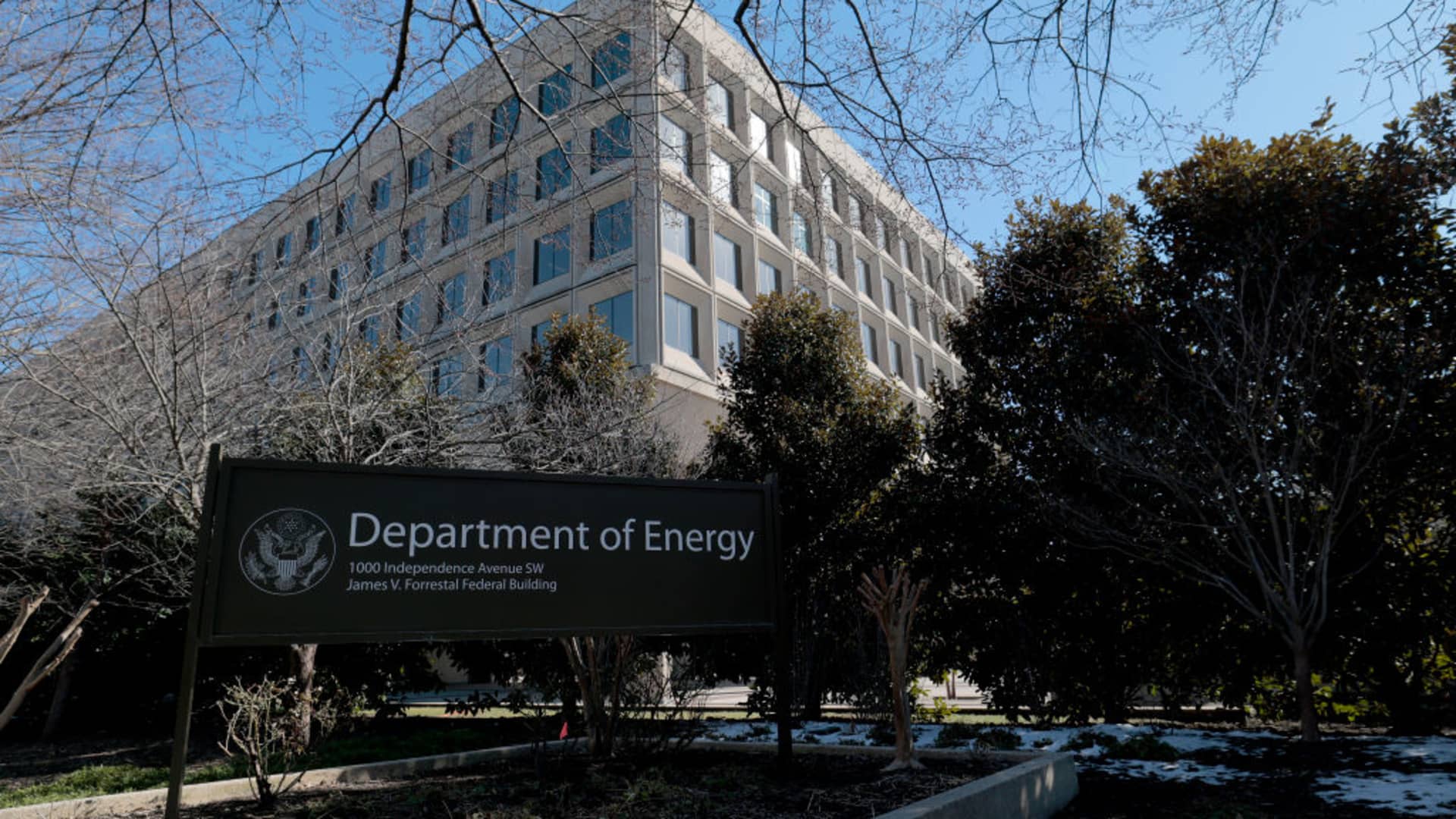
The U.S. Department of Energy on Feb. 14, 2025 in Washington, D.C.  

Anna Moneymaker | Getty Images News | Getty Images

California has paused rebate programs offering thousands of dollars to consumers who make their homes and appliances more energy efficient due to a Trump administration freeze on federal funding.

While a handful of other states also recently halted their programs, California is the largest state to delay a rollout so far — putting $582 million earmarked for consumers and program administration at risk.

California had issued its first rebate check to consumers in February, according to the state’s Energy Commission.

“Many states were just getting started on their programs, and suddenly they’re tossed into turmoil,” said Lowell Ungar, director of federal policy at the American Council for an Energy-Efficient Economy.

President Trump moves to halt federal grants

The programs in question, Home Energy Rebates, were created through the Inflation Reduction Act. President Biden signed it into law in 2022.

The law allocated up to $8.8 billion of federal funds for states, territories and the District of Columbia to disburse to consumers in the form of rebates.

Consumers were provided up to $8,000 of Home Efficiency Rebates and up to $14,000 of Home Electrification and Appliance Rebates, per federal law. Maximum amounts vary per household, depending on factors like income eligibility.

The rebates aim to reduce the cost of home upgrades like installing insulation and heat pumps or buying efficient appliances like electric stoves — with an eye to also reducing consumers’ energy bills and cutting planet-warming carbon emissions.

More from Personal Finance:
Congress’ proposed cuts may jeopardize Medicaid
Canada, Mexico tariffs create ‘ripple effects’ on consumer prices
Social Security plans to cut about 7,000 workers

All states except South Dakota had applied for the federal funds. The U.S. Department of Energy approved those applications, and states were in various phases of rollout by the end of the Biden administration.

However, the Trump administration on Jan. 27 put a freeze on the disbursement of federal funds that conflict with the president’s agenda, including initiatives related to green energy and climate change.

The fate of that freeze is up in the air as courts weigh legal challenges to the policy.

The U.S. Department of Energy didn’t return a request from CNBC for comment.

The California Energy Commission — which had launched an $80 million first phase of its home energy rebate program in the fall — paused its program on Feb. 25, according to a California Energy Commission website.

The pause will remain in place “until the Trump Administration provides additional information on the funding,” Commission staff wrote in an e-mailed statement.

California was approved for the second-largest tranche of funding for the energy rebate programs, behind only Texas. (The U.S. Energy Department awarded $689 million to Texas, according to an archived federal website.)

The Texas State Energy Conservation Office didn’t return a request for comment on the status of its program.

Since Jan. 31, California hasn’t been able to successfully draw down funds for administrative costs to run its rebate program, according to a California Energy Commission website. The U.S. Energy Department has also removed information about Home Energy Rebate programs from its website, the CEC said.

Not all states have paused their programs, however.

For example, officials in Maine and North Carolina recently confirmed to CNBC that funding through their rebate programs remains available — for now.

The North Carolina Department of Environmental Quality is “closely watching any federal actions that may change the operations of the Energy Saver NC program,” a spokesperson said in an e-mailed statement.

Different states may have “different risk tolerances” when it comes to administering these programs and issuing rebates when it’s unclear if they’ll eventually be reimbursed, Ungar said.


Continue Reading

Finance

Treasury Yields Rise as Fed Cut Expectations Shift

Published

on

Treasury Yields Rise as Fed Cut Expectations Shift

Fixed-income markets recorded significant re-pricing during the week ending July 25, 2026, as a convergence of strong labor market metrics and surging energy costs drove U.S. Treasury yields higher across all maturities. The benchmark 10-year Treasury yield climbed toward 4.70%, reaching its highest point in several months. Institutional bond investors rapidly adjusted portfolio durations as expectations for near-term interest rate cuts by the Federal Reserve faded in response to inflation concerns.

The upward shift in sovereign yields reflects a broader fundamental reassessment of global monetary policy. Earlier in the quarter, money markets had priced in a series of rate reductions designed to support economic activity. However, with initial jobless claims falling to 187,000 and crude oil breaching $100 per barrel, fixed-income traders are pricing in a ‘higher-for-longer’ interest rate environment. The inversion between short-term Treasury bills and long-term bonds narrowed, indicating a shift toward term premium expansion.

Rising Treasury yields present both challenges and opportunities for institutional wealth managers. While commercial lenders and mortgage origination volumes face headwinds from elevated borrowing costs, fixed-income investors are locking in attractive real yields on high-quality sovereign and investment-grade corporate bonds. Institutional debt issuers, conversely, are recalibrating their capital structures, opting for shorter-term refinancing instruments or private credit facilities to avoid committing to elevated long-term coupon rates.

Navigating the current bond market landscape demands strict duration management and credit selection. Wealth advisors recommend maintaining flexible fixed-income allocations, combining short-duration Treasuries with inflation-protected securities (TIPS) to shield capital against potential energy-driven inflation spikes while earning dependable nominal income.

Continue Reading

Finance

Private Credit Expansion Transforms Corporate Loans

Published

on

Private Credit Expansion Transforms Corporate Loans

Private credit markets reached a pivotal milestone during the week ending July 25, 2026, as non-bank direct lending consortiums captured a record share of middle-market corporate debt originations. With commercial banks maintaining conservative credit standards and public bond yields remaining elevated, corporate borrowers are increasingly turning to private fund managers for customized capital solutions. This expansion marks a permanent structural shift in enterprise finance, establishing private credit as a primary pillar of institutional corporate liquidity.

The acceleration of private credit deals is driven by speed, deal certainty, and flexible terms. Unlike traditional syndicated bank loans that require lengthy underwriting, credit rating approvals, and public roadshows, private direct lenders can structure tailored financing packages within days. Middle-market firms facing upcoming debt maturities are utilizing private debt facilities to execute recapitalizations, strategic acquisitions, and growth capital deployments without risking execution delay in public markets.

However, financial regulators and central bank supervisors are scrutinizing the sector’s rapid growth. Supervisory agencies are evaluating potential systemic risks associated with non-bank leverage, valuation transparency, and liquidity mismatches during economic downturns. Despite regulatory interest, major pension funds, insurance firms, and sovereign wealth entities continue to expand capital allocations to private credit funds, attracted by reliable floating-rate yields that outperform public fixed-income benchmarks.

As private credit matures into a dominant asset class, corporate chief financial officers must evaluate non-bank lenders alongside traditional banking relationships. Direct lending partnerships provide valuable balance sheet resilience, enabling companies to secure flexible financing terms even during periods of public market turbulence.

Continue Reading

Finance

Tokenized Debt Shifts How Corporate Manage Short Term Liquidity

Published

on

Tokenized Debt Shifts Corporate Liquidity

The landscape of institutional debt markets is undergoing a profound structural shift on July 21, 2026, as major corporate issuers and commercial banks rapidly accelerate the deployment of tokenized debt instruments. Data published by leading capital market consortiums indicates that primary issuances of digital commercial paper and tokenized corporate bonds have reached record volumes this month. By moving legacy debt origination, underwriting, and secondary distribution onto permissioned distributed ledgers, corporate treasurers are unlocking unprecedented operational flexibility and instantaneous cross-border liquidity.

The adoption of tokenized debt is fundamentally altering how enterprise balance sheets manage short-term liquidity needs. Traditional corporate bond settlement cycles historically required multi-day clearing processes involving numerous intermediaries, custodial entities, and clearinghouses. Through programmable smart contracts on distributed ledgers, issuers can now execute atomic settlement—enabling continuous, 24/7 access to institutional capital pools. This instantaneous clearing mechanism drastically reduces counterparty risk, eliminates costly settlement friction, and allows treasury teams to dynamically optimize working capital in real time.

A major catalyst driving this institutional migration is the establishment of comprehensive digital asset regulatory frameworks across major financial hubs. Clear legal guidelines regarding ledger-based securities ownership have provided institutional compliance officers with the regulatory confidence necessary to transition multi-billion-dollar liquidity facilities onto digital platforms. Furthermore, the integration of automated regulatory reporting directly into token smart contracts simplifies ongoing compliance audits, ensuring that secondary market trades automatically enforce investor accreditation limits and tax withholding requirements.

For chief financial officers and institutional portfolio managers, tokenized debt represents a fundamental evolution in fixed-income strategy. Companies that embrace ledger-based debt structures gain direct access to a broader, global base of digital-native institutional investors while substantially reducing borrowing overhead. As ledger interoperability continues to improve across global exchanges, tokenized debt is poised to become the standard infrastructure for global corporate finance.

Continue Reading

Trending