
Finance
China state planner lays out further actions to boost economy but no new plans for major stimulus

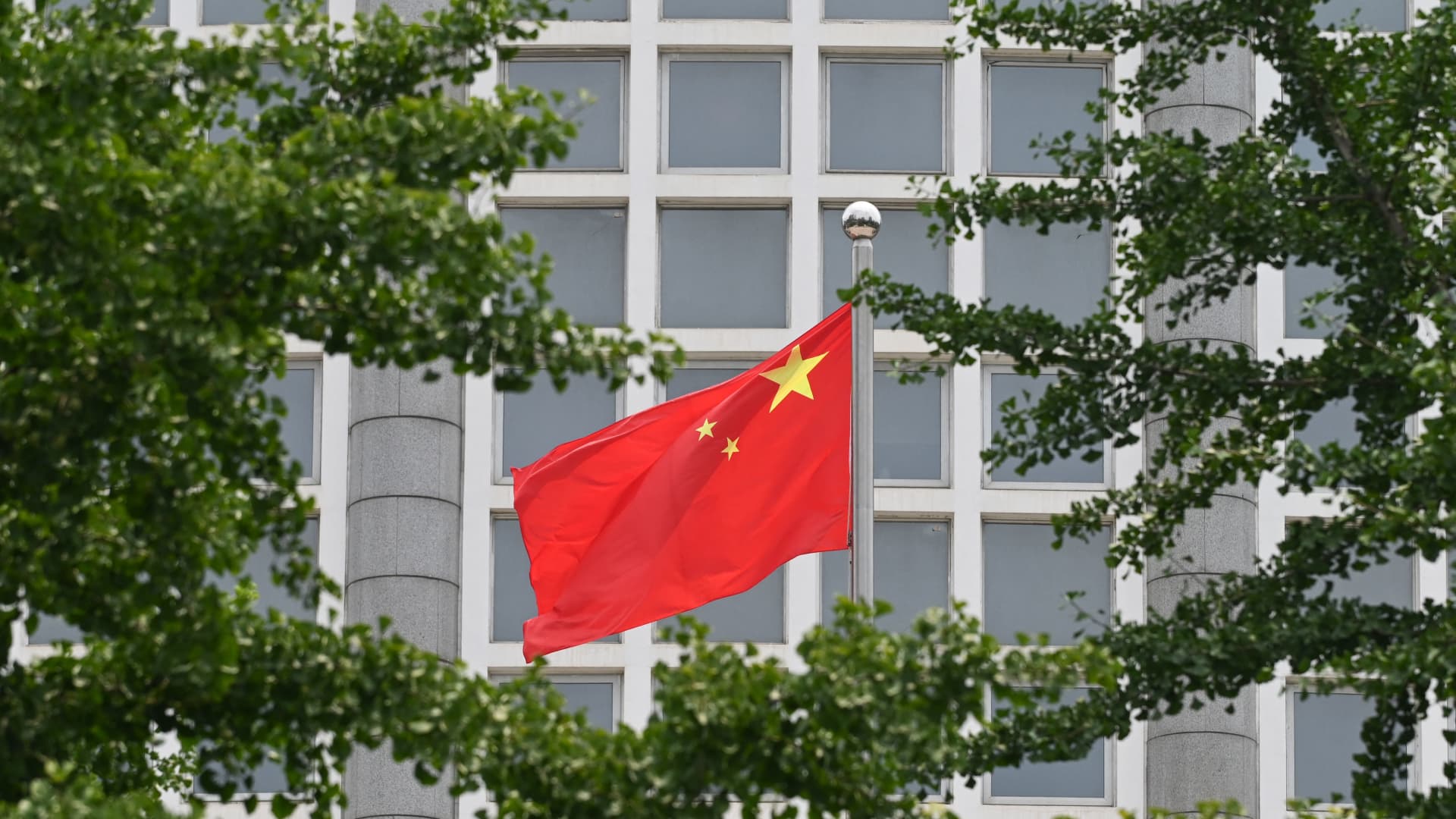
The Chinese national flag flies outside the Ministry of Foreign Affairs in Beijing on July 26, 2023.
Greg Baker | Afp | Getty Images
Zheng Shanjie, chairman of China’s National Development and Reform Commission, on Tuesday pledged a raft of actions to bolster the country’s economy during a highly-anticipated press conference.
But he stopped short of announcing any new major stimulus plans, underwhelming investors and weakening the rally in the mainland Chinese markets.
China will speed up special purpose bond issuance to local governments to support regional economic growth, the senior NDRC official said.
Zheng said ultra-long special sovereign bonds, totaling 1 trillion yuan, have been fully deployed to fund local projects, and he vowed that China will continue to issue ultra-long special treasury bonds next year.
The central government will release a 100 billion yuan investment plan for next year by the end of this month, ahead of schedule, a senior official added.
Zheng also promised that more measures are coming that aims to support the property market and boost domestic spending.
The NDRC head was speaking at a press briefing with four other key officials of the country’s economic planning agency. The briefing came as markets in mainland China returned from Golden Week, a weeklong holiday that started Sept. 30.
Chinese stocks reopened sharply higher on Tuesday morning, extending the rally before the holiday. Major indexes in mainland China — the Shanghai Composite Index, CSI 300 blue-chip index and SZSE Component Index — surged over 10% in early hour trade.

Shanghai Composite Index
Last month, China’s top leaders had signaled a sense of urgency in confronting a long and painful economic downturn that has thrown into doubt the country’s ability to hit an annual growth target of “around 5%.”
Before the holiday, Chinese authorities had called for strengthening fiscal and monetary policy support at a monthly meeting of top Communist Party officials, and unveiled a flurry of stimulus measures aimed to put an end to the sliding property prices.
The stimulus blitz came as growth in the world’s second largest economy had slowed after a disappointing recovery from Covid-19 lockdowns, weighed down by lackluster domestic demand and a protracted property downturn.
In the first half of the year, China’s economy grew by 5.0% from a year earlier, meeting the central government’s target, while in the April-June quarter, its GDP growth missed expectations and grew by 4.7%, marking its slowest growth since the first quarter in 2023.
China’s latest consumer price index rose by 0.6% year on year in August, missing expectations of 0.7%, while the core-CPI, which strips out food and energy prices, climbed by 0.3%, a slower rise for a second-straight month.
Among a barrage of disappointing economic data, China’s factory activity also contracted for the fifth consecutive month in September, with the official PMI coming in at 49.8 in September. A PMI reading above 50 indicates expansion in activity, while a reading below that level points to contraction.
The Caixin PMI was 49.3 in the same period, the sharpest contraction in 14 months, driven by declining demand and a weakening labor market.
In March, Zheng said at a high-level press conference that China will “continue to strengthen macroeconomic policies.” It would involve coordination of fiscal, monetary, employment, industrial and regional policies, he said, as China continues to step up macro economic policy adjustment.
The NDRC chief also acknowledged that “there are still many difficulties and problems” in the process of achieving the country’s expected growth targets, according to CNBC’s translation of his Mandarin-language remarks.
This is breaking news. Please check back here for updates.





Treasury Bond Volatility Forces Bessent to Double Debt Buyback Size as Yields Swing

Nvidia Earnings Preview: What Wall Street Expects From the AI Bellwether’s Q2 Report

SEC’s Semiannual Reporting Proposal Faces Investor Pushback: What CFOs Need to Know

Armanino adds Strategic Accounting Outsourced Solutions

New 2023 K-1 instructions stir the CAMT pot for partnerships and corporations

Tax Strategy: Employee Retention Credit update
-

 Economics1 week ago
U.S. Retail Sales Fall for the First Time in Nine Months as Consumer Spending Slows
-

 Economics1 week ago
Nvidia’s Potential $3 Billion SB Energy Investment Could Reshape AI Infrastructure
-

 Economics4 days ago
Top 10 Largest Economies by 2030: IMF & World Bank GDP Projections for Global Powerhouses
-

 Stock News4 days ago
How to understand Intel $15B Stock Offering
-

 Technology1 week ago
U.S.-China AI Competition Intensifies as Washington Pushes Allies to Choose Sides
-

 Economics4 days ago
Economic Profile of the United States of America (2026–2030 Horizon)
-
 Leaders3 days ago
Jackson Hole 2026: What the First Symposium Under Fed Chair Kevin Warsh Means for Markets
-

 Economics3 days ago
U.S. National Debt Surpasses $40 Trillion for the First Time: What It Means for the Economy