
Finance
China stocks just had their best day in 16 years, sending related U.S. ETFs soaring

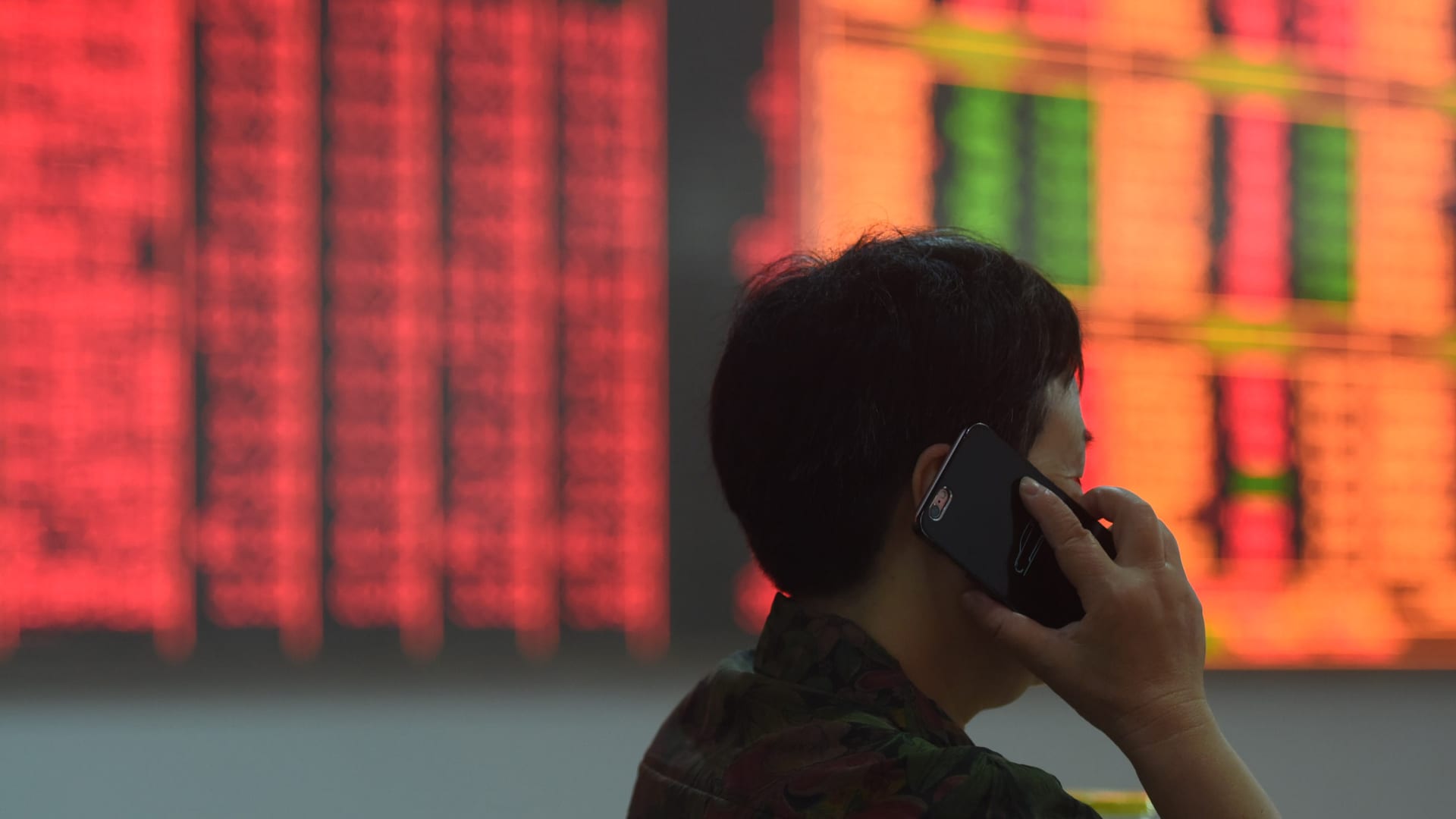
A shareholder at a securities hall in Hangzhou, the capital of Zhejiang province in east China, on Sept. 24, 2024.
Cfoto | Future Publishing | Getty Images
China stocks rallied to their best day in 16 years, with related U.S. ETFs also soaring after recent economic stimulus buoyed investor optimism in the market.
The Shanghai Composite rallied 8.06% in its best day since September 2008, and capping a nine-day win streak for the index. It ended September up 17.39%, its first monthly gain in five and its best monthly performance going back to April 2015.
The Shenzhen Composite Index closed up 10.9%, its best day since April 1996. It gained 24.8% in September, its best month going back to April 2007.
The China ADR index gained nearly 6%.
The U.S. listed shares of human resources company Kanzhun surged 9% along with online video company Bilibili. Tencent Music Entertainment gained 2.9%, while online brokerage company Futu Holdings rose 15%.

China ADR Index
The KraneShares CSI China Internet ETF (KWEB) gained 4.2%, while the iShares China Large-Cap ETF (FXI) rose 2.2%.
The U.S. listed shares of Alibaba had gained more than 4%, while JD.com was up by 5.4%.
Chinese stocks have been on a tear after Beijing last week unveiled a slew of economic stimulus measures including interest rate cuts to support the weak property market. On Thursday, state media said Chinese President Xi Jinping and other top leaders affirmed the measures.
“While we don’t know for sure if there’s going to be enough to really kick the economy back into gear, it’s certainly the right first step,” said Art Hogan, chief market strategist at B. Riley Securities. “I think the impact of a strengthening China can’t be underestimated.”
“On balance, this is going to be an ambiguous positive for markets going forward,” he added. “And I think that there’s a lot of investors are going to have to quickly recalibrate their expectations.”
More U.S. investors are bullish on the market following the move. Last week, billionaire hedge fund founder David Tepper said he is overwhelmingly bullish on Chinese equities, having bought “everything” related to China following the Federal Reserve’s recent rate cut.
— CNBC’s Gina Francolla, Nick Wells, Lim Hui Jie and Evelyn Cheng contributed to this report.





Treasury Bond Volatility Forces Bessent to Double Debt Buyback Size as Yields Swing

Nvidia Earnings Preview: What Wall Street Expects From the AI Bellwether’s Q2 Report

SEC’s Semiannual Reporting Proposal Faces Investor Pushback: What CFOs Need to Know

Armanino adds Strategic Accounting Outsourced Solutions

New 2023 K-1 instructions stir the CAMT pot for partnerships and corporations

Tax Strategy: Employee Retention Credit update
-

 Economics1 week ago
U.S. Retail Sales Fall for the First Time in Nine Months as Consumer Spending Slows
-
 Economics1 week ago
Nvidia’s Potential $3 Billion SB Energy Investment Could Reshape AI Infrastructure
-

 Economics4 days ago
Top 10 Largest Economies by 2030: IMF & World Bank GDP Projections for Global Powerhouses
-
 Stock News4 days ago
How to understand Intel $15B Stock Offering
-

 Technology1 week ago
U.S.-China AI Competition Intensifies as Washington Pushes Allies to Choose Sides
-

 Economics4 days ago
Economic Profile of the United States of America (2026–2030 Horizon)
-

 Leaders3 days ago
Jackson Hole 2026: What the First Symposium Under Fed Chair Kevin Warsh Means for Markets
-
 Economics3 days ago
U.S. National Debt Surpasses $40 Trillion for the First Time: What It Means for the Economy