
Finance
China’s biggest shopping event of the year exceeds low expectations

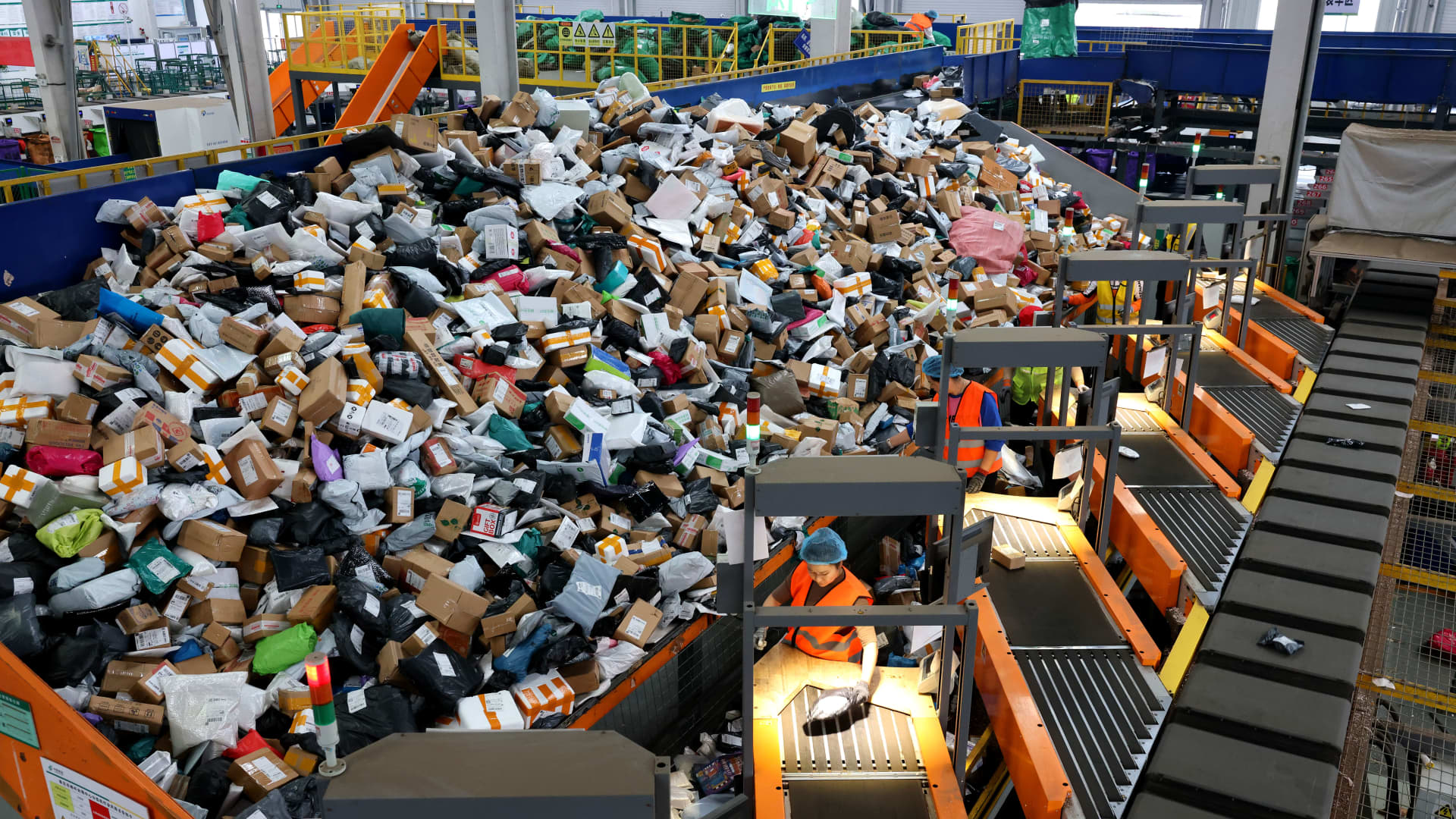
Staff sort express deliveries at China Post’s Zaozhuang branch in east China’s Shandong province on November 10, 2024
Nurphoto | Nurphoto | Getty Images
BEIJING — China’s Singles’ Day shopping festival saw consumers spend more than expected in what has otherwise been a tepid retail environment, consulting executives told CNBC.
The country’s version of Black Friday kicked off this year on Oct. 14, more than a week earlier than in 2023, and wrapped up Monday. Major e-commerce companies used to report gross merchandise value, an industry measure of sales over time, but did not for a third consecutive year amid weak consumer sentiment.
“I do think for many brands it probably will have turned out a bit better than they thought, but on a low level. Probably nobody would say we hit it out of the ballpark,” said Chris Reitermann, CEO of Ogilvy APAC and Greater China. He is also president of WPP China.
Many multinational corporations that sell consumer products in China are more cautious on the market, if not struggling, Reitermann said. But he pointed out many of the companies are still “very profitable” in the country, even if their growth has slowed to the low single digits, instead of high double digits.
For this year’s Singles Day, Alibaba claimed “robust growth” in GMV and a “record number of active buyers,” while JD.com said the number of shoppers on its platform rose by more than 20% year-over-year.
The shopping season that celebrates single people, also known as Double 11, came as the Chinese government has announced a series of stimulus measures since late September, fueling a stock market rally.

“There seems to be an uptick” in consumer sentiment over the last six weeks, said Daniel Zipser, senior partner at McKinsey and leader of its Asia Pacific consumer and retail division. It’s “hard to predict what that means going forward.”
Singles Day exceeded expectations for most brands, Zipser said. But rather than sales rising across the board, he pointed out pockets of growth in categories such as outdoors, pet care and “blind box” toys — in which consumers buy uniformly marked boxes for a chance at winning a new collectible.
He noted that the blind box category is one that went from $0 before Covid-19 to an industry more than $2 billion in size, reflecting the potential speed of consumer adoption in China.
China’s retail sales for October are expected to have risen by 3.8% from a year ago, according to a Reuters poll. That would be an improvement from 3.2% growth in September.
“We saw people spending more this year,” Jacob Cooke, co-founder and CEO of WPIC Marketing + Technologies, told CNBC on Tuesday. The company helps foreign brands — such as Vitamix and IS Clinical — sell online in China and other parts of Asia.
He estimated 16% growth in GMV for the shopping festival from last year, in likely the strongest performance in years. Cooke added that brands didn’t have to cut prices as much.
Research firm Syntun said Tuesday it estimated 20.1% year-on-year growth in sales over the Singles Day period to 1.11 trillion ($150 billion) for Alibaba’s Tmall, JD.com and PDD.
Investors could get more details on China consumption later this week. JD.com is scheduled to release quarterly results Thursday, followed by Alibaba on Friday.
“We’ve seen consumers who have, if you will, save for a rainy day, and they’ve purchased on this Double 11 shopping festival,” Deborah Weinswig, founder and CEO of Coresight Research, said Tuesday on CNBC’s “Squawk Box Asia.”

She said the company’s weekly survey has indicated some “differences” in consumer sentiment over the last month.
Hopes for a recovery in 2025
China’s consumer spending has come under pressure since the Covid-19 pandemic as households grapple with economic uncertainty. A real estate slump has cut into household wealth, while economic growth has slowed.
While premium or mid-tier brands are “disappearing very fast,” higher-end brands such as Lululemon can do well, Reitermann said. He noted generally that local brands are often lower-priced and able to go to market faster.
He expects some rebound in consumer confidence in the second half of next year, after additional stimulus is likely announced in the first half.
China’s Ministry of Finance last week indicated more fiscal support could come in 2025. While China did not hand out cash to consumers during the pandemic, this year, the country did roll out a trade-in program to subsidize a portion of car and home appliance purchases.
— CNBC’s Sonia Heng contributed to this report.




Treasury Bond Volatility Forces Bessent to Double Debt Buyback Size as Yields Swing

Nvidia Earnings Preview: What Wall Street Expects From the AI Bellwether’s Q2 Report

SEC’s Semiannual Reporting Proposal Faces Investor Pushback: What CFOs Need to Know

Armanino adds Strategic Accounting Outsourced Solutions

New 2023 K-1 instructions stir the CAMT pot for partnerships and corporations

Tax Strategy: Employee Retention Credit update
-
 Economics1 week ago
U.S. Retail Sales Fall for the First Time in Nine Months as Consumer Spending Slows
-

 Economics1 week ago
Nvidia’s Potential $3 Billion SB Energy Investment Could Reshape AI Infrastructure
-
 Economics4 days ago
Top 10 Largest Economies by 2030: IMF & World Bank GDP Projections for Global Powerhouses
-

 Stock News4 days ago
How to understand Intel $15B Stock Offering
-

 Technology1 week ago
U.S.-China AI Competition Intensifies as Washington Pushes Allies to Choose Sides
-
 Economics4 days ago
Economic Profile of the United States of America (2026–2030 Horizon)
-
 Stock News20 hours ago
Nvidia Earnings Preview: What Wall Street Expects From the AI Bellwether’s Q2 Report
-
 Leaders3 days ago
Jackson Hole 2026: What the First Symposium Under Fed Chair Kevin Warsh Means for Markets