
Finance
Chinese businesses rush to try DeepSeek AI at ‘unprecedented’ scale

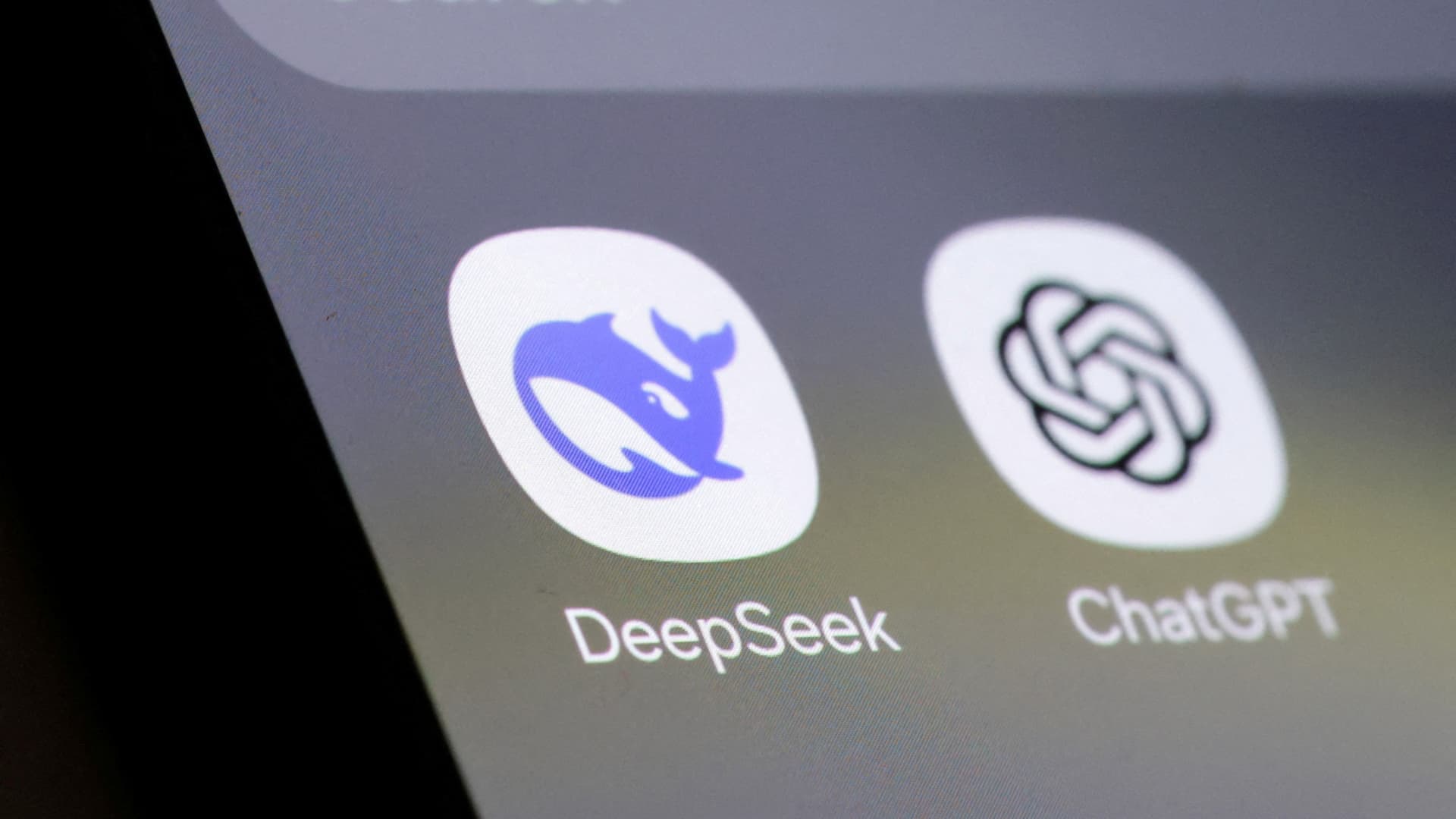
BEIJING — Chinese businesses are tapping DeepSeek’s newest artificial intelligence model to see how it can improve productivity.
The Chinese AI model took the world by storm in recent weeks after showcasing its reasoning process and claims to undercut rival OpenAI’s ChatGPT on cost — despite U.S. restrictions on Chinese access to the advanced semiconductors needed to develop the tech.
Eight automakers including BYD, at least nine financial securities companies, three state-owned telecommunications operators and smartphone brand Honor are among the many that have rushed in the last week to integrate with DeepSeek. Cloud computing operators Alibaba, Huawei, Tencent and Baidu have all offered ways for clients to access DeepSeek’s latest model.
“This is quite unprecedented,” Wei Sun, principal analyst of artificial intelligence at Counterpoint Research, said in an email Monday. She pointed to the rate of adoption, scale of business integration and breadth of specific industries covered.
“When we have all of these, we know it’s making a big social and economic impact,” she said.

Optimism over artificial intelligence has spread to Chinese stocks. UBS said Wednesday that AI-related Chinese stocks are up by 15% since the start of the year, outperforming the broader MSCI China Index by 9%.
A big factor in the widespread interest is timing. DeepSeek released its latest R1 model on Jan. 20, and news of its low-cost reasoning capabilities prompted a global tech stock sell-off on Jan. 27 — just as millions of urban workers in China were returning to their hometowns to celebrate the eight-day Lunar New Year holiday.
As a result, less developed parts of China gained greater understanding of AI and its impact, a topic previously limited to conversations in China’s largest cities, said Wenhao Zhang, CEO of the Beijing-based consumer marketing consultancy Doodod.
“It’s a major education of the market. This will push the entire ecosystem’s development,” he said Tuesday in Mandarin, translated by CNBC.
Zhang, who studied AI at Tsinghua University, founded Doodod in 2012 to build customer engagement through social media analysis. He said the company — which counts China Merchant’s Bank and Toyota as clients — started looking at DeepSeek’s offerings late last year, and began using it more after the R1 release in late January.
DeepSeek, founded in 2023 out of a quantitative hedge fund, had released a basic version of R1 in November, and a V3 model in December. It launched a smartphone chatbot app in January.
Open-source local deployment
Another attractive factor for businesses is that DeepSeek’s models are open-source, allowing individuals and companies to download and customize it.
DeepSeek also advertised drastically lower prices for applications to use its tech versus that of OpenAI. ChatGPT is not officially available in mainland China and requires users to provide an overseas phone number and payment method from a supported country such as the U.S.
DeepSeek changed the perception that AI models only belong to big companies and have high implementation costs, said James Tong, CEO of Movitech, an enterprise software company which says its clients include Danone and China’s State Grid.
He said Movitech started integrating an earlier version of DeepSeek in the fourth quarter of last year, helping boost sales by about 25% from the same period in 2023. The company plans to launch a new DeepSeek-integrated application by the end of March to improve clients’ ability to make decisions, he said.
Many recent videos on Chinese social media have showed off how to run a local version of DeepSeek on Apple’s Mac mini.
Apple Mac mini online sales in China climbed significantly from November to January, versus the same period the year prior, according to data from consultancy WPIC. The electronics-focused JD.com site recorded unit sales of around 20,200 in January, up from nearly 19,400 in December and around 12,250 in November, the data showed.
DeepSeek’s affordability is pressuring more expensive AI models to cut prices, enabling more businesses to adopt the tech, said Chim Lee, senior Asia analyst at the Economist Intelligence Unit. He added that open-source models allow finance, banking and healthcare businesses — which are subject to stringent data protection rules in China — to develop AI applications locally.
“It is still very early to point to concrete business applications, but a key takeaway is that DeepSeek will accelerate the commoditization of AI,” Lee said.
Beijing is also increasing support. China’s national supercomputing network announced Tuesday that eligible companies and individuals can obtain three free months of DeepSeek access, along with subsidized computing power.
The network is similar to OpenAI’s Trump-backed Stargate project in the U.S. for building AI infrastructure — with the potential for “even faster scaling,” Winston Ma, adjunct professor at NYU School of Law said Wednesday. He is also the author of “The Digital War: How China’s Tech Power Shapes the Future of AI, Blockchain and Cyberspace.”
Not centered on DeepSeek
The rush to try out DeepSeek doesn’t mean it will be the only AI provider for Chinese companies. Developers in the U.S. and China are regularly releasing new models.
Movitech also uses Alibaba’s Qwen AI model, Tong said, noting that the market wants the tech that can lower costs and produce results the most, whether it’s OpenAI or DeepSeek.
HangHang AI, which has invested several hundred million yuan to develop AI solutions for companies across 20 industries, uses a range of models, said partner and COO Shu Weibing.
Many people first used “Baidu, then realized it wasn’t as good as Kimi, then it wasn’t as good as [ByteDance’s] Doubao, which also cut prices,” Shu said in Mandarin, translated by CNBC. “Now it’s DeepSeek.”
It remains to be seen how much generative AI can boost productivity and profits.
Shu predicts that small businesses and companies that integrate AI with hardware will benefit more than large, consumer-facing internet platforms, whose AI work so far, he said, has focused more on boosting efficiency rather than creating new consumer services.
Despite AI models’ falling prices, “small and medium-sized businesses may still be in a period of wait-and-see” for adopting the tech due to the relatively high cost for a full deployment, including computing power and customization, Mike Fang, senior director analyst at Gartner, said Wednesday in Mandarin translated by CNBC.
But the consulting firm predicts that by 2027, the average price to access a generative AI model will be less than 1% of what it costs now — and that by 2029, 60% of Chinese businesses will have incorporated AI into their primary products and services, forming the top drivers of revenue growth.





Nvidia Q2 FY2027 Earnings beats Wall Street Expectation with Record $96.2 Billion Revenue

Treasury Bond Volatility Forces Bessent to Double Debt Buyback Size as Yields Swing

Nvidia Earnings Preview: What Wall Street Expects From the AI Bellwether’s Q2 Report

Armanino adds Strategic Accounting Outsourced Solutions

New 2023 K-1 instructions stir the CAMT pot for partnerships and corporations

Tax Strategy: Employee Retention Credit update
-
 Economics1 week ago
Nvidia’s Potential $3 Billion SB Energy Investment Could Reshape AI Infrastructure
-

 Economics4 days ago
Top 10 Largest Economies by 2030: IMF & World Bank GDP Projections for Global Powerhouses
-
 Stock News4 days ago
How to understand Intel $15B Stock Offering
-
 Technology1 week ago
U.S.-China AI Competition Intensifies as Washington Pushes Allies to Choose Sides
-
 Stock News1 day ago
Nvidia Earnings Preview: What Wall Street Expects From the AI Bellwether’s Q2 Report
-

 Economics4 days ago
Economic Profile of the United States of America (2026–2030 Horizon)
-

 Leaders3 days ago
Jackson Hole 2026: What the First Symposium Under Fed Chair Kevin Warsh Means for Markets
-
 Economics3 days ago
U.S. National Debt Surpasses $40 Trillion for the First Time: What It Means for the Economy