
Accounting
Congressman introduces bill to offer residence-based tax system to expatriates

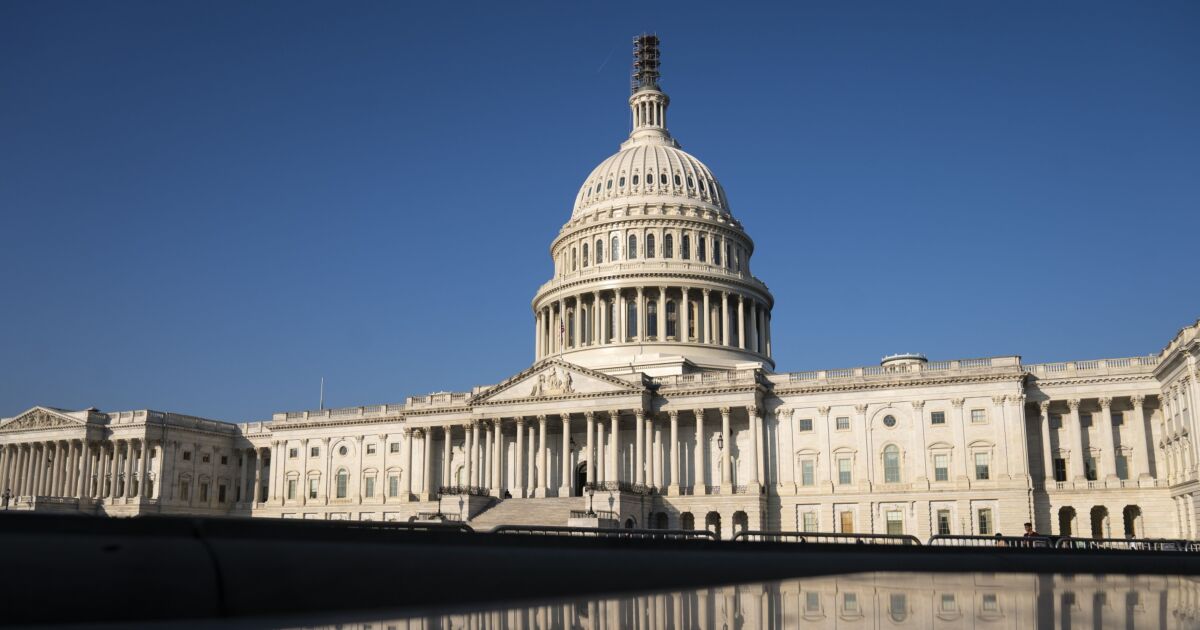

Expatriate advocacy groups are applauding legislation introduced this week that would implement a residence-based taxation system for U.S. citizens living overseas.
Rep. Darin LaHood, R-Illinois, a member of the tax-writing House Ways and Means Committee, introduced the Residence-Based Taxation for Americans Abroad Act on Wednesday, a bill that would implement a residence-based taxation system for U.S. citizens currently living overseas.
The bill would enable Americans living overseas to elect to be treated as a nonresident American, allowing them to be subject to U.S. tax only on U.S.-sourced income and gains.
“This is a non-partisan issue that impacts U.S. citizens with roots in districts across the country. In today’s world, Americans choose to live and work abroad for a host of reasons, and that does not mean that they should be subject to more onerous tax and compliance burdens,” LaHood said in a statement Wednesday. “I look forward to working with President-elect Trump and my House colleagues on both sides of the aisle to modernize our Tax Code to ensure Americans are not punished for living and working abroad.”
The issue received more attention this past fall during the election campaign when Donald Trump told the Wall Street Journal, “”I support ending the double taxation of overseas Americans.”
According to recent estimates, over 5 million U.S. citizens are currently living abroad, including both Americans who were born and raised in the United States but have since moved abroad indefinitely, as well as “accidental Americans,” or individuals who hold dual citizenship in the United States and a foreign country but are unaware of their status as U.S. citizens. The U.S. is the only major country that uses citizenship-based taxation, levying taxes on individuals regardless of where they live or whether they earn income in the U.S.
The bill establishes an elective process for a U.S. citizen living abroad to be treated as a non-resident without having to renounce his or her U.S. citizenship. Under this new tax regime, an electing taxpayer would be subject to U.S. tax only on U.S.-sourced income and gains (such as income from ownership in a U.S. business), distributions from U.S. retirement and deferred compensation plans, income from assets physically located in the U.S. (such as rent from real-estate investments), and other U.S.-sourced income or gains.
The electing individual would be treated for tax purposes like a foreign individual residing outside the United States with U.S.-sourced income.
An electing individual would need to certify compliance with U.S. tax obligations for the five years prior to the election date, with exceptions for certain existing, long-term Americans abroad.
Once the election is made, it would be effective for the current and all future taxable years until terminated (either by the non-resident American self-withdrawing the election or if the individual again becomes a U.S. resident for tax purposes).
Since the election is intended for Americans living abroad over the long term, the bill requires the non-resident American to live abroad for at least three years from the election date or the election would be reversed entirely.
For purposes of Foreign Account Tax Compliance Act only, a non-resident American would be able to apply to the IRS for a certificate of non-residency to use with foreign financial institutions.
By allowing the non-resident American to establish that he or she is not a “specific United States person,” foreign financial institutions would not be required to undertake burdensome reporting requirements under FATCA, which frequently discourage them from offering banking services to Americans living and working abroad.
Similarly, the non-resident American would be exempt from certain reporting requirements (and substantial associated penalties) with respect to foreign assets and transactions, including Foreign Bank and Financial Accounts Reports, or FBARs.
To help ensure fiscal balance and prevent abuse, the electing individual must also pay a departure tax on deferred income, with certain exceptions.
An election would require the individual to pay a departure tax based on deferred income, treating all property as if sold for fair market value on the day before the election with the gains and losses taken into account for purposes of determining the departure tax.
Once the departure tax is paid, the individual’s basis in each asset subject to tax would be the fair market value (stepped up basis).
The bill provides three exceptions to the departure tax, for an individual who:
- Has a net worth (i.e., fair market value of all assets over liabilities) of less than the applicable estate tax exemption amount ($13.61 million for 2024, $13.99 million for 2025); or
- Is a tax resident of a foreign country where the individual has regularly, normally, or customarily lived for three of the past five years, and such individual certifies that he or she has been in compliance with U.S. tax requirements for the three years prior to the bill’s introduction; or
- Has not been a U.S. resident at any time since turning 25 years old or after March 28, 2010 (date that FATCA was adopted) through the date of enactment of the bill.
Expat support
The bill has received support from expatriate advocacy organizations, including American Citizens Abroad and Tax Fairness for Americans Aboard.
“This long-awaited legislation is a critical step forward in bringing about something ACA has worked hard to achieve over many years,” said ACA executive director Marylouise Serrato in a statement. “The bill builds on Congressman [George] Holding’s Tax Fairness for Americans Abroad Act of 2018 and we’re pleased to note, includes multiple features of ACA’s RBT modeling in our
She pointed out that the introduction of LaHood’s legislation aims to set the groundwork for tax language that would ultimately be included in a new bill in the next Congress. It’s not expected to be passed before the current Congress recesses.
The ACA has drafted a
Some of the main aspects of the legislation include:
- U.S. citizens, but not “green card” holders, residing overseas (newly called “nonresident U.S. citizens”), in general, would be removed from the category of individuals subject to U.S. income tax and taxed like nonresident aliens (foreign individuals).
- Individuals need to make a one-time election and continually meet residency and other requirements.
- Electing individuals must certify under penalty of perjury that they have met all tax requirements for the five preceding taxable years and submit all required evidence.
- Individuals resident in a so-called “tax haven” country can qualify for elective RBT.
- Foreign banks can treat individuals who elect RBT as not subject to FATCA reporting rules provided they obtain a certificate of non-residency and give a copy to the bank. (This is similar to treatment of individuals who renounce US citizenship and file a Form 8854.
- There is a tax, commonly called a “transition tax”, on deferred income of certain individuals electing to be subject to the new RBT rules. The tax applies to a deemed sale of all property. Individuals with a net worth not exceeding $13.6 million ($27.2 million-married couples) are excluded. Tied to estate tax unified credit. These amounts revert to $5 million or approximately $7 million when adjusted for inflation, if the Tax Cuts and Jobs Act is not extended.
- There are a number of exceptions, including Individual Retirement Accounts (IRA)s, which will not be subject to “transition tax.”
- A special rule, a type of “grandfather” rule, will exempt many Americans residing abroad from the transition rules.
The National Taxpayers Union also praised the bill. NTU president Pete Sepp, an advisor to Tax Fairness for Americans Aboard, which helped LaHood develop the legislation, expressed its support:
“Americans living abroad face some of the toughest financial and compliance burdens that the U.S. tax system can possibly inflict,” Sepp said in a statement. “It is long past time that American tax laws deliver fairness and relief for these citizens. Congressman LaHood deserves praise from all American taxpayers, not just those living overseas, for developing this tax reform in collaboration with TFFAA and other organizations so quickly and holistically. Now taxpayers have a head start for 2025 on addressing a problem that prominent Democrats as well as Republicans (including President-elect Trump) have acknowledged. With this legislation, we have a very effective tool for the job of righting a great wrong for taxpayers.”
LaHood worked closely with Tax Fairness for Americans Abroad in drafting the bill. TFFAA is a U.S. nonprofit organization whose board members have deep personal experience navigating the pitfalls of U.S. tax and financial services laws that affect Americans abroad. The group’s sole mission is to advocate for a U.S. tax system for Americans abroad that is based on residence and source, not citizenship.
“For the first time in our lifetimes, Americans abroad can see the light at the end of the long, dark tunnel that has cost them huge amounts in accounting fees, ruined relationships, and made it impossible for them to live normal lives,” said Brandon Mitchener, executive director of Tax Fairness for Americans Abroad, in a statement. “We thank Mr. LaHood for his leadership and look forward to working with him to collect feedback on this non-partisan approach and to help advance the bill to the president’s desk next year.”





S&P 500 September Outlook: Tech Rally Holds Index at 7,600

India Unveils ‘Saptadhara’ Reform Agenda Targeting Technology, Youth Skilling, and Growth

S&P 500 Outperforms Amid Strong Corporate Earnings as Treasury Yields Cap Equity Multiples

Armanino adds Strategic Accounting Outsourced Solutions

New 2023 K-1 instructions stir the CAMT pot for partnerships and corporations

Tax Strategy: Employee Retention Credit update
-

 Technology7 days ago
AI Infrastructure Boom Hits Physical Limits: Power, Financing, and Supply Chain Strain
-

 Economics5 days ago
U.S.- Canada Trade Talks Collapse; Carney Says Retaliatory Tariffs Begin September 8
-
 Stock News18 hours ago
S&P 500 September Outlook: Tech Rally Holds Index at 7,600
-

 Technology5 days ago
Flock Cameras and the Future of Public Security
-
 Finance18 hours ago
S&P 500 Outperforms Amid Strong Corporate Earnings as Treasury Yields Cap Equity Multiples
-

 Insights19 hours ago
Climate Resilience and Offshore Wind and Land Restoration Milestones
-

 Accounting19 hours ago
Mandatory ESG Reporting Standards Demand Standardized Non-Financial Audit Trails
-
 Leaders18 hours ago
India Unveils ‘Saptadhara’ Reform Agenda Targeting Technology, Youth Skilling, and Growth