
Personal Finance
Consumers continue to spend even as trade wars raise recession risk

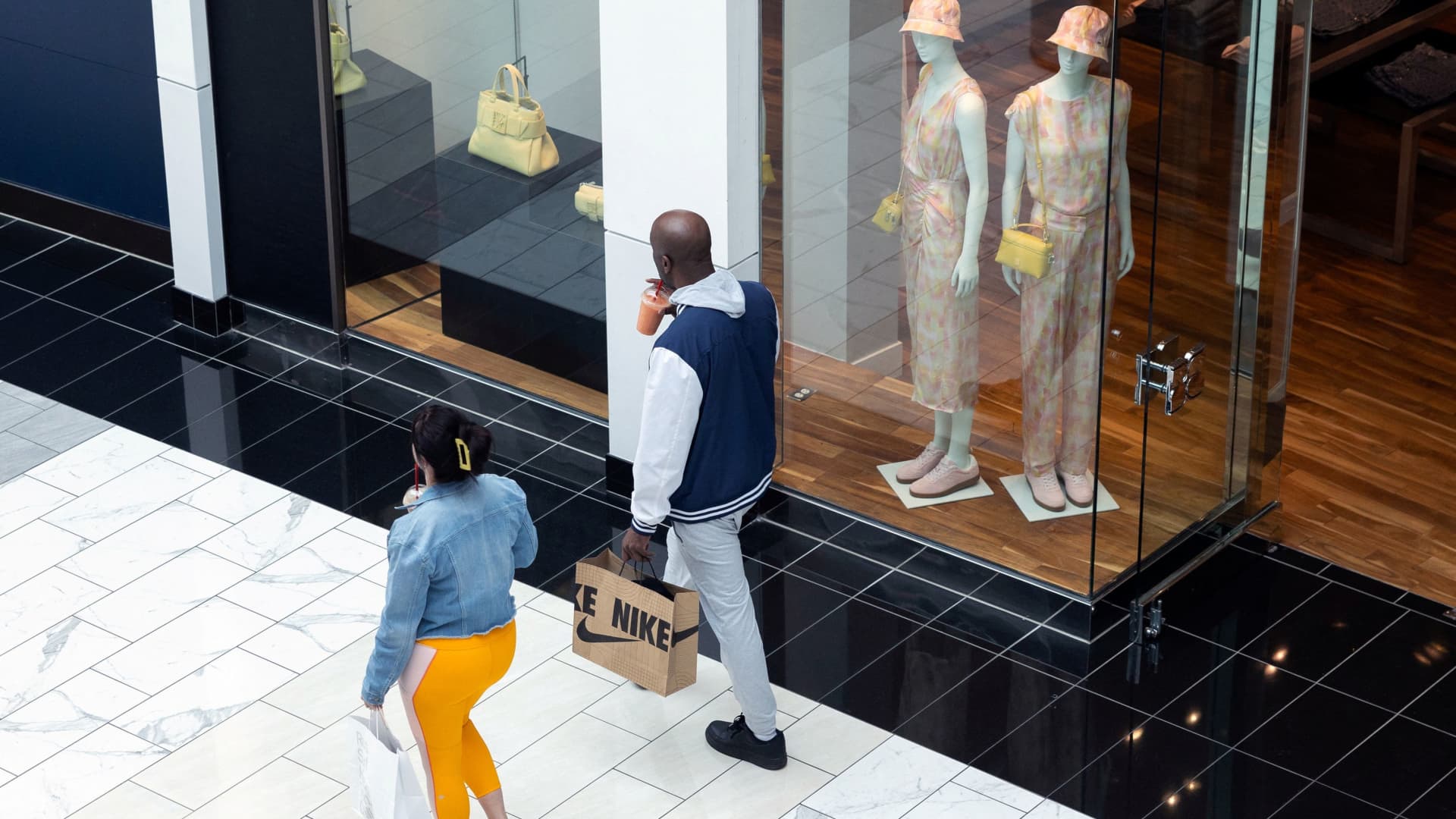

While many Americans are worried about where the U.S. economy is heading, few have changed their spending habits in anticipation of a slowdown.
Nearly three-quarters, or 73%, of adults said they are “financially stressed,” with most pointing to the tariff wars as the culprit, according to a recent CNBC/SurveyMonkey online poll.
And yet, consumer spending has remained remarkably resilient.
In part because of looming tariffs, shoppers are panic buying. In fact, consumer spending was even stronger than expected in March, according to the Commerce Department and ticked up again in April, data released Wednesday from J.P. Morgan showed.
J.P. Morgan also raised its odds for a U.S. and global recession to 60%, by year end, up from 40% previously.
More from Personal Finance:
Cash may feel safe when stocks slide, but it has risks
What higher stagflation risks mean for your money
Should investors dump U.S. stocks for international equities?
Setting the stage for a slowdown
Consumer spending is considered the backbone of the economy because it represents a significant portion of Gross Domestic Product and fuels economic growth.
In a speech earlier this month before business journalists in Arlington, Va., Federal Reserve Chair Jerome Powell said “the economy is overwhelmingly driven by consumer spending.” Powell also said that he expects President Donald Trump’s tariff policies to raise inflation and lower growth.
Most experts agree that in the face of higher prices for many consumer goods, Trump’s tariffs are igniting a fresh wave of declining sentiment, which plays a big part in determining where the economy is headed.
The Conference Boards’ expectations index, which measures consumers’ short-term outlook, plunged to its lowest level in 12 years and well below the recession threshold, signaling heightened recession risk. The University of Michigan’s consumer survey also showed sentiment sank by more than 30% since December among persistent worries of a trade war.
“On-again, off-again rising tariffs and resulting turmoil in the stock market and world economy are clearly impacting consumer concerns about higher prices and future consumer spending growth,” Jack Kleinhenz, chief economist of the National Retail Federation, said in a statement.
How tariffs impact household budgets
The Trump administration’s tariffs on a host of other countries are currently in the middle of a 90-day pause, with a 10% baseline tariff rate instead applying to all imported goods across the board. The pause is due to expire on July 9, with Trump touting a series of rate negotiations with foreign leaders between now and then.
According to an analysis by the Urban-Brookings Tax Policy Center, if the lower tariff rates in effect during the 90-day pause remain in effect permanently, it could reduce real income for the average taxpayer by about $3,100 in 2026. A separate study by the Budget Lab at Yale estimates that tariffs could cost the average household roughly $3,800 per year.
“Household budgets remain under pressure and highly sensitive to further price increases,” said Greg McBride, chief financial analyst at Bankrate. “Inflation will continue to be central to how consumers feel about their finances, and their capacity for additional spending.”
A looming drop off
Financial constraints coupled with expectations that the economy is weakening will eventually cause consumers to spend less, which can cause businesses to cut back or lay off workers, according to Sasha Indarte, an assistant professor of finance at University of Pennsylvania’s Wharton School. “That is a self-fulfilling prophecy.”
“Even a small initial cutback in spending gets amplified,” she said. “One person’s spending becomes another person’s income — you can get this echo effect.”
But basic economic theories don’t tell the whole story, Indarte added.
Even when consumers intend to cut back, they don’t always scale back their spending as much as they want to, or should. Behavioral biases and inertia also play a role, according to Indarte.
“Even when our environment is changing, we are happy doing what we used to be doing. People are used to going to the same restaurants, or driving the same car, we aren’t used to making adjustments,” she said. “There’s a preference for sameness.”
However, once household budgets reach their limits, consumers will no longer be able to afford the lifestyle they were accustomed to — that’s “when the shock materializes,” she said.
At that point, consumers will have to reign in their spending, whether they want to or not, she said, which could lead to an economic drop-off in the months ahead. That prediction was also recently shared by JPMorgan analysts in a research note on Wednesday and Federal Reserve Bank of Chicago President Austan Goolsbee on Sunday.
“We should be worried,” Indarte said.


Personal Finance
Next-Generation Retirement Planning: Managing Longevity Risk and Variable Income Streams


U.S.- Canada Trade Talks Collapse; Carney Says Retaliatory Tariffs Begin September 8

Flock Cameras and the Future of Public Security

AI Infrastructure Boom Hits Physical Limits: Power, Financing, and Supply Chain Strain

Armanino adds Strategic Accounting Outsourced Solutions

New 2023 K-1 instructions stir the CAMT pot for partnerships and corporations

Tax Strategy: Employee Retention Credit update
-

 Stock News1 week ago
Nvidia Earnings Preview: What Wall Street Expects From the AI Bellwether’s Q2 Report
-

 Accounting1 week ago
SEC’s Semiannual Reporting Proposal Faces Investor Pushback: What CFOs Need to Know
-

 Stock News1 week ago
Nvidia Q2 FY2027 Earnings beats Wall Street Expectation with Record $96.2 Billion Revenue
-

 Finance1 week ago
Treasury Bond Volatility Forces Bessent to Double Debt Buyback Size as Yields Swing
-
 Technology5 days ago
AI Infrastructure Boom Hits Physical Limits: Power, Financing, and Supply Chain Strain
-
 Technology3 days ago
Flock Cameras and the Future of Public Security
-
 Economics3 days ago
U.S.- Canada Trade Talks Collapse; Carney Says Retaliatory Tariffs Begin September 8