
Personal Finance
CPI inflation is still high. How to measure what that means for you


A customer picks up a seasoning at a supermarket in Tokyo on February 27, 2024.
Kazuhiro Nogi | Afp | Getty Images
New government inflation data released on Wednesday came in hotter than expected.
That may not be a surprise to consumers who are still feeling the weight of higher prices.
Inflation — as measured by the consumer price index — rose 3.5% from a year ago and 0.4% for the month. The consumer price index, or CPI, tracks the average changes in prices over time for consumer certain goods and services.
“The CPI basket and its movements are meant to be broadly indicative of the price experiences of a wide swath of Americans over time,” said Brett House, an economics professor at Columbia Business School.
For individuals, that means headline inflation numbers may reflect their own experience more or less at any given point in time, he said.
Categories including juices and drinks, motor vehicle insurance or household repairs are up by double-digit percentages in the past 12 months, the CPI data shows.
Consumers who depend on those products and services are likely feeling the effects of inflation.
“People continue to feel the pain of higher prices,” said Eugenio Aleman, chief economist at Raymond James, despite the CPI having declined from its 9.1% year-over-year peak in 2022.
“And that is something that at a feeling level is still negative, because they don’t see any relief,” Aleman said.
How to calculate your personal inflation rate
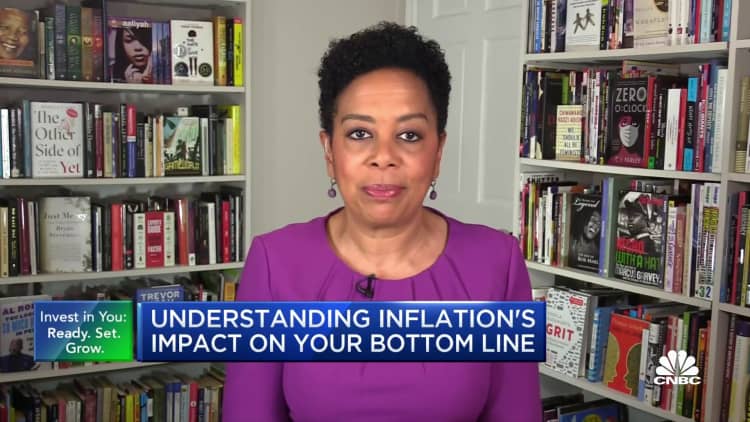
To get a better sense of how inflation is affecting you and your family, it can help to calculate your personal inflation rate.
“To even understand how inflation affects you, you need to know how the purchases that you make regularly are changing, if at all,” said Douglas Boneparth, a certified financial planner and president and founder of Bone Fide Wealth, a wealth management firm based in New York City.
To get started, gather your spending data.
To come up with a specific calculation as to how inflation is affecting you, subtract your total monthly spending for March 2023 from your total for March 2024. Then, divide that number by your March 2023 spending to get your personal inflation rate.
To get a quicker result, an online personal inflation calculator — like this one from the Federal Reserve Bank of Atlanta — can help.
More from Personal Finance:
What Biden’s new student loan forgiveness plan means for your taxes
‘Proceed with caution’ before tapping AI chatbots to file your tax return
There’s still time to reduce your tax bill or boost your refund before the deadline
Even a more informal look at your grocery spending over the past several months can help you gauge how your bill is changing, said Boneparth, a member of the CNBC FA Council.
With that, you may notice how what you spend on certain categories — milk, eggs, chicken or beef, for example — has fluctuated.
For items that have risen in cost, ask yourself whether you might consider not spending on that particular item at all, Boneparth said. If you can’t do without it, consider whether you might be able to substitute in other products or change the frequency with which you buy them, he said.
Wage increases affect your inflation experience
Other factors beyond your monthly spending determine how inflation has affected you.
The CPI is up a little under 18% since three years ago, according to Greg McBride, chief financial analyst at Bankrate.
Consequently, if your wages haven’t increased by that much over the same period, you’re more likely to feel the pinch of higher prices.
That can contribute to a lack of savings and higher credit card debt, financial consequences many Americans are showing. About 60% of households are living paycheck to paycheck, McBride said.
But the good news is that real wages, or wages adjusted for inflation, are now higher, Aleman said.
Consequently, many individuals are better off today than they were a year or two years ago, he said.
“Of course, everybody would want prices to go back to pre-pandemic,” Aleman said.
Another point to keep in mind is that the CPI typically overstates inflation, Aleman said. That is why the Federal Reserve tends to prefer another inflation measure, the personal consumption expenditures price index. The PCE was up 2.8% over the past 12 months, according to the latest data for the month of February.


Personal Finance
Next-Generation Retirement Planning: Managing Longevity Risk and Variable Income Streams


U.S.- Canada Trade Talks Collapse; Carney Says Retaliatory Tariffs Begin September 8

Flock Cameras and the Future of Public Security

AI Infrastructure Boom Hits Physical Limits: Power, Financing, and Supply Chain Strain

Armanino adds Strategic Accounting Outsourced Solutions

New 2023 K-1 instructions stir the CAMT pot for partnerships and corporations

Tax Strategy: Employee Retention Credit update
-

 Stock News1 week ago
Nvidia Earnings Preview: What Wall Street Expects From the AI Bellwether’s Q2 Report
-

 Accounting1 week ago
SEC’s Semiannual Reporting Proposal Faces Investor Pushback: What CFOs Need to Know
-

 Stock News1 week ago
Nvidia Q2 FY2027 Earnings beats Wall Street Expectation with Record $96.2 Billion Revenue
-

 Finance1 week ago
Treasury Bond Volatility Forces Bessent to Double Debt Buyback Size as Yields Swing
-
 Technology5 days ago
AI Infrastructure Boom Hits Physical Limits: Power, Financing, and Supply Chain Strain
-
 Technology3 days ago
Flock Cameras and the Future of Public Security
-
 Economics3 days ago
U.S.- Canada Trade Talks Collapse; Carney Says Retaliatory Tariffs Begin September 8