
Finance
DEI dominates conversation among CEOs

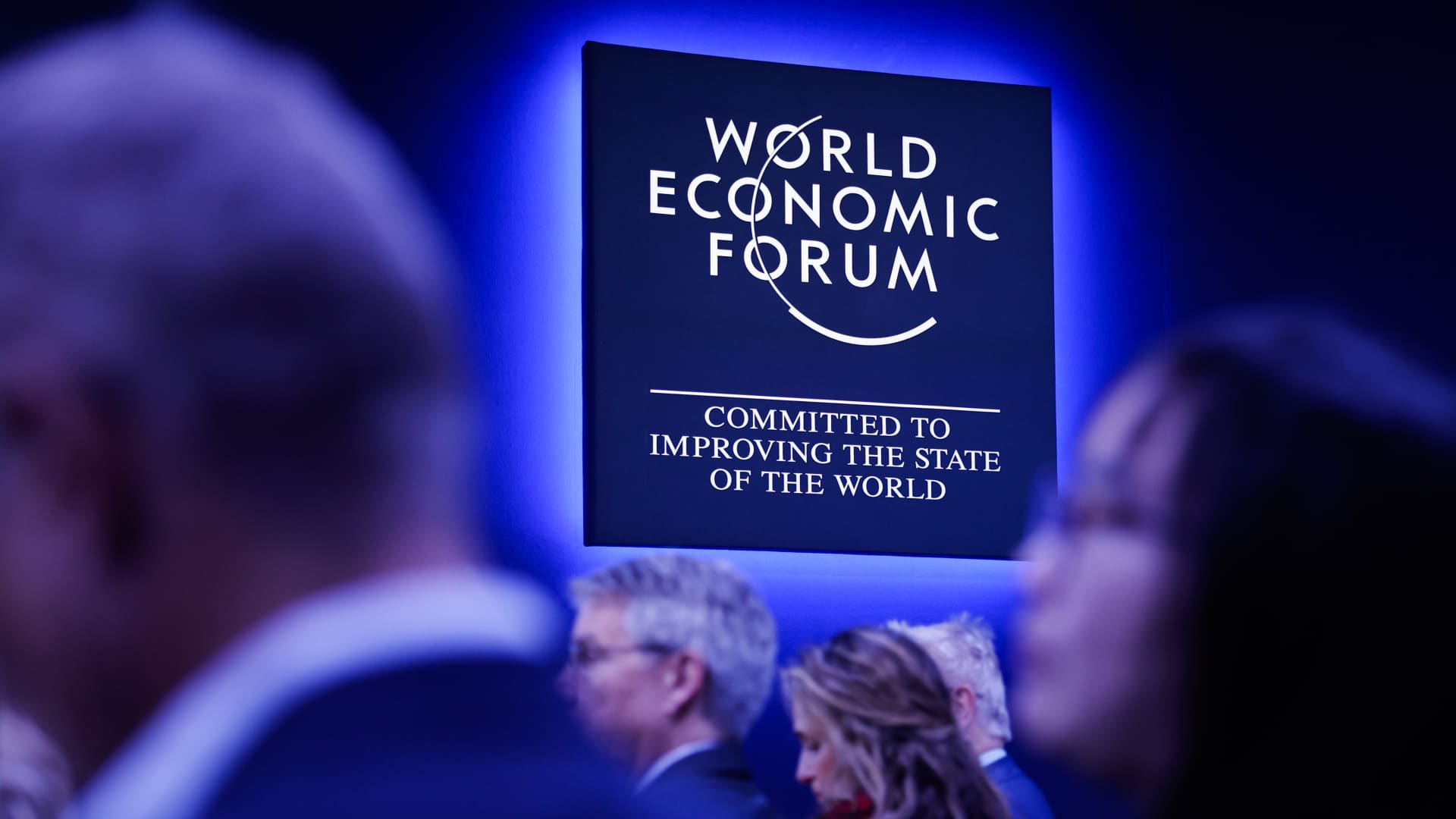

Three buzz words this year among politicians and business leaders at the World Economic Forum’s annual meeting in Davos Switzerland: diversity, equity and inclusion.
It’s no surprise DEI is on corporate leaders’ minds since it’s been front and center at the White House as well.
“My administration has taken action to abolish all discriminatory diversity, equity and inclusion nonsense,” President Donald Trump said Thursday during a virtual appearance in Davos. “America will once again become a merit-based country.”
Trump signed an executive order his first day in office aimed at dismantling the federal government’s diversity and inclusion programs. The order as written only applies to federal government employers, but he also mentioned extending his executive order to private institutions in his comments at Davos.
Following his executive order, his administration has also targeted affirmative action in federal contracting and ordered all federal DEI staff be put on paid leave.
On the ground in Davos, DEI has been the subject of conversation both on-the-record and behind closed doors, with discussions including the potential of ditching the commonly used acronym and changing external communication around certain policies.
Most corporate leaders who spoke to CNBC across the first four days of the summit reiterated that while the language may change and internal policies may be tweaked, company values will remain the same.
Here’s what executives had to say:
Jamie Dimon, JPMorgan Chase CEO
“We are going to continue to reach out to the Black community and Hispanic community, LGBT community, and the veteran community. … Wherever I go — red states, blue states — mayors, governors say they like what we do. So we’re not trying to pander to any which side or any which thing. Now if you point to something we’re doing that’s wrong, I’d change it. And we will make modifications going forward, but we’re very proud of what we’ve done, and what we’ve done is lift up cities, schools, states, hospitals, countries, companies, and we’re gonna do more of the same.”
Adena Friedman, Nasdaq CEO
“For Nasdaq, we really continue to look at everything that we do in building the right culture. We do believe that a place where we feel like people can be themselves and can operate at their highest potential, and have diversity of views, and diversity of backgrounds, actually makes us a better company and makes us perform better. So we’re going to continue to operate in that way. And I think that at the end of the day, these things come and go with different political cycles, but at the same time, I believe that there’s an undercurrent that continues to be supportive.”
Bill Ready, Pinterest CEO
“People on our platform come from all walks of life, from all different backgrounds, and so we’ve been very focused on how we drive inclusivity in our platform with things like inclusive AI, with things like ‘diversity by default’ in our feed … We’re not [changing anything], and the reason is we’ve seen it’s actually leading to better engagement, there’s consumer demand for it, it’s good for our business.”
Chuck Robbins, Cisco CEO
“I think what happened is there’s a subset of initiatives under the DEI brand that were particularly disliked. And I think the whole thing got blown up because of that … If I’m sitting in a room to try to solve a complex problem or to chase a big opportunity, I want a lot of diverse brains in that room, and I don’t care if it’s gender or if it’s nationality or if it’s just diversity of experience. Diversity in general is good for business. But I think the pendulum swung and I think it was a handful of issues that really triggered it all.”
Robert Smith, Vista Equity Partners CEO
“I think that diversity is a great thing in business. How do I know? Because I look at the data, I look at the facts. When we have diverse teams, our teams are more productive. We have lower risk. We’re actually able to out-produce those who don’t have diverse teams. The facts all suggest that. Now, how that gets implemented and executed, I think is where there’s dialogue and debate. I think companies and executives who actually understand the importance of diverse thinking in the work that they do, in the products that they deliver, and in the markets they serve will benefit long term … We will have to navigate through this, and there may be certain laws to change. We have to make adjustments to it, but people will do the right thing.”
Alexandr Wang, Scale AI CEO
“We operate in an incredibly competitive and fast-moving industry in AI, and I don’t have any option but to hire the best and most brilliant and most capable people for every single job inside my company. So as a result, we have no option but to be meritocratic … And in the process, we achieve diversity.”




Nvidia Q2 FY2027 Earnings beats Wall Street Expectation with Record $96.2 Billion Revenue

Treasury Bond Volatility Forces Bessent to Double Debt Buyback Size as Yields Swing

Nvidia Earnings Preview: What Wall Street Expects From the AI Bellwether’s Q2 Report

Armanino adds Strategic Accounting Outsourced Solutions

New 2023 K-1 instructions stir the CAMT pot for partnerships and corporations

Tax Strategy: Employee Retention Credit update
-

 Economics1 week ago
Nvidia’s Potential $3 Billion SB Energy Investment Could Reshape AI Infrastructure
-

 Economics4 days ago
Top 10 Largest Economies by 2030: IMF & World Bank GDP Projections for Global Powerhouses
-

 Stock News4 days ago
How to understand Intel $15B Stock Offering
-
 Technology1 week ago
U.S.-China AI Competition Intensifies as Washington Pushes Allies to Choose Sides
-
 Stock News1 day ago
Nvidia Earnings Preview: What Wall Street Expects From the AI Bellwether’s Q2 Report
-
 Economics4 days ago
Economic Profile of the United States of America (2026–2030 Horizon)
-
 Leaders3 days ago
Jackson Hole 2026: What the First Symposium Under Fed Chair Kevin Warsh Means for Markets
-
 Economics3 days ago
U.S. National Debt Surpasses $40 Trillion for the First Time: What It Means for the Economy