
Personal Finance
Disability advocates sue Social Security and DOGE to stop service cuts

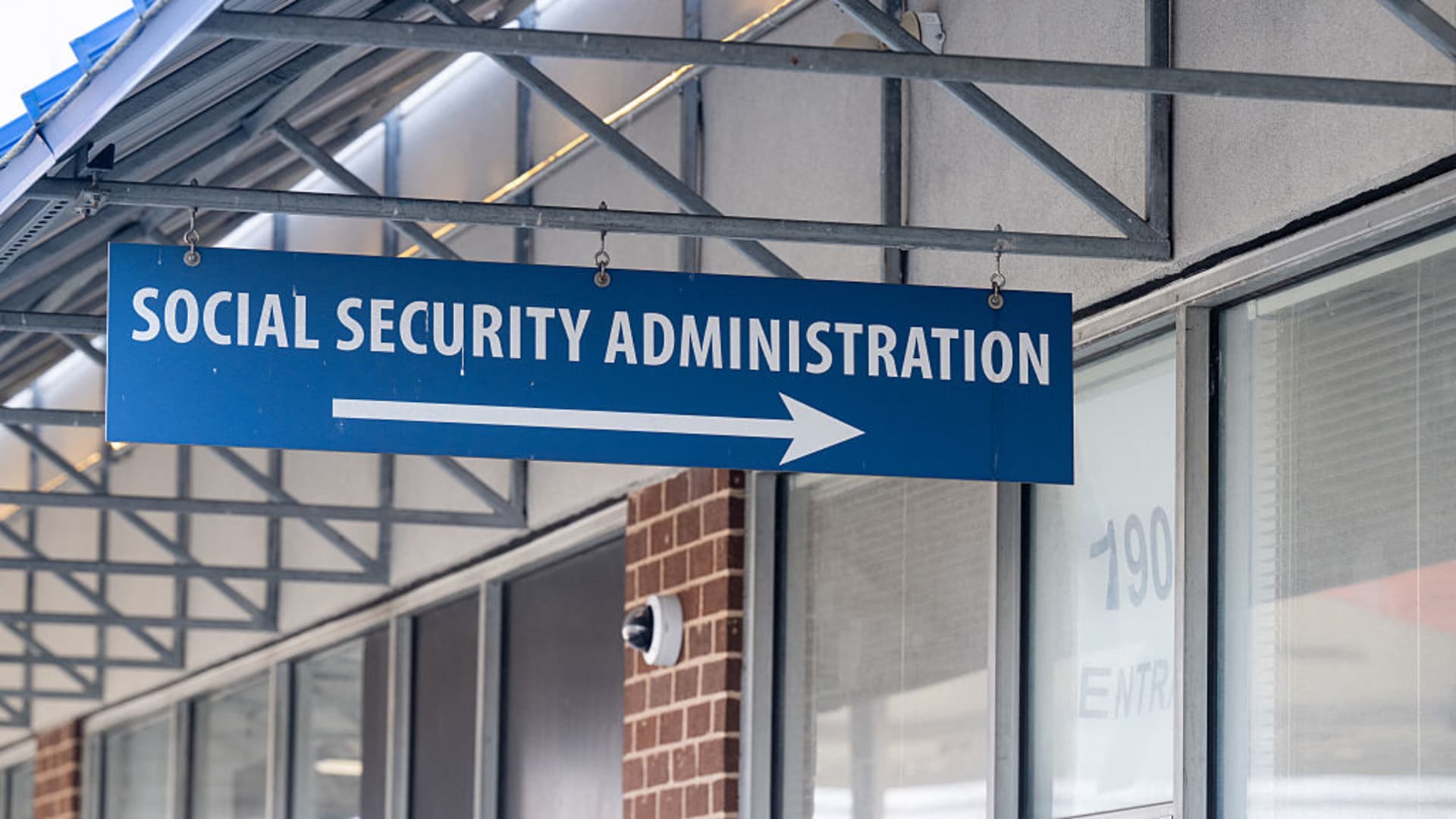
A Social Security Administration (SSA) office in Washington, DC, March 26, 2025.
Saul Loeb | Afp | Getty Images
A group of disability advocates filed a federal lawsuit against the Social Security Administration and the so-called Department of Government Efficiency on Wednesday aimed at stopping cuts to the agency’s services.
Recent changes at the Social Security Administration under DOGE — including staff reductions, the elimination of certain offices and new requirements to seek in-person services — have made it more difficult for individuals with disabilities and older adults to access benefits, the lawsuit argues.
The complaint was filed in the U.S. District Court for the District of Columbia.
The plaintiffs include the National Federation of the Blind, the American Association of People with Disabilities, Deaf Equality, the National Committee to Preserve Social Security and Medicare, the Massachusetts Senior Action Council and individual beneficiaries.
“The defendants’ actions are an unprecedented and unconstitutional assault on Social Security benefits, concealed beneath the hollow pretense of bureaucratic ‘reform,'” the complaint states.
In nine weeks, the new administration has “upended” the agency with “sweeping and destabilizing policy changes,” the plaintiffs claim, that have shifted agency functions to local offices while slashing telephone services.
More from Personal Finance:
Trump administration loses appeal of DOGE Social Security restraining order
Social Security changes may impact service, benefit payments
Trump pick to lead Social Security faces questions on DOGE
“The result is a systematic dismantling of SSA’s core functions, leaving millions of beneficiaries without the essential benefits they are legally entitled to,” the lawsuit complaint states.
The “mass restructuring” of the agency is unlawful and violates the Rehabilitation Act and the Administrative Procedure Act, the lawsuit argues. The changes also violate multiple constitutional provisions, including the First Amendment right to petition the government for redress of grievances, according to the plaintiffs.
With 1.1 million disability claims pending, the recent actions could also be life threatening to individuals who are dying or going bankrupt while waiting for decisions, they allege.
The Social Security Administration did not respond to CNBC’s request for comment.
“President Trump has made it clear he is committed to making the federal government more efficient,” White House spokesperson Liz Huston said in an email statement. “He has the authority to manage agency restructuring and workforce reductions, and the administration’s actions are fully compliant with the law.”
Lawsuit alleges reform is ‘administrative vandalism’
People hold signs during a protest against cuts made by U.S. President Donald Trump’s administration to the Social Security Administration, in White Plains, New York, U.S., March 22, 2025.
Nathan Layne | Reuters
The Social Security Administration sends monthly checks to around 73 million Social Security and Supplemental Security Income beneficiaries.
DOGE, which is not an official government entity, has been tasked with cutting “waste, fraud and abuse” within the federal government. President Donald Trump issued an executive order creating DOGE on Jan. 20, the same day he was inaugurated.
Since then, the Social Security Administration has cut 7,000 employee positions and closed the Office of Civil Rights and Equal Opportunity and the Office of Transformation. The Office of Civil Rights and Equal Opportunity handled the agency’s equal employment opportunity and civil rights programs. The Office of Transformation was responsible for coordinating customer service-related initiatives like adding the ability to use digital signatures and electronic documents.
The Social Security Administration has also changed its identity proofing policies for claiming benefits and changing direct deposit information that is expected to require more individuals to visit the agency’s offices in person.
The agency has updated its policy, allowing individuals applying for Social Security Disability Insurance, Medicare, or Supplemental Security Income who cannot use a personal my Social Security account to complete their claim entirely over the telephone, starting April 14.
The reforms amount to the dismantling of “core functions of SSA, abandoning millions of Americans to poverty and indignity,” according to the plaintiffs’ complaint.
“What the defendants frame as ‘reform’ is, in truth, administrative vandalism,” the lawsuit states.
Beneficiaries face long waits, overpayment issues
The plaintiffs include seven individuals whose experiences, including long customer service waits and, in some cases, demands to repay large sums to the Social Security Administration, are detailed in the complaint.
One plaintiff, Treva Olivero, who has been legally blind since birth, was informed in March 2024 that she had been overpaid Social Security disability insurance benefits for five or six years, prompting the agency to demand she repay more than $100,000, according to the complaint.
Olivero’s Medicaid coverage was also terminated soon after, which left her without income and health coverage. She has since been in an “ongoing struggle” to have her disability benefits reinstated, while also facing almost $80,000 in medical debt, according to the complaint.

Another plaintiff, Merry Schoch, who received Social Security disability insurance for many years, returned to work to help pay for large medical bills after she was hit by a waste management truck in 2022. She reported her income to the Social Security Administration, and the agency made no changes to her benefit payments, according to the complaint.
Two years later, Schoch stopped working and reported her unemployment to the Social Security Administration. In August 2024, the agency then terminated her benefits and informed Schoch that she owed $30,000 for the disability benefit payments she received while working full time, according to the complaint.
Last September, Schoch was informed she could reapply for benefits. However, she has since struggled to get in touch with the agency over the phone, online and in person.
Both Olivero and Schoch are members of the National Federation of the Blind, which is also a plaintiff.
The plaintiffs want the court to reverse the Social Security Administration’s recent reforms, including staff reductions, closures of certain offices and policies requiring in-person appointments.


Personal Finance
Next-Generation Retirement Planning: Managing Longevity Risk and Variable Income Streams


U.S.- Canada Trade Talks Collapse; Carney Says Retaliatory Tariffs Begin September 8

Flock Cameras and the Future of Public Security

AI Infrastructure Boom Hits Physical Limits: Power, Financing, and Supply Chain Strain

Armanino adds Strategic Accounting Outsourced Solutions

New 2023 K-1 instructions stir the CAMT pot for partnerships and corporations

Tax Strategy: Employee Retention Credit update
-

 Stock News1 week ago
Nvidia Earnings Preview: What Wall Street Expects From the AI Bellwether’s Q2 Report
-

 Accounting1 week ago
SEC’s Semiannual Reporting Proposal Faces Investor Pushback: What CFOs Need to Know
-

 Stock News1 week ago
Nvidia Q2 FY2027 Earnings beats Wall Street Expectation with Record $96.2 Billion Revenue
-

 Finance1 week ago
Treasury Bond Volatility Forces Bessent to Double Debt Buyback Size as Yields Swing
-
 Technology5 days ago
AI Infrastructure Boom Hits Physical Limits: Power, Financing, and Supply Chain Strain
-
 Technology3 days ago
Flock Cameras and the Future of Public Security
-
 Economics3 days ago
U.S.- Canada Trade Talks Collapse; Carney Says Retaliatory Tariffs Begin September 8