
Finance
Fed cuts rate by a quarter point

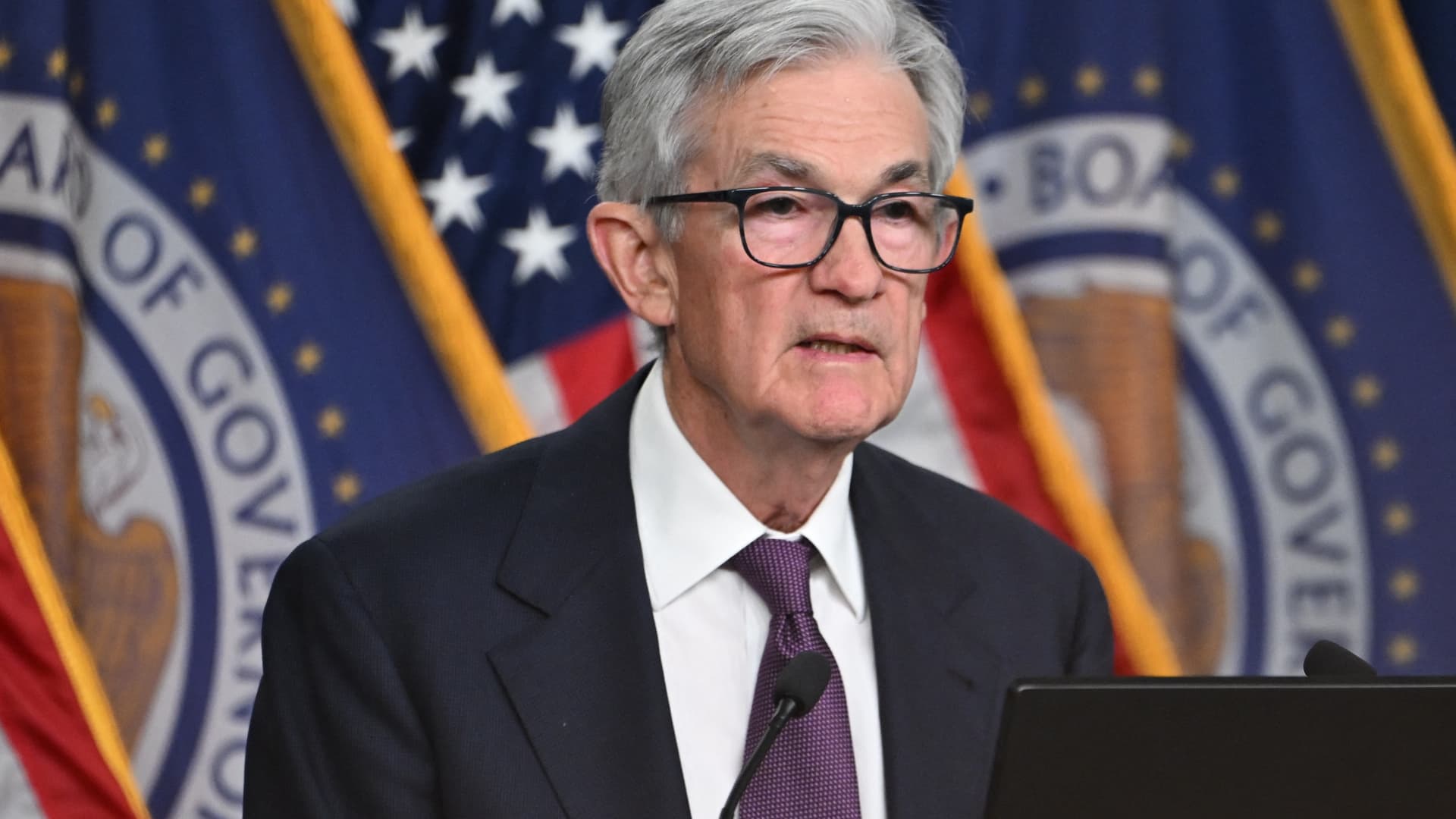

WASHINGTON – The Federal Reserve on Wednesday lowered its key interest rate by a quarter percentage point, the third consecutive reduction and one that came with a cautionary tone about additional reductions in coming years.
In a move widely anticipated by markets, the Federal Open Market Committee cut its overnight borrowing rate to a target range of 4.25%-4.5%, back to the level where it was in December 2022 when rates were on the move higher.
Though there was little intrigue over the decision itself, the main question had been over what the Fed would signal about its future intentions as inflation holds steadily above target and economic growth is fairly solid, conditions that don’t normally coincide with policy easing.
In delivering the 25 basis point cut, the Fed indicated that it probably would only lower twice more in 2025, according to the closely watched “dot plot” matrix of individual members’ future rate expectations. The two cuts indicated slice in half the committee’s intentions when the plot was last updated in September.
Assuming quarter-point increments, officials indicated two more cuts in 2026 and another in 2027. Over the longer term, the committee sees the “neutral” funds rate at 3%, 0.1 percentage point higher than the September update as the level has drifted gradually higher this year.
“With today’s action, we have lowered our policy rate by a full percentage point from its peak, and our policy stance is now significantly less restrictive,” Chair Jerome Powell said at his post-meeting news conference. “We can therefore be more cautious as we consider further adjustments to our policy rate.”

“Today was a closer call but we decided it was the right call,” he added.
Stocks sold off following the Fed announcement while Treasury yields jumped. Futures pricing pared back the outlook for cuts in 2025 to one quarter point reduction, according to the CME Group’s FedWatch measure.
“We moved pretty quickly to get to here, and I think going forward obviously we’re moving slower,” Powell said.
For the second consecutive meeting, one FOMC member dissented: Cleveland Fed President Beth Hammack wanted the Fed to maintain the previous rate. Governor Michelle Bowman voted no in November, the first time a governor voted against a rate decision since 2005.
The fed funds rate sets what banks charge each other for overnight lending but also influences a variety of consumer debt such as auto loans, credit cards and mortgages.
The post-meeting statement changed little except for a tweak regarding the “extent and timing” of further rate changes, a slight language change from the November meeting.
Change in economic outlook
The cut came even though the committee jacked up its projection for full-year gross domestic product growth to 2.5%, half a percentage point higher than September. However, in the ensuing years the officials expect GDP to slow down to its long-term projection of 1.8%.
Other changes to the Summary of Economic Projections saw the committee lower its expected unemployment rate this year to 4.2% while headline and core inflation according to the Fed’s preferred gauge also were pushed higher to respective estimates of 2.4% and 2.8%, slightly higher than the September estimate and above the Fed’s 2% goal.
The committee’s decision comes with inflation not only holding above the central bank’s target but also while the economy is projected by the Atlanta Fed to grow at a 3.2% rate in the fourth quarter and the unemployment rate has hovered around 4%.
Though those conditions would be most consistent with the Fed hiking or holding rates in place, officials are wary of keeping rates too high and risking an unnecessary slowdown in the economy. Despite macro data to the contrary, a Fed report earlier this month noted that economic growth had only risen “slightly” in recent weeks, with signs of inflation waning and hiring slowing.
Moreover, the Fed will have to deal with the impact of fiscal policy under President-elect Donald Trump, who has indicated plans for tariffs, tax cuts and mass deportations that all could be inflationary and complicate the central bank’s job.
“We need to take our time, not rush and make a very careful assessment, but only when we’ve actually seen what the policies are and how they’ve been implemented,” Powell said of the Trump plans. “We’re just not at that stage.”
Normalizing policy
Powell has indicated that the rate cuts are an effort to recalibrate policy as it does not need to be as restrictive under the current conditions.
“We think the economy is in really good place. We think policy is in a really good place,” he said Wednesday.
With Wednesday’s move, the Fed will have cut benchmark rates by a full percentage point since September, a month during which it took the unusual step of lowering by a half point. The Fed generally likes to move up or down in smaller quarter-point increments as its weighs the impact of its actions.
Despite the aggressive moves lower, markets have taken the opposite tack.
Mortgage rates and Treasury yields both have risen sharply during the period, possibly indicating that markets do not believe the Fed will be able to cut much more. The policy-sensitive 2-year Treasury yield jumped to 4.3%, putting it above the range of the Fed’s rate.
In related action, the Fed adjusted the rate it pays on its overnight repo facility to the bottom end of the fed funds rate. The so-called ON RPP rate is used as a floor for the funds rate, which had been drifting toward the lower end of the target range.






Nvidia Q2 FY2027 Earnings beats Wall Street Expectation with Record $96.2 Billion Revenue

Treasury Bond Volatility Forces Bessent to Double Debt Buyback Size as Yields Swing

Nvidia Earnings Preview: What Wall Street Expects From the AI Bellwether’s Q2 Report

Armanino adds Strategic Accounting Outsourced Solutions

New 2023 K-1 instructions stir the CAMT pot for partnerships and corporations

Tax Strategy: Employee Retention Credit update
-

 Economics1 week ago
Nvidia’s Potential $3 Billion SB Energy Investment Could Reshape AI Infrastructure
-

 Economics4 days ago
Top 10 Largest Economies by 2030: IMF & World Bank GDP Projections for Global Powerhouses
-

 Stock News4 days ago
How to understand Intel $15B Stock Offering
-

 Technology1 week ago
U.S.-China AI Competition Intensifies as Washington Pushes Allies to Choose Sides
-
 Stock News23 hours ago
Nvidia Earnings Preview: What Wall Street Expects From the AI Bellwether’s Q2 Report
-

 Economics4 days ago
Economic Profile of the United States of America (2026–2030 Horizon)
-
 Leaders3 days ago
Jackson Hole 2026: What the First Symposium Under Fed Chair Kevin Warsh Means for Markets
-

 Economics3 days ago
U.S. National Debt Surpasses $40 Trillion for the First Time: What It Means for the Economy